BACALAH INI DISAAT ENGKAU MERASA KALAH

Sebelum engkau merasa kalah bacalah ini. Jangan biarkan siapapun mengacaukan hidupmu dengan apa yang telah mereka capai diusia mereka.

BACALAH INI DISAAT ENGKAU MERASA KALAH

Mungkin kau pernah berpikir, bahwa pada hari engkau mulai memasuki sekolah menengah atas adalah hari dimana kau memulai perjalanan hidupmu, sebuah awal mula yang paling menentukan bagaimana hidupmu kelak. Sukses atau tidak? Bahwa masa-masa sekolah itu adalah saat paling menentukan dalam perjalanan hidupmu.

Maka engkaupun menaruh harapan, dalam dua tahun bersekolah engkau berkeinginan menjadi yang terbaik dikelasmu. Dalam tiga tahun engkau bercita-cita telah melangkah meninggalkan kotamu untuk melanjutkan ke universitas terbaik yang engkau pilih. Lima tahun kemudian setelah lulus kuliah engkau harusnya telah memulai karirmu yang gemilang. Mungkin kamu akan bekerja pada perusahaan terbaik yang jaringannya tersebar diseluruh dunia.

Kamu kemudian akan segera menikah, membangun sebuah rumah dan sepuluh tahun kemudian kamu akan mendapati hidupmu sesuai dengan apa yang telah engkau rencanakan dimasa muda. Dan kau telah menemukan jalan kegemilangan.

Benarkah begitu?

Mungkin pendekatan seperti ini adalah impian semua orang. Tapi kita tahu, ada mereka yang telah lulus universitas diusia 22 tapi tidak menemukan pekerjaan sampai bahkan sampai berumur 27 tahun lebih. Namun ada orang yang lulus kuliah diumur 25, kemudian mereka langsung menemukan pekerjaan segera.

Ada pula orang yang tak pernah berkuliah tapi langsung terjun ke bidang yang mereka cintai diusia 18 tahun. Atau ada juga orang diusia 25 lulus kuliah dan langsung menghasilkan uang namun membenci pekerjaan mereka. Atau kita mengenal orang-orang dimana mereka yang merasa yakin akan cita-cita saat berumur 16, tapi kemudian oleh keadaan terpaksa mengubah pilihan hidupnya ketika berusia 25 tahun.

Kita tahu ada banyak orang harus melalui bertahun-tahun yang panjang untuk menemukan tujuan hidupnya. Sebagaimana orang-orang yang telah menikah 8-10 tahun sampai akhirnya mendapatkan keturunan, sedang ditempat lain ada banyak bayi yang dibuang sesaat setelah mereka dilahirkan, karena mereka tidak diinginkan oleh orang tua mereka.

Kehidupan juga membuat kita melihat ada yang telah menikah dengan seseorang tapi sebenarnya mencintai orang lain, sebagaimana kita menyaksikan ada pasangan yang sangat saling mencintai namun mereka tak bisa bersama.

Mungkin kita bisa menarik kesimpulan, apapun yang terjadi dalam hidup adalah tergantung waktumu, setiap orang memiliki masanya. Kita mungkin melihat ada teman-teman telah jauh lebih sukses, atau menyaksikan beberapa teman telah tertinggal. Tapi sebenarnya semua orang  memiliki ketepatan waktu masing-masing.

Mereka memiliki waktu dan masanya masing-masing, begitu pula denganmu, maka sabarlah. Menyelesaikan kuliah di usia 27, bagaimana pun masih merupakan sebuah pencapaian yang baik. Tidak menikah sampai umur 30, tapi masih tetap bahagia adalah masih sebuah keindahan.

Memulai sebuah keluarga setelah umur 35 adalah masih mungkin, atau bahkan membeli rumah di usia 45 masih hebat. Sebelum engkau merasa kalah, jangan biarkan siapapun  mengacaukan hidupmu dengan apa yang telah mereka capai diusia mereka. Karena tidak semua yang dihitung bisa diperhitungkan, dan tidak semua yang telah diperhitungkan itu benar-benar dihitung.

Hal yang paling penting dalam hidup, ketika kamu menciptakan atau menjadikan sesuatu yang benar-benar berarti, sebagai tujuan hidupmu, dan kemudian mempelajarinya. Jika itu memberikan efek dan perbedaan untuk membuat orang lain lebih baik dalam hidup mereka. Maka itulah kesuksesan yang sejati, jika itu dapat engkau capai.

KATALOG OPINI:

  1. Kesadaran Literasi; 8 Juni 2017;
  2. Syariat Islam Siapa Takut; 9 Juni 2017;
  3. Idul Fitri Dan Hukum Tekanan Pascal; 25 Juni 2017;
  4. Hikayat Suku Mante; 5 Juli 2017;
  5. Memutus Lingkaran Kebencian; 8 Juli 2017;
  6. Membeli Kebijaksanaan; 22 Juli 2017;
  7. Mengapa Kita Merasa Senasib Dengan Palestina; 23 Juli 2017;
  8. Asal Muasal Budaya Kopi Di Aceh; 1 Agustus 2017;
  9. Melukis Sejarah; 10 Agustus 2017;
  10. Sepak Terjang Partai Komunis Indonesia Di Aceh; 21 September 2017;
  11. Komunisme Dalam Perspektif Muslim; 30 September 2017;
  12. Dimanakah Makam Para Ratu Yang Pernah Memerintah Aceh Selama 59 Tahun; 6 Oktober 2017;
  13. Ketika Kritis Itu Haram; 9 Oktober 2017;
  14. Eksploitasi Sumber Daya Alam Apakah Bagus Untuk Aceh; 15 Oktober 2017;
  15. Perlukah Kita Menjaga Makam-Makam Warisan Penjajah Kolonial Belanda di Kherkoff Peucut Banda Aceh; 11 November 2017;
Posted in Cerita, Kisah-Kisah, Kolom, Mari Berpikir, Pengembangan diri | Tagged , , , , , , , , , , , , , , , , , , , , , , | 10 Comments

MARSOSE CORPS, THE DUTCH SPECIAL ARMY DURING ACEH WAR

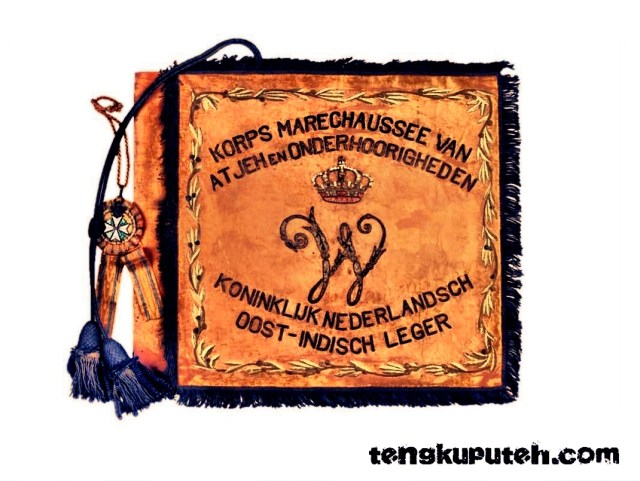
Bendera Korps Marsose sumber Dutch Document

Marsose Corps flag source Dutch Document

MARSOSE CORPS, THE DUTCH SPECIAL ARMY

The Marechaussee te Voet Corps, known in Indonesia as the Marsose corps, was a military unit established during the colonial period of the Dutch East Indies by the KNIL (colonial army) as a tactical response to the guerrilla resistance in Aceh. This corps has no ties to Koninklijke Marechaussee in the Netherlands.
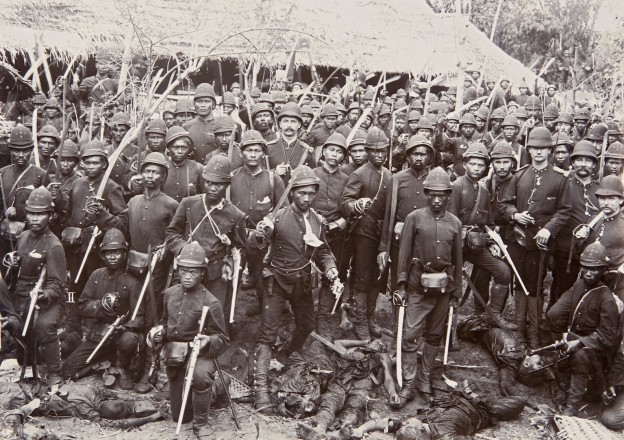
On August 6, 1897, a unit of the Marechaussee Corps, attacked the landscape of Soekoen (near Sigli) and killed more than 57 men. Only a few minutes later after their action pose while stepping on the bodies of the Aceh martyrs for photographer Christiaan Benjamin Nieuwenhuis. News of the victory was immediately sent to Batavia and the Netherlands.

Marsose was assigned in the Indies, among others in the battle against Sisingamangaraja XII in North Sumatra, which in 1907 defeated and killed Sisingamangaraja XII. In the Aceh War, Marsose controlled the mountains and jungle forests in Aceh to seek and pursue Acehnese guerrillas.

Background The Aceh War is very detrimental to the Netherlands.

In 1873 began a terrible war between the people of Aceh against the Dutch occupation. As Ibrahim recounts in his book “Perang di Jalan Allah, Perang Aceh 1873-1912”, the Acehnese war resulted in so many fatalities on both sides. Not just troops vs. troops, but also the massacre of civilians of Aceh by the Dutch Colonial army.

On the side of the Dutch colonizers themselves, the number of victims swelled by many troops who fought, did not have the ability to fight. Or it could be said that the death rate was also in vain in the Aceh War. One of the reasons why so many casualties and so terrible war, was because, in this war, guerrilla techniques were used so perfectly by the forces of Aceh when facing Dutch troops.

Ianah Wulandari, Historian of Universitas Negeri Surabaya in his article entitled “Mareschausse Corps Unit in Aceh in 1890-1930”, confirmed a series of guerrilla attacks. To the extent that, in the Aceh war, the Dutch did not give much resistance. The Dutch troops were surrounded by hard-to-find guerrillas of Acehnese warriors. Not to mention the hilly geographical conditions in Aceh, many rivers, and many mountains and forests make Acehnese insurgents increasingly difficult to trace Dutch troops. As a result, the Dutch could only defend its territory, which was captured at the beginning of the war.
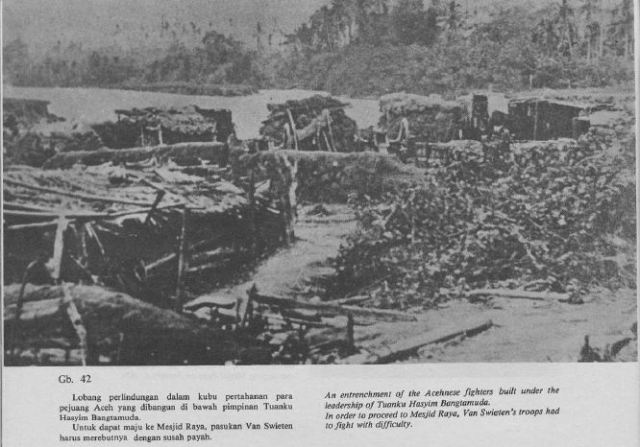
Defense hole in the stronghold of the Acehnese warriors built under the leadership of Tuanku Hasyim Bangtamuda – To go forward to attack the Great Mosque Van Swieten forces seized the fortress with great difficulty.

At first, the Dutch thought it would be easy to conquer the Aceh Sultanate. In fact, from 1873 to early 1880, the Netherlands gained so much loss, worth up to 115 million florins. The cost is so great compared to the results obtained. Dutch within that period were only able to control Aceh in the area of 74 Km2. That is, the Dutch are only able to control the territory of the capital city of Aceh; Koetaradja (Palace), and around the Great Mosque of Aceh. Beyond that, the Netherlands has no power whatsoever. The Dutch were surrounded by Acehnese rebel forces, and this also benefited the Aceh troops. Their enemy, the Dutch troops like being herded at a single point of the battle. Making it easier for the Acehnese guerrillas to conduct tactical attacks that produce a large effect. At the beginning of the Dutch battle using the strategy “Gecocentreerde Linie” or a very conventional defense pattern. From a series of failures experienced by the Dutch, they decided to use different tactics than they ever had.
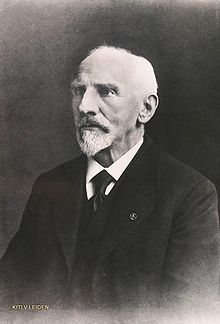
Christiaan Snouck Hurgronje. Occupation Professor, author, spy, colonial advisor.

The Dutch eventually hired an anthropologist to study the Acehnese. A person named Snouck Hurgronje was an anthropologist to “spy” and charted the hard-to-be-defeated Acehnese people in battle. One of Hurgronje’s tasks is to investigate the socio-cultural conditions of the Acehnese society so that the Dutch can enter and control the people of Aceh. Snouck Hurgronje’s research results related to Aceh and Islam War in Indonesia which have been booked are:

  1. The Achehnese;
  2. Advices C. Snouck Hurgronje during his services to Dutch Indies Government 1889-1936. 11 Volumes.

The proposed strategy of Snouck Hurgronje to Dutch Military Governor Joannes Benedictus van Heutsz was that the Keumala group (the Sultan’s party based in Keumala) with his followers was put aside. Keep attacking and holding on to the ulamas (clerics) constantly. Do not negotiate with guerrilla leaders. Establish a permanent base in Aceh Besar. Demonstrate (intent) good Dutch to the people of Aceh, by establishing langgar (small mosque), mosque, repairing irrigation roads, and helping the social work of the people of Aceh. It turned out that Dr. Snouck Hurgronje’s ploy was accepted by Van Heutz who became the military and civilian governor of Aceh (1898-1904). Then Dr. Snouck Hurgronje was appointed as his advisor.

Background Forming the Marsose Troops
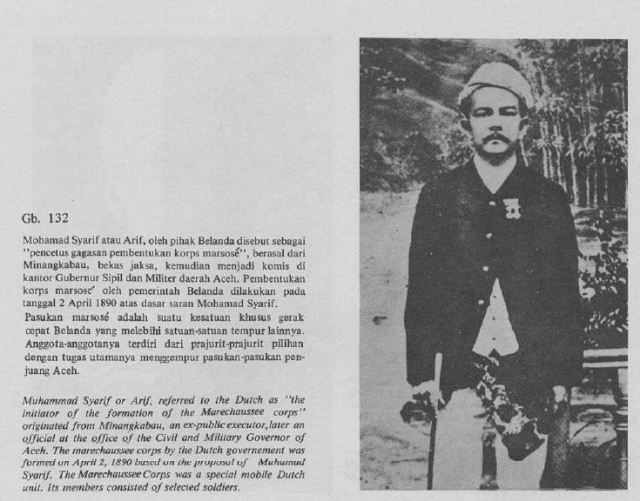
Mohammad Syarif or Arif

Furthermore, in a series of ways to rule Aceh, at the suggestion of a Minangkabau named Mohammad Syarif or Mohammad Arif a chief prosecutor in Koetaradja (Banda Aceh now). The man born in Minang sparked the formation of a special forces corps formed to confront the Acehnese guerrillas. Syarif himself was an indigenous Indonesian, who supported the Dutch government. He gave the proposal to the Dutch Military Governor in Aceh, General van Teijn and also to the Chief of Military Staff J.B. van Heutsz to form a small, highly mobile infantry combat unit. These troops are certainly anti-guerrilla forces. In 1889, the Dutch Army Command in Aceh had compiled two detachments of mobile forces with anti-guerrilla capabilities.
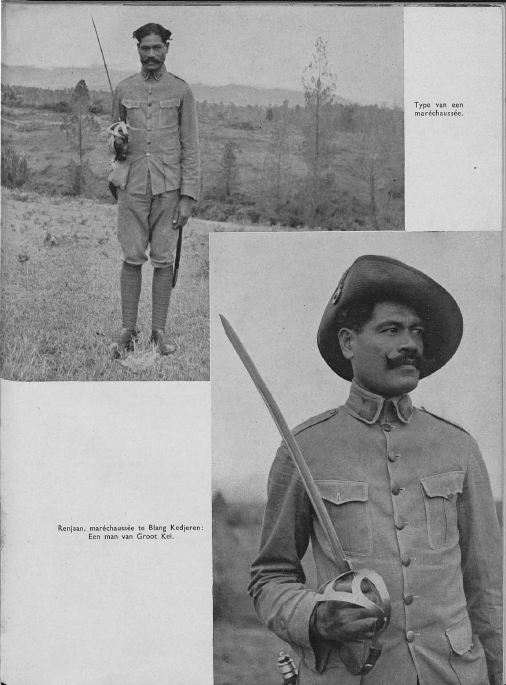
Renjaan, A Marsose – Marsose Profile

The concept of the troop then matured again into an army of Marsose who eventually proved themselves as an elite troop because some heavy tasks that are difficult to do KNIL soldiers usually managed to finish them. How not, these troops are the choice of troops from various units of the KNIL both indigenous and European.

From the proposal, the concept of troops was then matured again until finally formed an elite force named troops Marsose or also known as Mareschausse Corps which was founded on April 2, 1890, and recorded in a letter signed by the Queen of the Netherlands entitled “Staatsblad Van Nederlandsch Indie “. This corps is not just any corps, this army is an army of choice from various units of KNIL both indigenous and Europe. They are none other than an army of cold-blooded mercenaries whose members are indigenous. Only the leader is a Dutchman.

Typical Characteristics of Marsose Soldiers

Marsose is a fast-moving force with a green uniform with red curved lines on the arms and neck with red lines. Each Marsose unit consists of 20 people led by a Dutch sergeant assisted by a native corporal. Each troop usually consists of a platoon consisting of 40 people and is led by a Dutch Lieutenant.
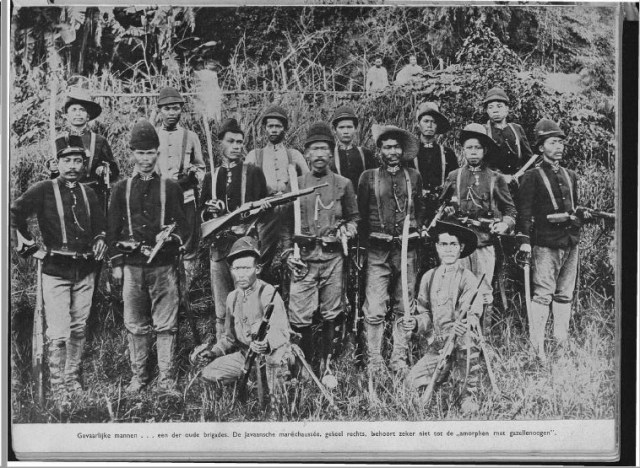
The dangerous ones, Marsose troops from Java posing after the operation into the forest in Aceh. The Marsose soldiers are Dutch Pride, they are qualified subordinates (H.C. Zentgraaff in his book The Atjeher).
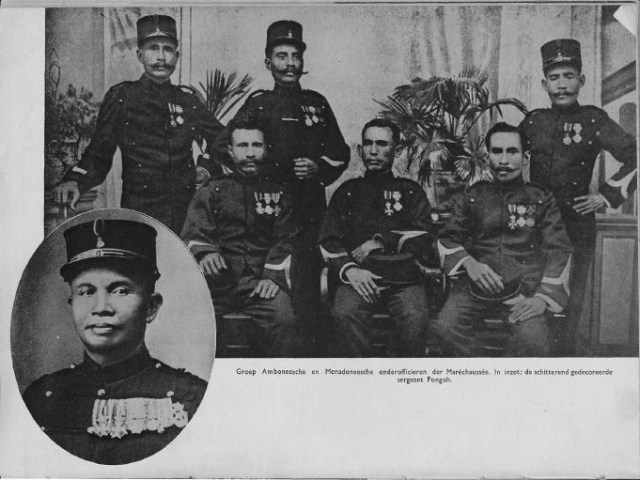
The Marsose from Ambon and Manado are posing together.

Altogether, the Marsose corps consists of 1,200 people from various nations, composed of Dutch, French, Swiss, Belgian, African, Ambonese, Menado, Javanese, as well as some Nias and Timorese. These troops, in addition, armed with carbines, are also armed with traditional weapons such as klewang(machete), rencong (knife/bayonet), and so forth. They are not dependent on military transport and are on foot. They do not rely on logistical supply lines.

This is especially useful in melee warfare, man to man, as do indigenous guerrillas. Marsose tried to follow this fighting style because guerrilla guerrillas were so effective against the usual KNILs that prevailed on the big front but bothered when attacked abruptly. These troops are certainly trained in warfare in the jungle against insurgent attacks.

The excellence offered by these troops is because they are specially trained natives, they will be more familiar with their fellow enemies. That is, it can be said, this Marsose corps is assigned to kill their own compatriots. With sophisticated equipment in his day and a large salary, Marsose troops are known as cold-blooded elite.
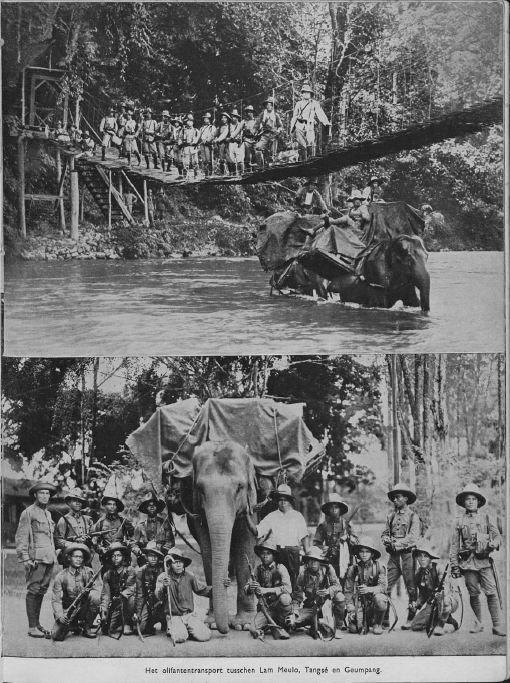
Marsose Force Expedition to Lam Meulo-Tangse-Geumpang

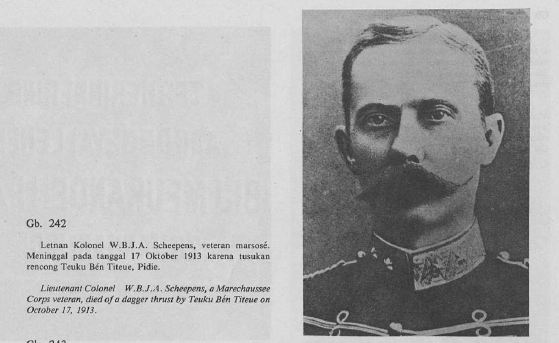
Marsose, based on historical records, does more of his work as a counter-guerrilla force in Aceh and Batak land. These two areas were very difficult to control the colonial government until the early twentieth century. Marsose in large quantities is needed there for long time tasks. Even after the war against Batak people in the Sumatra and Aceh Hinterlands was over, little resistance sometimes still happened. As experienced by a former Marsose commander, Lieutenant Colonel W.B.J.A Scheepens, who stabbed rencong (knife) Acehnese people.

Marsose is not only assigned to these two areas but also in some places such as the Nusa Tenggara Archipelago as well as Sulawesi, although with few personnel. The story of the malignancy of Marsose troops is more prevalent in Aceh and Gayo land.

Special Forces Marsose was named Kolone Macan

The presence of Marsose as a special force that is so reliable, is apparently still considered not enough by senior Dutch military officials. The Dutch officers again formed a unit within Marsose’s army named Kolone Macan. Like Marsose, Kolone Macan was also led by officers from Europeans. One of them is a Swiss officer named Hans Christofell. He is well-known for contributing to the colonial government in the war in northern Sumatra. He set up a new special force again, in which the members were elected members of Marsose.

There is a Marsose officer who is higher in rank than Christoffel, Captain (later Lieutenant Colonel) Scheepens. After various considerations, the Dutch military policy-makers came to the conclusion that the sadistic work of the executioner was not suitable for Scheepens, although Scheepens was quite willing to do even heavy military tasks such as fighting for days in the forest. In the eyes of the policymaker, Christoffel is considered more suitable to lead a group of executioners. Christoffel finally departed to Cimahi, were standing a garrison of Dutch troops there. Here Christoffel met with many veteran Marsose and has experience fighting in Aceh. Their presence in Cimahi was in order to rest after the heavy war in Aceh for months.

He assembled a vicious member of Marsose, a bruiser. The troop was named Kolone Macan. These troops are trained by Christoffel in Garnisun Cimahi. Their clothing is gray-green in the collar of her shirt with two bloody fingering blisters. Of course, the red necktie looks scarier. They are known as the creepy troops with the nickname ‘cold-blooded killer’.

After resting for a long time, the Martians felt that they wanted to go back to war in Aceh again. The world of Marsose is definitely not a world of peaceful barracks, their world is war in the forest, as in Aceh. During the peaceful Cimahi barrack, the Marsose was also given the theory of war, but it was less responded to by low-educated marsose. They do not need theory in warfare but in battle. Naturally, the theory of war was not even digested Marsose warriors. They know better and love to fight. Another routine that they hate in the barracks is that several times a day have to line up. The marsose exercise is not firing a gun, but rather playing a klewang (machete).

In Cimahi, Christoffel picked up some brigade commanders who were usually the best sergeant Marsose. Those who are tired of living in the garrison are clearly a priority. These troops are made up of 12 marsose brigades who have been trained again in Cimahi. How well trained they are now. In the front row of Kolene Macan‘s troops is the unmarried Marsose. Obviously, they can fight more freely because they will not think about their children and their wives.

The way the troop’s work is crueler than Marsose before. They do execution on the spot. This is crazy, as one of Marsose Schriwanek’s commanders feels. Though he was a rough man, he saw the workings of Kolone Macan, perceived by the officer, to be completely outrageous when doing Sweeping. They cleaned the guerrilla movement of the people’s resistance cruelly from the lowlands. They do their work briefly and thoroughly.

The strong reaction to the work of Kolone Macan also emerged from the Dutch military itself. The battle they carried out in Aceh was outrageous. This reaction came from a Dutch officer who was not from a mercenary background. Finally, the command over the Aceh region was changed from van Daalen to Swart. Due to the change of command, the ruthless way of Kolone Macan was slowly removed. The troops once trained and led by Christoffel were then switched command to van der Vlerk. This new commander, like the demands of some Dutch officers who hated the cruelty of Van Daalen and Christoffel, began to change the nature of the Kolone Macan army. These troops disappeared for a long time and became just regular Marsose.

Kolone Macan is the cruelest part of the corps named Marsose and only plunges into the Aceh front only. The Colonial Government apparently did not want to be an army of organized executioners, for the colonial government, just marsose the cruelest troops they had. However, resistance to colonial policy is unpredictable when it occurs and this is the reason why Marsose continues to be preserved despite its diminishing role. Marsose did not sound great again when Japan landed in Indonesia.

Photos of the cruelty of Long March Marsose troops to Gayo under the leadership of General C.G.E van Daalen.
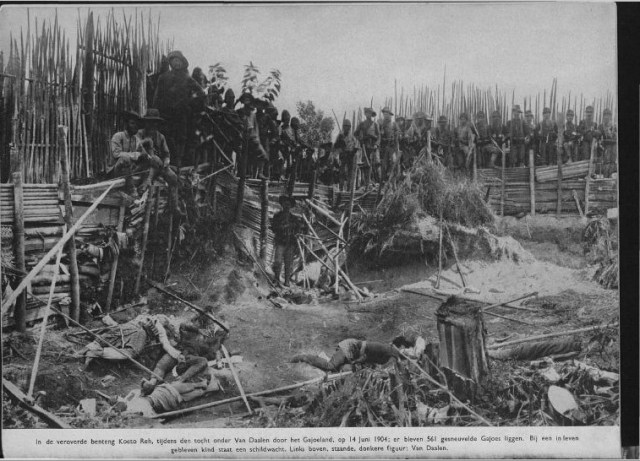
The conquest of Koeta Reh Fortress, an operation under the leadership of Van Daalen in Gayo Land. The photo was taken on June 14, 1904. Part of the Aceh War (1873-1904)
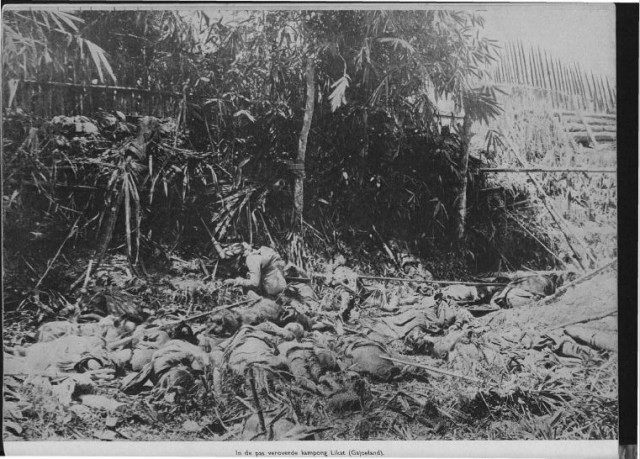
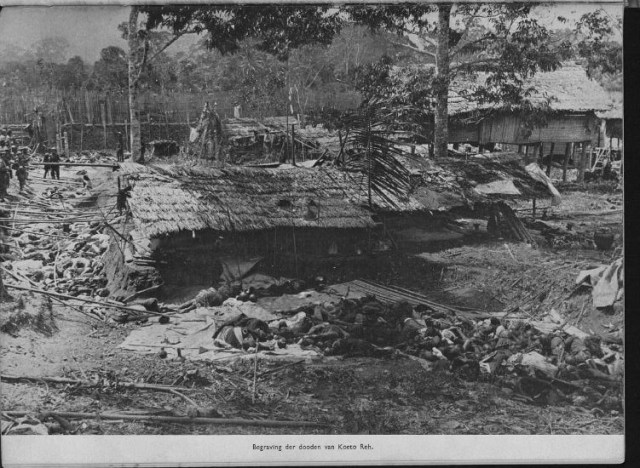
All the inhabitants of Koeta Reh fortress, women and children were massacred by the Van Daalen-led Dutch troops (Aceh War 1873-1904)
Dutch cruelty in Kampong Likat Tanah Gayo, children and women were also massacred by Van Daalen’s Dutch army. Aceh War (1873-1904).
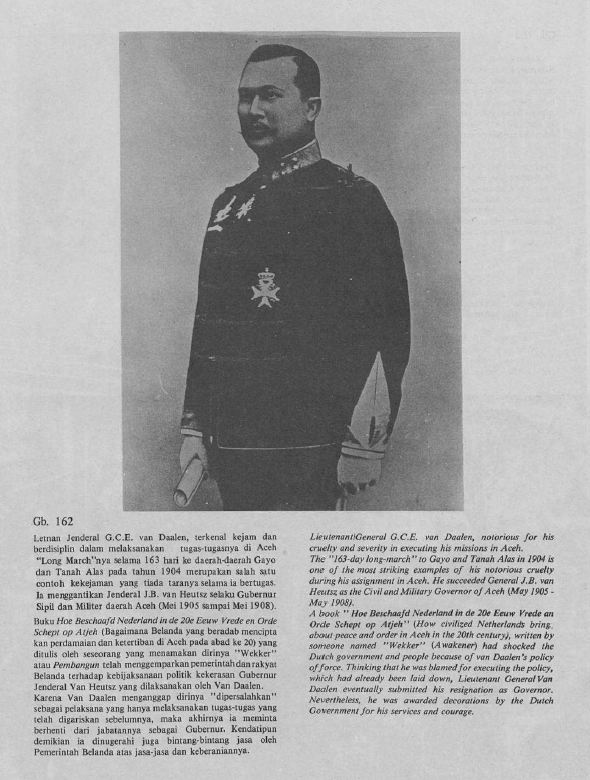
Lieutenant General G.C, E. van Daalen one of Marsose’s most violent leaders – During the Long March led for 163 days – He ordered the burning of the village – Killing women and children.

End of the Marsose Corps.
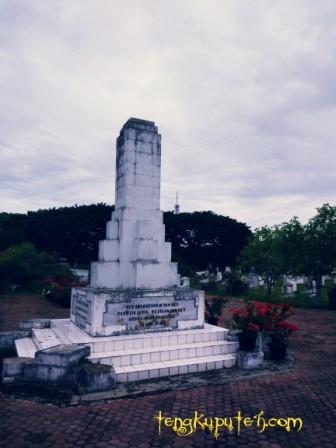
Tugu Marsose

The honorary monument was built by the owners of plantations in East Sumatra to honor the 40th anniversary of the Marsose corps (1930) in Aceh. In 1930 also Marsose troops in Indonesia were dissolved by the Dutch East Indies colonial government

As a result of cruelty outside the limits of humanity, Marsose Corps was finally dissolved by the Dutch themselves. The story of Marsose’s history after the Aceh war was gone. In 1930 Marsose troops in Indonesia officially disbanded. As a result, the Dutch troops were sharp as they were during the Aceh War, easily conquered by the Japanese in the Second World War.

The heritage of Marsose.

The Dutch special forces tradition in Indonesia was revived by Lieutenant Colonel W.B.J.A Scheepens’s son, Captain W.J. Scheepens when the Dutch army landed in 1945. Captain Scheepens developed his idea of forming Special Forces (Speciale Troepens) so that the KNIL leadership approved it by establishing Depot Speciale Troepens (DST) on July 15, 1946.

DST troops characteristic of green-coated is commandeered by Captain W.J Scheepens personnel are also recruited from various tribes and nations. These troops were given strategic training and command tactics in various places ranging from Polonia, and Kalibata to finally Batujajar, Bandung.

Then on July 20, 1946, the DST commander was handed over to Westerling. Now the DST troop training ground in Batujajar is used to train Kopassus members, the elite troops of the Indonesian National Army.

Translate From: Korps Marsose Serdadu Pribumi Pelayan Ratu Belanda

About Aceh:

  1. CUMBOK WAR, A SOCIAL REVOLUTION IN ACEH (1946-1947); 8 April 2017;
  2. CIVILIZATION WITHOUT WRITING; 13 April 2017;
  3. ACEH THE FIRST SOVEREIGN COUNTRY TO RECOGNIZING THE INDEPENDENCE OF THE NETHERLANDS; 27 April 2017;
  4. VISITING THE EXHIBITION ACEH TOMBSTONE AS AN ISLAMIC CULTURAL HERITAGE IN SOUTH-EAST ASIA; 16 May 2017;
  5. DUTCH RAID OPERATION AGAINST CUT MEUTIA (1910); 20 May 2017;
  6. SAMUDERA PASAI AS THE FIRST ISLAMIC KINGDOM IN SOUTHEAST ASIA; 6 June 2017;
  7. ISLAMIC SHARIAH WHO IS AFRAID, A CASE STUDY IN ACEH; 13 June 2017;
  8. ACEH WOMEN FULL POWER; 13 June 2017;
  9. DUSK IN MALACCA; 4 July 2017;
  10. GOLD, INFIDELS, AND DEATH; 10 July 2017;
  11. MANTE THE LOST PYGMY TRIBE; 13 July 2017;
  12. HOW TO TELL HISTORY; 14 August 2017;
  13. THE ORIGIN OF THE COFFEE CULTURE IN ACEH; 19 August 2017;
  14. THE UNTOLD STORY ABOUT HISTORY OF THE COMMUNIST PARTY OF INDONESIA IN ACEH PROVINCE; 28 September 2017;
  15. WHEN CRITICISM IS FORBIDDEN; 14 October 2017;
  16. EXPLOITATION OF NATURAL RESOURCES, WHAT IS IT GOOD FOR ACEH; 5 November 2017;
  17. PEUCUT KHERKOFF, ACEH-DUTCH WAR MONUMENT; 12 November 2017;
  18. THE PRICE OF FREEDOM; 5 December 2017;
  19. ACEH CRAZY OR ACEH PUNGO; 25 February 2018;
  20. WHEN ACEH ASKED TO BECOME A VASSAL OF THE OTTOMAN EMPIRE; 9 April 2022;
Posted in History, International, Opinion, Reportase, Story | Tagged , , , , , , , , , , , , , , , , , , | 7 Comments

ADIOS ANDALUCIA

Reality perhaps only perception.

ADIOS ANDALUCIA

This Arab horse is tired of running. Climb the hill through the night to the meeting place. Today I Abdurrahman represents the emirate of Granada, the only Islamic state that last existed in Andalucia. It is heartbreaking to face today who must attend the birthday of the lady of Castilla. After Cordoba and Sevilla subdued, I had no choice but to reverence the invitation of Henry IV, King Castilla who had a celebration to please his daughter Juana. Maghrib State is sealed by the Atlantic Ocean, Turkey Ottoman still busy fighting in the east, Baghdad capital of the Islamic world has been through a hundred years destroyed by the Mongols. The country of Granada lives alone here, in Southern Europe surrounded by Castilla, Aragon, and Navarre plus the Portuguese Empire. The power of an inch made me have to let myself down here. Guadalquivir welcomes the commander to celebrate the party where the light of Islam has ever shone.

Battle of Yarmuk (Arab: معركة اليرموك) in August 636. The beginning of the first major wave of Muslim conquests out of Arabia.

“Do not go, my son, this could be a trap.” Said, my mother. But the fate of the emirate of Granada is determined today and I can’t refuse. The king of Portugal could have refused to send a messenger because he was still angry with the failure of an arranged marriage with Princess Isabella, the younger sister of King Castilla. But I can’t refuse this invitation. The fate of Granada is at the end of the horn. The emirate of Sevilla, the City of Cordova has fallen. There is no independent Muslim taifa again in Andalusia except the emirate of Granada. This is a time when self-worth is worthless.

“Welcome, Boabdil. Finally, the emir of Granada will humble himself and keep his promise to be present. “Ferdinand Prince Aragon greeted cheerfully, my arrival.

Coastal Maghrib, North Africa. 1497 AD

“History never sided with those who kept their promises.” The words of King Ferdinand of Aragon repeated all the refugees from Andalucia ringing in my ears, what is my day? The emirate of Granada was subdued. I have to leave the land I love, Andalucia. Just five years ago and the inquisition began.

Kingdom Castilla and Aragon have betrayed the Treaty of Granada. Every Muslim left in the Iberian peninsula only has three choices; go, die, or convert to Catholic. Denying the covenant of religious tolerance, which I have ever tried so hard with. As a last effort, I keep so much blood from spilled Muslims, after the war against the combined armies of Castilla, Aragon and the Portuguese was over. Five years ago, I had left Andalusia. A clause of the covenant I must implement for peace.

Because of the time, now I can see clearly my folly. Yes, my mistake is to love the Iberian peninsula. I miss every tree there, I love the flow of the river and the people who live in the shade. Cities that have a lighted street. Even London in the North is still muddy. I feel like I have it all, but I’m not! And it all weakens me, it is not proper for a desert son to have a weak heart.

I am ashamed of my foolishness, I have embarrassed the ancestors. Indeed I have put the effort of Thariq ibn Ziad to conquer the Iberian Peninsula, seven hundred years ago. And I surrender to fate, if I later, Abdurrahman is remembered as the worst Muslim fighter and leader, all the time. Adios Andalusia that I love and will never see again.

I cried so much, “Abdurrahman from Granada why are you crying like a woman? While you are not fighting like a real man?” Mother scolded me. She was annoyed, remembering how I avoided total war by surrendering one day in 1492. It had the ability to repeat itself, but a man had no power back in time.

And reality perhaps only perception.

Alhambra

People say the past is always in place, and only distorted memories are always carried away where the foot stepped. Time devours everything including memories but unaware, perception wraps, stores in burrows of memories, presents with nostalgic spices. Until the memorable snippet feels sweeter or bitter than it should be. When we try to taste it again, we are disappointed.

Perhaps the reality has indeed changed. Time dispels its toughness to survive. Perhaps we alone have gone far from the past. Too complex and too high. Then miss and scrap the memories from the heap of reality. Then we encounter something we can’t digest anymore.

Perhaps a mistake or more precisely our stupidity, is using perceptions of the present, for an expectation of the past? Or even reversed? Who knows?

Translate From: Selamat Tinggal Andalusia

Another Story:

  1. HOW TO TURN LEAD INTO GOLD; 3 April 2017;
  2. DIFFERENT NARCISSUS; 7 April 2017;
  3. YUKIMURA SANADA, THE LAST GENERAL; 10 April 2017;
  4. THE LAST WITCH; 10 April 2017;
  5. ALI AND MALENA, A LOVE STORY; 11 April 2017;
  6. TOKUGAWA IEYASU, THE ASURA; 19 April 2017;
  7. BHISHMA’S DEATH; 21 April 2017;
  8. BEHIND THE SCENES MACHIAVELLI WROTE THE PRINCE; 23 April 2017;
  9. SPEECH OF THE BIRDS; 25 April 2017;
  10. THE NOBLE VEIL, ODA NOBUNAGA; 13 May 2017;
  11. LETTER TO LISA; 9 June 2017;
  12. GATE WITHOUT GATE, THE MILITARY STRATEGY OF IEYASU TOKUGAWA; 10 JUNE 2017;
  13. DUSK IN MALACCA; 4 July 2017;
  14. THE RIVERMAN; 18 July 2017;
  15. AFTER THE REVOLUTION ENDED; 28 July 2017;
  16. FRIENDSHIP BETWEEN GOATS AND WOLVES; 29 October 2017;
  17. A NOTE FROM A LOSER; 10 November 2017;
  18. TESTAMENT FROM HANG TUAH; 25 November 2017;
  19. FOR ONE WEEK IN LOVE; 27 November 2017;
  20. INTERVIEW WITH THE DEVIL; 17 January 2018;
Posted in Fiction, International, Story | Tagged , , , , , , , , , , , , , , , , , , , , , , , , , | 3 Comments

DI TEPIAN PANTAI PULAU BUNTA

Laut yang kian merahkan warna-warna tengelam – Pulau Bunta

DI TEPIAN PANTAI PULAU BUNTA


Bersama langit merah mega-mega tenggelam

Sembilu menghentak kemudian membatu

Digugusan pulau jauh ini

Asing, terasing dan semakin asing


Debur-debur ombak -Pantai Pulau Bunta

Debur-debur ombak sejenak menyapu kegundahan

Sejenak kulupakan rasa rinduku

Sepoi-sepoi angin mengalun lembut dipipiku

Sebentar merampas kegalauan


Digugusan pulau jauh ini – Pulau Bunta

Tapi kemudian, rindu kian menghujam

Duduk termenung menghayati hidup

Jiwa yang haus nan sepi ini

Tak sanggup menahan lebih dari satu hari lagi


Pulau Bunta, 4 Maret 2018

Posted in Cerita, Kisah-Kisah, Photography, Puisiku | Tagged , , , , , , , , , , | 8 Comments

ACEH CRAZY OR ACEH PUNGO

The word “Pungo” is an ancient word that is equivalent to the Acehnese language meaning “crazy” or is a term used when a person does things beyond reasonable limits.

ACEH CRAZY OR ACEH PUNGO

DEFINITION ACEH PUNGO

Aceh Pungo (Bahasa Indonesia: Aceh Gila) is known in Dutch by the name of Aceh Moorden. The word “Pungo” is an ancient word that is equivalent to the Acehnese language meaning “crazy” is a term used when a person does things beyond reasonable limits.

The morphology of the meaning of Aceh Pungo is a typical Aceh killing that the Acehnese themselves call it poh kaphe (killing the infidels). Here the warriors of Aceh no longer wage war together or in groups, but individually.

It was desperate to attack Dutchmen whether he was a soldier, an adult, a woman or a child even being targeted for murder. And this daring act of killing is done anywhere on the street, in markets, in parks or in barracks alone.

This title was popularized by a Dutch researcher named R.A Kern, as for the origin of this phrase we can browse from the following historical records:

BACKGROUND OF ACEH WAR

The Aceh army provided a persistent resistance by stemming the flow of crossing of the Dutch army. Dutch troops continue to advance through the defense of Aceh with a complete and modern tool. In this breakthrough, there was a one-on-one battle, one against an Acehnese soldier advancing with a klewang, which was difficult for the Dutch to face him at close range. But with the advantages of weaponry and the expertise of Dutch troops continue to advance.

The Dutch War in Aceh that began in 1873 to the beginning of the XX century is not yet over. Various attempts were made to end the war that has caused many casualties, both on the side of Aceh and the Dutch itself. Towards the end of the nineteenth century and in the early twentieth century, the Dutch carried out an act of violence through an elite force they called het corps marechaussee (marsose troops).

They are dangerous, Marsose troops. Dutch pride, they are capable subordinates.

By means of this violence, the Dutch expected the people or the fighters to be afraid and to stop the Dutch resistance. But what happened? The consequences of such acts of violence have generated immense hatred and resentment for the remaining Acehnese warriors, more so for their families to leave, father, son, son-in-law, relatives or relatives who have been victimized by the Dutch. According to a moderate estimate, the total victims of the Aceh-Dutch War have eliminated a quarter of the Acehnese population at the time.

ACEH PUNGO IS REACTION

To reply to the violence carried out by the Dutch, the Acehnese fighters made a way which was later termed by the Dutch under the name Atjeh Moorden or het is een typische Atjeh Moord a typical Acehnese murder that the Acehnese themselves call him poh kaphe (killing the infidels). Here the warriors of Aceh no longer wage war together or in groups, but individually. It was desperate to attack Dutchmen whether he was a soldier, an adult, a woman or a child even being targeted for murder. And this daring act of killing is done anywhere on the street, in markets, in parks or in military barracks.

The conquest of Koeta Reh Fortress, an operation under the leadership of Van Daalen in Gayo Land. The photo was taken June 14, 1904. Part of the Aceh War (1873-1904)

Dutch atrocities in Kampong Likat Tanah Gayo, children and women were also massacred by Van Daalen’s Dutch army. Aceh War (1873-1904).

All the inhabitants of Koeta Reh fortress were massacred by the Dutch troops led by Van Daalen (Aceh War 1873-1904).

This typical Aceh killing between 1910 – 1920 has occurred as much as 79 times with the victims on the Dutch side 12 dead and 87 wounded, while on the Acehnese side 49 people were killed. The peak of this murder took place in 1913, 1917, and 1928 that is up to 10 each year. While in 1933 and 1937 respectively 6 and 5 times. The number of victims in the Dutch war in Aceh for ten years at the beginning of XX century (1899-1909) as mentioned by Paul Van’t Veer in his book De Atjeh Oorlog is not less than 21.865 people of Aceh. In other words, that figure is almost 4 percent of the total population at that time. This figure after 5 years later (1914) rose to 23,198 people and counted all the fatalities (from the Aceh and the Netherlands) in the period is almost the same as that has fallen during the war of 1873 – 1899.

This is not to mention the victims who fell after 1914 to 1942. While at the end of November 1933 two Dutch children playing in Taman Sari Kutaradja (now Banda Aceh) were also victims of this Acehnese murder.

The typical Aceh killing is a stance of the spontaneity of the people who are depressed due to violence committed by the Dutch troops. This attitude is also imbued with the spirit of holy war teachings for poh kaphe (killing the infidels). In addition, there is also a desire to get martyrdom. And to take revenge which in Aceh terms is called tuengbila, a term that illustrates how fervently expels the invaders possessed by the people of Aceh.

Due to the murderous killings committed by the people of Aceh is causing Dutch officials who will be assigned to Aceh think many times. And there are those who do not want to include his family (wife-child) when assigned to Aceh. In fact there is a repatriate to the Netherlands. Dutch officials in Aceh always imagine and think about the dangers of Atjeh Moorden.

DUTCH RESEARCH ABOUT ACEH PUNGO

They can not understand how, just with a single person and armed with rencong tucked in blankets or clothes of Aceh fighters dare to attack the Dutch people, even the Dutch barracks even though. Therefore, among the Dutch people who declared the act “crazy” as impossible for a sane person, there was a term among the Dutch calling it Gekke Atjehsche (Acehnese madman), which became popular as Aceh pungo.

To study it the Dutch conducted a psychological study of the people of Aceh. In the research involved Dr. R.H. Kern, a government adviser on indigenous and Arab affairs, the results of this study suggest that the act (Atjeh Moorden) includes symptoms of mental illness. A conclusion that may contain truth, but there may also be mistakes, given the phenomena which are unattainable by the foundations of scientific thought in Atjeh Moorden. According to R.H. Kern what the people of Aceh are doing is a feeling of dissatisfaction because they have been oppressed by the Dutch because it will remain against the Dutch.

THE FAMOUS ACEH PUNGO VICTIMS

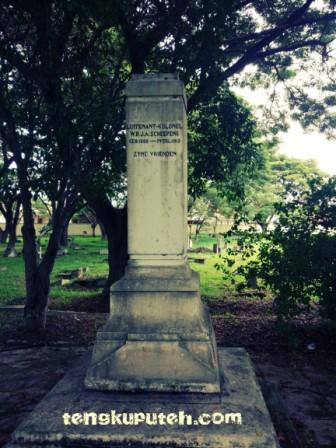
The tomb of Lieutenant Colonel (overste) SCHEEPENS, a famous researcher on Aceh as well as the marsose commander who died in 1913.

Lieutenant colonel (overste) SCHEEPENS

Lieutenant colonel (overste) SCHEEPENS, a well-known researcher on Aceh, as well as SCHMIDT who was also killed in Sigli in 1913. On the monument, we will remember how ridiculous Death Overste Scheepens, whereas he had previously received rather severe injuries in various battles in the thicket of Aceh, and he survived. The injury that caused his death from rencong stabbing suddenly, and never expected when he was presiding over a small trial in Sigli. The man who stabbed him was Uleebalang (landlord) Titeu who died instantly also chopped up by police agents who served around the office where the trial took place.

Prior to that incident, Aceh was known by the Dutch as one of the strange areas called “Gekke Atjehsche” or better known as “Atjeh Moorden” (Aceh Pungo, Aceh or Aceh Gila; Indonesia) Aceh Pungo is a desperate act of an attack against the Dutch regardless of whether he is a soldier, an adult, even a girl even a child. This action is done anywhere, in the streets, in the barracks, or in the gardens. This was the result of the Dutch violence in the Aceh war, causing deep hatred and resentment for the surviving relatives of Acehnese survivors, more so because of their son, son-in-law, relatives or tribe who had become the malignancy of the Dutch.

The victim was not necessarily Dutch, sometimes other white people who were thought to be Dutch. The victims of Aceh Pungo di Sigli, among others, a female tourist from the United States named Mrs. Mary Ware has promised Scheepens to be given the best service as she is looking for materials to write the book “FOREIGN COUNTRY THROUGH FOREIGN EYES”.

Kapitein CHARLES EMILE SCHMID

Kapitein CHARLES EMILE SCHMID, commander of the 5th Division Korp Marsose in Lhoksukon on 10 July 1933 died silly unexpectedly on a sunny morning in the military training ground in Lhokukon. Schmid was looking at a small group of soldiers practicing in the morning. He left the field to go home but suddenly he saw an Acehman passing by while giving “tabek” a greeting as the Acehnese custom of honoring the Dutch. The man’s Tabek was reciprocated by the captain but unexpectedly, as the hand of the honorable man came down, so rencong anchored to his body and caused a deadly wound. Schmid was carried away but was immediately assisted by some soldiers and he was taken to the hospital, but he could not be helped anymore. Schmid is now one of Peucut’s inhabitants.

Peucut, In these graves have been buried more than 2,200 Dutch soldiers killed during the Aceh-Dutch War.

According to Dutch sources, the man who stabbed Schmid in Lhoksukon has declared a “man who has tired of life” and sought martyrs, his name is Amat Leupon. He was killed by a soldier Asa Baoek who “for his service and courage” got a bronze cross.

COLONIAL GOVERNMENT STEPS TO PREVENT “ACEH PUNGO”

Christiaan Snouck Hurgronje. Occupation Professor, author, spy, colonial advisor.

With the conclusion that many people are mentally ill in Aceh, the Dutch government then established a mental hospital in Sabang. Dr. Latumenten who became head of Mental Hospital in Sabang then also conducted a study of the perpetrators of the Aceh assassination that by the Dutch government they are alleged to have been infected with neurological or insane. But the results of research Dr. The latumenten indicates that all the perpetrators are normal people. And that encourages them to commit such desperate deeds is due to the nature of a vengeance to the Dutch-owned that is tuengbila (Revenge). Therefore, all violent acts should not be perpetrated against the people of Aceh.

Furthermore, the Dutch East Indies government implemented a new policy known as advanced politics of ideas by C. Snouck Hurgronje. Something politics that shows the peaceful nature in which the Dutch show a gentle attitude to the people of Aceh, they no longer act only by relying on violence but with other efforts that can generate popular sympathy.

Translate From: ACEH PUNGO (ACEH GILA)

XXX

About Aceh

  1. CUMBOK WAR, A SOCIAL REVOLUTION IN ACEH (1946-1947); 8 April 2017;
  2. CIVILIZATION WITHOUT WRITING; 13 April 2017;
  3. ACEH THE FIRST SOVEREIGN COUNTRY TO RECOGNIZING THE INDEPENDENCE OF THE NETHERLANDS; 27 April 2017;
  4. VISITING THE EXHIBITION ACEH TOMBSTONE AS AN ISLAMIC CULTURAL HERITAGE IN SOUTH-EAST ASIA; 16 May 2017;
  5. DUTCH RAID OPERATION AGAINST CUT MEUTIA (1910); 20 May 2017;
  6. SAMUDERA PASAI AS THE FIRST ISLAMIC KINGDOM IN SOUTHEAST ASIA; 6 June 2017;
  7. ISLAMIC SHARIAH WHO IS AFRAID, A CASE STUDY IN ACEH; 13 June 2017;
  8. ACEH WOMEN FULL POWER; 13 June 2017;
  9. DUSK IN MALACCA; 4 July 2017;
  10. GOLD, INFIDELS, AND DEATH; 10 July 2017;
  11. MANTE THE LOST PYGMY TRIBE; 13 July 2017;
  12. HOW TO TELL HISTORY; 14 August 2017;
  13. THE ORIGIN OF THE COFFEE CULTURE IN ACEH; 19 August 2017;
  14. THE UNTOLD STORY ABOUT HISTORY OF THE COMMUNIST PARTY OF INDONESIA IN ACEH PROVINCE; 28 September 2017;
  15. WHEN CRITICISM IS FORBIDDEN; 14 October 2017;
  16. EXPLOITATION OF NATURAL RESOURCES, WHAT IS IT GOOD FOR ACEH; 5 November 2017;
  17. PEUCUT KHERKOFF, ACEH-DUTCH WAR MONUMENT; 12 November 2017;
  18. THE PRICE OF FREEDOM; 5 December 2017;
  19. ACEH CRAZY OR ACEH PUNGO; 25 February 2018;
Posted in History, International, Opinion, Reportase, Review, Story | Tagged , , , , , , , , , , , , , , , , , | 23 Comments

GENDERANG PULANG SANG RAJAWALI

Alkisah, dimasa lalu hiduplah seekor rajawali, ia adalah burung yang kuat, pemangsa yang yang kebanggaannya, bukanlah memburu tikus, melainkan pada “mengejar para malaikat.”

GENDERANG PULANG SANG RAJAWALI

Betapa sang rajawali tak akan terbang

Kembali ke sang raja dari perburuan

Bilamana dari genderang ditabuh

Sang burung mendengarkan panggilan

Marilah pulang

Alkisah, dimasa lalu hiduplah seekor rajawali, ia adalah burung yang kuat, pemangsa yang yang kebanggaannya, bukanlah memburu tikus, melainkan pada “mengejar para malaikat.” Tetapi, burung yang tinggi hati itu oleh seorang perempuan celaka, Nyonya Dunia menangkapnya. Perempuan tua itu memenjarakannya dan menutup kepalanya sehingga sang rajawali nyaris melupakan tuannya, yang karena hal musabab terpaksa harus ditinggalkannya.

Sebagaimana kejatuhan Adam dan Hawa, nasib burung rajawali itu tidak beruntung. Ia menolak makanan berupa bubur lezat yang ditawarkan oleh si perempuan tua itu, karena marah Nyonya Dunia menuangkan bubur panas yang sedang mendidih ke atas kepala burung. Ketika itulah, sang rajawali teringat akan keadaan bahagianya dahulu, ia teringat akan tuannya. Maka itulah ia berusaha untuk pulang.

Allah mampu membuat “jiwa yang lalai menjadi seorang pemandu” dan “seorang pengembara yang tak punya tujuan menjadi seorang nabi.”

Tiada orang berakal yang memahami keasyikan si pencinta, dan tiada orang yang bernalar yang mengetahui asyiknya kehilangan akal.

Sementara itu, sang raja merasa cemas mencari akhirnya sampai ke gubuk perempuan tua itu. Sang raja memohon agar rajawali dibebaskan oleh Nyonya Dunia, berapapun tebusannya. Awalnya, Nyonya Dunia menerima, sang raja menyiapkan tebusan. Ketika sang raja datang kembali, perempuan tua itu berubah pikiran. Air mata paduka mempertajam penderitaan sang rajawali.

Oleh perempuan tua itu rajawali dimasukkan kedalam kandang bersama para burung hantu. Burung hantu takut kalau-kalau rajawali itu datang menguasai kandang tersebut, maka burung-burung hantu itu menyerang.

Berkata rajawali, “Aku tak berhasrat berkuasa disini, aku akan berangkat kembali kepada raja. Janganlah kalian khawatir, karena aku tak berhasrat disini, aku berniat kembali ke rumahku. Kalian memandang reruntuhan ini sebagai tempat kediaman, tetapi bagiku ke lengan sang rajalah akan kembali.”

Para burung hantu itu tetap mencurigai rajawali sebagai penipu yang licik, lalu mereka mengejek perkataannya tentang kembali kepada sang raja. Sebagai jawaban, si rajawali menerangkan bahwa sekalipun ia tak sepadan dengan raja, ia bahkan bergembira jika harus musnah demi sang paduka. Ia harus kembali semata-mata untuk kebahagiaan sang raja.

Para burung hantu mencemooh, tak percaya bahkan bersekongkol menyerangnya. Mereka keliru memandang sang rajawali sebagai gagak, musuh alamiah para burung hantu. Maka mereka sangat mencemaskan perkataan rajawali yang dianggapnya tipu daya belaka.

Ketika semuanya seolah tak mungkin, ketika jalan kembali seolah telah ditutup oleh makhluk-makhluk pendengki itu, sandaran sang rajawali hanyalah Allah S.W.T semata, yang maha kuasa atas segala apapun. Allah bisa saja memberikan tempat Adam kepada Iblis, sebagaimana kuasa-Nya seorang Fir’aun dapat saja menjadi Musa.

Allah mampu membuat “jiwa yang lalai menjadi seorang pemandu” dan “seorang pengembara yang tak punya tujuan menjadi seorang nabi.” Kekuasaan-Nya sama sekali tidak terhalang oleh apapun, untuk menganugerahkan kelebihan kepada seseorang melebihi orang yang lain.

“Ya, Allah kuatkan hatiku untuk tidak mencintai hal-hal yang terbenam.”

Dalam kesedihan, sengsara, dan harapan sang rajawali berdoa. “Ya, Allah kuatkan hatiku untuk tidak mencintai hal-hal yang terbenam.” Terhadap masa depan yang tak pernah pasti, akan hidup yang pedih sang rajawali menyadari bahwa yang datang menyelamatkannya tidak lain, tidak bukan melainkan; Iman dan Islam. Bahwa yang memungkinkan dia keluar dari pengalaman yang paling menyakitkan adalah keyakinan penuh terhadap sang Maha Penyayang lagi Maha pengasih, berupa Iman dan Islam.

Terinspirasi oleh Kitab Tasbih at-Thuyur, “Tasbih Para Burung” yang ditulis oleh Jalaluddin Rumi.

Katalog Cerita Pendek:

  1. Sebentuk Harta; 10 Agustus 2008;
  2. Elegi Pagi Hari, Sebuah Cerpen; 13 Agustus 2008;
  3. Keindahan Sang Rembulan; 5 September 2008;
  4. Ketidakagungan Cinta; 10 Oktober 2008;
  5. Tempat Tiada Kembali; 13 Oktober 2008;
  6. Pada Pandangan Pertama; 18 Oktober 2008;
  7. Aku Tak Mengerti Kamu; 24 Oktober 2008;
  8. Mengenang Sebuah Perjalanan Cinta; 3 November 2008;
  9. Selamanya; 14 Desember 2008;
  10. Ode Seorang Bujang; 17 Desember 2008;
  11. Sepucuk Surat Untuk Lisa; 1 Januari 2009;
  12. Wasiat Teruntuk Adinda Malin Kundang; 4 Februari 2009;
  13. Tidak Sedang Mencari Cinta; 23 Februari 2009;
  14. Hanyalah Lelaki Biasa; 6 April 2009;
  15. Wasiat Hang Tuah; 29 Mei 2009;
  16. Ode Seekor Elang; 8 Juni 2009;
  17. Tak Ada Apa Apa; 7 Oktober 2009;
  18. The Last Gentleman; 4 Desember 2009;
  19. Renungan Majnun Seorang Penarik Cukai; 31 Mei 2010
  20. Yang Tak Akan Kembali; 10 Juni 2010;
  21. Kisah Sebelum Sang Pengeran Selesai; 5 Juli 2010;
  22. Penyihir Terakhir; 15 Maret 2011;
  23. Santiago Sang Pelaut; 23 Maret 2012;
  24. Iblis Namec Vs Manusia Saiya; 6 April 2012;
  25. Ashura; 13 Februari 2013;
  26. Selamat Tinggal Andalusia; 10 Maret 2013;
  27. Narsis Yang Berbeda; 28 April 2013;
  28. Istana Kosong; 4 Juni 2013;
  29. Bangsawan Pandir; 10 Juni 2013;
  30. Kematian Bhisma; 15 Juni 2013;
  31. Badai Sejarah; 29 Juli 2013;
  32. Cerita Cinta; 7 Agustus 2013;
  33. Perjalanan; 29 November 2013;
  34. Jaring Kamalanga; 29 Desember 2013;
  35. Lelaki Sungai; 19 Januari 2014;
  36. Dragon Dialog; 13 November 2014;
  37. Persahabatan Kambing Dan Serigala; 19 Desember 2014;
  38. Pesan Kepada Penguasa; 17 Januari 2015;
  39. Bagaimana Mengubah Timah Hitam Menjadi Emas; 11 April 2015;
  40. Setelah Revolusi Selesai; 6 Oktober 2016;
  41. Harlequin Dan Pohon Harapan; 30 Oktober 2016;
  42. Permufakatan Para Burung; 5 Januari 2017;
  43. Kepada Cinta Yang Berumur Seminggu; 13 April 2017;
  44. Senja Di Malaka; 14 Juni 2017;
  45. Mengecoh Sang Raja; 17 Oktober 2017;
  46. Wawancara Dengan Sang Iblis; 1 Januari 2018;
  47. Legenda Gajah Putih; 12 Januari 2018;
  48. Kisah Menteri Jaringan Melawan Kapitalisme Amerika; 17 Desember 2018;
  49. Legenda Naga Sabang; 29 Mei 2020;
  50. Legenda Gunung Geurutee; 1 Juni 2020;
Posted in Cerita, Kisah-Kisah, Kolom, Literature, Mari Berpikir | Tagged , , , , , , , , , , , , , , , , , , , , , , , , , , | 46 Comments

PENANTIAN

Kondisi keadaan kampung Kabong, (Aceh Jaya) pada November 2004, sebulan sebelum tsunami Aceh.

PENANTIAN

Kain jendela masih bergoyang

Dan gubuk tua ini

Seakan menjadi saksi

Waktu yang berjalan

Senja datang membara

Tapi tidak membelah

Mungkinkah malam membawa damai

Aku masih disini menanti dan terus menanti

Kabong, November 2004

Keadaan kampong Kabong sebelum tsunami Aceh yang terjadi pada 26 Desember 2004 adalah lanskap yang tak akan berulang kembali, pohon-pohon bakau di sebelah Barat telah musnah total, pohon-pohon kelapa disamping rumah yang menjulang telah berganti baru, pohon-pohon besar di selatan dari zaman purba telah digulung air bah dasyat. Lanskap telah berganti, sesuatu yang pernah ada menghilang dalam sekejap dan tak tertengok kembali. Yang tersisa adalah kenangan.

Tak semua warisan adalah bangunan. Tidak setiap kali ada tambatan yang tulus diri kita kini dan sebuah bangunan bersejarah. Jauh atau dekat sebuah peninggalan masa lalu tak ditentukan peta bumi, bahkan tak selamanya ditentukan oleh kronologi.

Cerita terkait:

  1. Kaki Gajah
  2. Kaki Gajah Bagian Dua

Beberapa Puisi lainnya:

  1. Selamat Sobat; 17 April 2017;
  2. Bara Api Idealisme; 27 April 2017;
  3. Aku Mencintaimu Dengan Sederhana; 15 Mei 2017;
  4. Bila Aku Pulang; 9 Juni 2019;
  5. Salam Kepada Malahayati; 17 Juli 2017;
  6. Rindu; 4 Agustus 2017;
  7. Yang Menggelandang; 27 Agustus 2017;
  8. Untuk Sebuah Senyuman; 12 September 2017;
  9. Harap Damai; 14 September 2017;
  10. Hidup; 16 September 2017;
  11. Bulan Dan Bintang; 29 September 2017;
  12. Menantikan Bayang-Bayang; 26 Oktober 2017;
  13. Diatas Puing-Puing; 6 November 2017;
  14. Renungan Malam; 19 November 2017;
  15. Seminggu Setelah Tsunami Aceh; 13 Desember 2017;
Posted in Cerita, Kisah-Kisah, Literature, Puisiku | Tagged , , , , , , , , , , , , , , , , , , , , , , , , | 6 Comments

KOPI, LEGENDA DAN MITOS

Secangkir Kopi di puncak gunung Geuruete (Pesisir Barat Aceh)

KOPI, LEGENDA DAN MITOS

Legenda dan mitos tentang kopi

Siapapun yang mencoba menelusuri asal-usul kopi mungkin akan menemukan dua legenda yang sangat terkenal. Yakni cerita “Si Kaldi dan kambingnya” dan cerita “Ali bin Omar al Shadhili”. Kedua legenda ini menceritakan awal manusia mengolah buah kopi.

Kisah Si Kaldi dan kambingnya

Cerita ini diambil dari legenda yang berkembang di Etiopia. Syahdan terdapat seorang pemilik kambing bernama Kaldi. Pada suatu hari si Kaldi mendapati kambingnya hiperaktif, melompat ke sana kemari seperti sedang menari. Setelah diselidiki ternyata kambingnya telah memakan buah beri merah dari pohon yang belum dikenali. Dengan rasa penasaran si Kaldi mencoba buah tersebut. Setelah memakannya ia mendapati dirinya berperilaku seperti kambingnya.

Kaldi dan Kambingnya yang menari

Si Kaldi melaporkan kejadian ini ke seorang biarawan. Si biarawan tertarik dengan cerita si Kaldi dan ia pun mencoba buah tersebut. Efeknya si biarawan merasa seperti mendapat tenaga ekstra, ia bisa terjaga di malam hari tanpa mengantuk untuk berdo’a. Karena rasa buah ini sedikit pahit, biarawan lain mulai mengolahnya dengan memanggang dan menyeduh buah tersebut. Sejak itu kopi dikenal menjadi minuman yang bisa memberikan kekuatan ekstra dan mengusir kantuk.

Kisah Ali bin Omar al Sadhili

Konon di kota Mocha, Yaman, hidup seorang tabib sekaligus sufi yang taat beribadah, namanya Ali bin Omar al Shadhili. Omar terkenal sebagai tabib handal yang bisa menyembuhkan penyakit dengan memadukan tindakan medis dan do’a. Namun sepak terjang Omar tidak disukai oleh penguasa lokal. Dengan berbagai intrik Omar digosipkan bersekutu dengan setan untuk menyembuhkan pasiennya. Akhirnya masyarakat kota Mocha mengusir Omar ke luar kota.

Kisah Ali bin Umar penemu kopi

Setelah terusir dari kota, Omar berlindung di sebuah gua yang ia temukan dalam perjalanan. Ia mulai kelaparan dan menemukan buah beri berwarna merah. Omar memakan buah itu untuk mengusir rasa laparnya. Karena rasanya pahit, ia mulai mengolah buah itu dengan cara memanggang dan merebusnya.

Namun biji kopi yang telah diolah Omar tetap tidak bisa dimakan. Ia pun hanya bisa meminum airnya. Tak disangka air yang ia minum memberikan kekuatan ekstra. Singkat cerita, air seduhan yang dibuat Omar mulai terkenal. Banyak orang yang memintanya kepada Omar. Hingga fenomena terdengar penguasa kota. Kemudian Omar dipanggil kembali untuk tinggal di kota. Obat mujarab berupa cairan hitam tersebut disebut dengan nama Mocha.

XXX

SEJARAH DUNIA

  1. Udik Invation; 15 Desember 2008;
  2. Jangan Melupakan Sejarah; 26 Juli 2009;
  3. Perjalanan Ini; 18 Agustus 2009;
  4. Apa Yang Machiavelli Lakukan; 1 Juni 2011;
  5. Kisah Sebelum Sang Pangeran Selesai; 5 Juli 2010;
  6. Heil Ceasar; 15 Maret 2012;
  7. Penaklukkan Kebudayaan; 30 Desember 2012;
  8. Istana Kosong; 4 Juni 2013;
  9. Bangsawan Pandir; 10 Juni 2013;
  10. Mereka Yang Bangkit (Kembali); 18 Desember 2013;
  11. Bajak Laut Pemberontak Atau Perompak; 17 Maret 2016;
  12. Membakar Buku Membunuh Intelektual; 6 Juni 2016;
  13. Menentang Tradisi Memang Tradisi; 5 April 2017;
  14. Kopi Dalam Lintasan Sejarah Dunia; 1 Mei 2017;
  15. Gula Dan Sejarah Penindasan; 4 Mei 2017;
  16. Pengulangan Sejarah; 23 Mei 2017;
  17. Bom Bunuh Diri Untuk Kemenangan Siapa; 25 Mei 2017;
  18. Memutus Lingkaran Kebencian; 8 Juli 2017;
  19. Mengapa Kita Merasa Senasib Dengan Palestina; 23 Juli 2017;
  20. Kopi, Legenda dan Mitos; 20 Februari 2018;
Posted in Cerita, Cuplikan Sejarah, Data dan Fakta, Kisah-Kisah, Kolom, Mari Berpikir, Opini | Tagged , , , , , , , , , , , , , , , , , , , , , , , , , , , , | 2 Comments

ACEH PUNGO (ACEH GILA)

Kata “Pungo” adalah sebuah kata purba yang seusia dengan bahasa Aceh yang berarti “gila” atau “crazy” merupakan istilah yang digunakan ketika seseorang melakukan hal-hal di luar batas kewajaran diluar akal sehat.

DEFENISI ACEH PUNGO

Aceh Pungo (Bahasa Indonesia : Aceh Gila) dikenal dalam bahasa Belanda dengan nama Aceh Moorden. Kata “Pungo” adalah sebuah kata purba yang seusia dengan bahasa Aceh yang berarti “gila” atau “crazy” merupakan istilah yang digunakan ketika seseorang melakukan hal-hal di luar batas kewajaran diluar akal sehat.

Secara morfologi arti dari Aceh Pungo adalah suatu pembunuhan khas Aceh yang orang Aceh sendiri menyebutnya poh kaphe (bunuh kafir). Di sini para pejuang Aceh tidak lagi melakukan peperangan secara bersama-sama atau berkelompok, tetapi secara perseorangan. Dengan nekad seseorang melakukan penyerangan terhadap orang-orang Belanda apakah ia serdadu, orang dewasa, perempuan atau anak-anak sekalipun menjadi sasaran untuk dibunuh. Dan tindakan pembunuhan nekad ini dilakukan di mana saja di jalan, di pasar, di taman-taman atau pun pada tangsi-tangsi sendiri.

Sebutan ini dipopulerkan oleh seorang peneliti Belanda yang bernama R.A Kern, adapun asal muasal frase ini dapat kita telusuri dari catatan sejarah berikut:

LATAR BELAKANG PERANG ACEH

Perang Belanda di Aceh yang meletus sejak tahun 1873 hingga awal abad XX belum berakhir. Berbagai upaya dilakukan untuk dapat mengakhiri perang yang telah banyak memakan korban, baik di pihak Aceh maupun di pihak Belanda sendiri. Menjelang akhir abad XIX dan pada awal abad XX, Belanda melaksanakan suatu tindakan kekerasan melalui sebuah pasukan elit yang mereka namakan het korps marechaussee (pasukan marsose).

Pasukan Aceh memberikan perlawanan yang gigih dengan membendung arus penyebrangan tentara Belanda. Tentara Belanda terus maju menerobos pertahanan Aceh dengan alatnya yang lengkap dan serba modern. Dalam terobosan-terobosan ini terjadilah perang tanding, seorang melawan seorang dimana prajurit Aceh maju dengan kelewang yang sukar bagi Belanda menghadapinya dalam jarak dekat. Namun dengan keunggulan persenjataan dan keahlian pasukan Belanda terus maju.

Pasukan ini dari serdadu-serdadu pilihan yang memiliki keberanian dan semangat tempur yang tinggi, dengan tugas untuk melacak dan mengejar para pejuang Aceh melawan Belanda ke segenap pelosok daerah Aceh. Mereka akan membunuh para pejuang Aceh yang berhasil ditemukan atau setidaknya membuang ke luar daerah Aceh.

Mereka yang berbahaya, pasukan Marsose. Kebanggaan Belanda, mereka adalah bawahan yang mumpuni.

Baca Juga : KOPRS MARSOSE SERDADU PRIBUMI PELAYAN RATU BELANDA

Dengan cara kekerasan ini Belanda mengharapkan rakyat atau para pejuang akan takut dan menghentikan perlawanan Belanda. Namun apa yang terjadi? Akibat tindakan kekerasan tersebut telah menimbulkan rasa benci dan dendam yang sangat mendalam bagi para pejuang Aceh yang bersisa, lebih-lebih bagi keluarga mereka tinggalkan, ayah, anak, menantu, sanak keluarga atau kaumnya yang telah menjadi korban keganasan pihak Belanda. Menurut perkiraan yang moderat total korban Perang Aceh-Belanda telah menghilangkan seperempat populasi rakyat Aceh saat itu.

ACEH PUNGO SEBAGAI REAKSI FRUSTASI RAKYAT ACEH TERHADAP KEKEJAMAN BELANDA

Untuk membalas tindakan kekerasan yang dilakukan oleh Belanda tersebut para pejuang Aceh melakukan suatu cara yang kemudian diistilahkan oleh Belanda dengan nama Atjeh Moorden atau het is een typische Atjeh Moord suatu pembunuhan khas Aceh yang orang Aceh sendiri menyebutnya poh kaphe (bunuh kafir). Di sini para pejuang Aceh tidak lagi melakukan peperangan secara bersama-sama atau berkelompok, tetapi secara perseorangan. Dengan nekad seseorang melakukan penyerangan terhadap orang-orang Belanda apakah ia serdadu, orang dewasa, perempuan atau anak-anak sekalipun menjadi sasaran untuk dibunuh. Dan tindakan pembunuhan nekad ini dilakukan di mana saja di jalan, di pasar, di taman-taman atau pun pada tangsi-tangsi sendiri.

Penaklukkan Benteng Koeta Reh, sebuah operasi dibawah pimpinan Van Daalen di Tanah Gayo. Foto diambil 14 Juni 1904. Bagian dari Perang Aceh (1873-1904)

Kekejaman Belanda di Kampong Likat Tanah Gayo, anak-anak dan perempuan juga di bantai oleh tentara Belanda pimpinan Van Daalen. Perang Aceh (1873-1904)

Seluruh penghuni benteng Koeta Reh di bantai oleh pasukan Belanda pimpinan Van Daalen (Perang Aceh 1873-1904)

Pembunuhan khas Aceh ini antara tahun 1910 – 1920 telah terjadi sebanyak 79 kali dengan korban di pihak Belanda 12 orang mati dan 87 luka-luka, sedang di pihak Aceh 49 tewas. Puncak dari pembunuhan ini terjadi dalam tahun 1913, 1917, dan 1928 yaitu sampai 10 setiap tahunnya. Sedangkan di tahun 1933 dan 1937 masing-masing 6 dan 5 kali. Adapun jumlah korban dalam perang Belanda di Aceh selama sepuluh tahun pada awal abad XX (1899-1909) sebagaimana disebutkan Paul Van’t Veer dalam bukunya De Atjeh Oorlog tidak kurang dari 21.865 jiwa rakyat Aceh. Dengan kata lain, angka itu hampir 4 persen dari jumlah penduduk pada waktu itu. Angka ini setelah 5 tahun kemudian (1914) naik menjadi 23.198 jiwa dan diperhitungkan seluruh korban jiwa (dari pihak Aceh dan Belanda) dalam kurun waktu tersebut hampir sama dengan yang telah jatuh pada masa perang 1873 – 1899.

Hal ini belum lagi korban yang jatuh setelah tahun 1914 hingga tahun 1942. Sementara pada akhir bulan Nopember 1933 dua orang anak-anak Belanda yang sedang bermain di Taman Sari Kutaradja (sekarang Banda Aceh) juga menjadi korban pembunuhan khas Aceh ini.

Pembunuhan khas Aceh adalah sikap spontanitas rakyat yang tertekan akibat tindakan kekerasan yang dilakukan pasukan Marsose Belanda. Sikap ini juga dijiwai oleh semangat ajaran perang Sabil untuk poh kaphe (membunuh kafir). Di samping itu juga adanya suatu keinginan untuk mendapatkan mati syahid. Dan untuk membalas dendam yang dalam istilah Aceh disebut tueng bila, sebuah istilah yang menggambarkan betapa membara semangat yang dimiliki oleh rakyat Aceh.

Akibat adanya pembunuhan nekad yang dilakukan rakyat Aceh tersebut menyebabkan para pejabat Belanda yang akan ditugaskan ke Aceh berpikir berkali-kali. Dan ada di antara mereka yang tidak mau mengikutsertakan keluarganya (anak-istri) bila bertugas ke Aceh. Malahan ada yang memulangkannya ke negeri Belanda. Para pejabat Belanda di Aceh selalu membayangkan dan memikirkan bahaya Atjeh Moorden tersebut.

KAJIAN BELANDA TENTANG ACEH PUNGO

Mereka tidak habis pikir, bagaimana hanya dengan seorang saja dan bersenjata rencong yang diselipkan dalam selimut atau bajunya para pejuang Aceh berani melakukan penyerangan terhadap orang-orang Belanda, bahkan pada tangsi-tangsi Belanda sekalipun. Oleh karena itu, ada di antara orang Belanda yang menyatakan perbuatan itu “gila” yang tidak mungkin dilakukan oleh seorang yang waras, maka timbullah istilah di kalangan orang Belanda yang menyebutnya Gekke Atjehsche (orang Aceh gila), yang kemudian populer dengan sebutan Aceh pungo (Aceh Gila).

Untuk mengkajinya pihak Belanda mengadakan suatu penelitian psikologis terhadap orang-orang Aceh. Dalam penelitian itu terlibat Dr. R.H. Kern, penasihat pemerintah untuk urusan kebumiputeraan dan Arab, Hasil penelitian ini menyebutkan bahwa perbuatan tersebut (Atjeh Moorden) termasuk gejala-gejala sakit jiwa. Suatu kesimpulan yang mungkin mengandung kebenaran, tetapi juga mungkin terdapat kekeliruan, mengingat ada gejala-gejala yang tidak terjangkau oleh dasar-dasar pemikiran ilmiah dalam Atjeh Moorden tersebut. Menurut R.H. Kern apa yang dilakukan rakyat Aceh itu adalah perasaan tidak puas akibat mereka telah ditindas oleh orang Belanda karena itu jiwanya akan tetap melawan Belanda.

PARA KORBAN ACEH PUNGO YANG TERKENAL

Makam Letnan kolonel (overste) SCHEEPENS, yang seorang peneliti terkenal tentang Aceh yang tewas pada tahun 1913.

Lieutenant colonel (overste) SCHEEPENS

Letnan kolonel (overste) SCHEEPENS, adalah seorang peneliti terkenal tentang Aceh, begitu pula SCHMIDT yang juga tewas di Sigli pada tahun 1913. Pada tugu tersebut kita akan terkenang betapa konyol Kematian overste Scheepens, padahal ia sebelumnja pernah mendapat luka-luka yang agak lumayan berat dalam berbagai pertempuran dihutan belukar Aceh, dan dia selamat. Adapun luka yang menyebabkan kematiannya akibat tikaman rencong dengan tiba-tiba, dan tidak pernah disangka ketika dia sedang mengetuai satu sidang pengadilan kecil di Sigli. Orang menikamnya adalah Uleebalang Titeu yang mati seketika itu juga dicincang oleh agen-agen polisi yang bertugas sekitar kantor dimana sidang itu bertempat.

Sebelum kejadian itu sebenarnya Aceh telah dikenal oleh Belanda sebagai salah satu daerah yang aneh yang dinamakan “Gekke Atjehsche” atau lebih dikenal sebagai “Atjeh Moorden” (Aceh Pungo; Aceh atau Aceh Gila; Indonesia) Aceh Pungo adalah tindakan nekat seseorang melakukan penyerangan terhadap orang-orang Belanda tak peduli apakah ia serdadu, dewasa, perempuan bahkan anak-anak sekalipun. Tindakan ini dilakukan dimana saja, di jalan-jalan, di tangsi-tangsi, atau di taman-taman. Ini terjadi akibat kekerasan Belanda dalam perang Aceh sehingga menimbulkan benci dan dendam yang mendalam bagi keluarga pejuang Aceh yang tersisa, lebih-lebih karena anak, menantu, sanak keluarga atau kaumnya yang telah menjadi keganasan pihak Belanda.

Korbannya tak mesti orang Belanda, terkadang juga bangsa kulit putih lain yang disangka sebagai orang Belanda. Korban Aceh Pungo di Sigli antara lain seorang turis wanita dari Amerika Serikat yang bernama Mrs. Mary Ware yang pernah dijanjikan Scheepens untuk diberikan layanan sebaik-baiknya karena ia sedang mencari bahan untuk menulis buku “FOREIGN COUNTRY THROUGH FOREIGN EYES”.

Kapitein CHARLES EMILE SCHMID

Kapitein CHARLES EMILE SCHMID, komandan Divisi 5 Korp Marsose di Lhoksukon pada tanggal 10 Juli 1933 mati konyol dengan tiba-tiba diluar dugaan pada suatu pagi cerah dilapangan tempat latihan militer di Lhoksukon. Schmid sedang melihat sekumpulan kecil serdadu berlatih dipagi hari itu. Ia meninggalkan lapangan tersebut untuk pulang tetapi tiba-tiba dilihatnya seorang Aceh melewatinya sambil memberi “tabek” sebuah salam sebagaimana kebiasaan orang Aceh menghormati Belanda. Tabek orang tersebut dibalas oleh kapitein itu tetapi diluar dugaannya, begitu tangan orang yang menghormatinya itu turun, begitu rencong berlabuh pada tubuhnya dan menyebabkan luka yang mematikan. Schmid terhoyong tetapi langsung dibantu oleh beberapa orang serdadu dan ia digotong ke rumah sakit, namun ia tak dapat ditolong lagi. Schmid kini menjadi salah seorang penghuni Peucut.

Pada makam-makam ini telah dikuburkan lebih dari 2.200 orang tentara Belanda yang tewas selama Perang Aceh-Belanda. ( In these graves have been buried more than 2,200 Dutch soldiers killed during the Aceh-Dutch War).

Menurut sumber Belanda, orang yang menikam Schmid di Lhoksukon itu dinyatakan sebagai “orang yang telah jemu untuk hidup” dan mencari syahid, namanya Amat Leupon. Ia mati dicincang oleh serdadu Asa Baoek  yang “atas jasa dan keberaniannya” mendapat bintang salib perunggu.

LANGKAH PEMERINTAH KOLONIAL BELANDA MENCEGAH “ACEH PUNGO”

Christiaan Snouck Hurgronje. Occupation Professor, author, spy, colonial advisor.

Dengan kesimpulan bahwa banyak orang sakit jiwa di Aceh, maka pemerintah Belanda kemudian mendirikan rumah sakit jiwa di Sabang. Dr. Latumenten yang menjadi kepala Rumah Sakit Jiwa di Sabang kemudian juga melakukan studi terhadap pelaku-pelaku pembunuhan khas Aceh yang oleh pemerintah Belanda mereka itu diduga telah dihinggapi penyakit syaraf atau gila. Namun hasil penelitian Dr. Latumenten tersebut menunjukkan bahwa semua pelaku itu adalah orang-orang normal. Dan yang mendorong mereka melakukan perbuatan nekad tersebut adalah karena sifat dendam kepada Belanda yang dimiliki yaitu tueng bila (Balas dendam). Untuk itu, seharusnya segala tindakan kekerasan jangan lagi dilakukan terhadap rakyat Aceh.

Selanjutnya, pemerintah Hindia Belanda melaksanakan kebijaksanaan baru yang dikenal dengan politik pasifikasi lanjutan gagasan yang dicetuskan oleh C. Snouck Hurgronje. Sesuatu politik yang menunjukkan sifat damai di mana Belanda memperlihatkan sikap lunak kepada rakyat Aceh, mereka tidak lagi bertindak hanya dengan mengandalkan kekerasan, tetapi dengan usaha-usaha lain yang dapat menimbulkan simpati rakyat.

XXX

Artikel-artikel tentang Aceh:

  1. PEREMPUAN ACEH FULL POWER 4 AGUSTUS 2008;
  2. MENYUSURI JEJAK DARA PORTUGIS DI ACEH 6 DESEMBER 2008;
  3. TEUKU UMAR PAHLAWAN 11 FEBRUARI 2011;
  4. FILOSOFI GOB 10 OKTOBER 2011;
  5. KEBENARAN YANG SAMAR 28 FEBRUARI 2013;
  6. GAM CANTOI TIADA 30 MARET 2013;
  7. PERANG CUMBOK SEBUAH REVOLUSI SOSIAL DI ACEH (1946-1947) 18 JUNI 2013;
  8. TSUNAMI 26 DESEMBER 2015;
  9. PERADABAN TANPA TULISAN 25 FEBRUARI 2016;
  10. SURAT TENGKU CHIK DI TIRO KEPADA RESIDEN VAN LANGEN AGAR TERCAPAI PERDAMAIAN DALAM PERANG ACEH MAKA BELANDA HARUS MEMELUK AGAMA ISLAM DI TAHUN 1885 4 NOVEMBER 2016;
  11. PARA PENYEBAR KEBOHONGAN 13 NOVEMBER 2016;
  12. MENGUNJUNGI RUMAH PAHLAWAN NASIONAL CUT MEUTIA 17 APRIL 2017;
  13. SAMUDERA PASAI SEBAGAI TITIK TOLAK ISLAM DI ASIA TENGGARA, SEBUAH UPAYA MELAWAN PSEUDO SEJARAH 24 APRIL 2017;
  14. EMAS, KAFIR DAN MAUT 20 APRIL 2017;
  15. MENGENAL LEBIH DEKAT POCUT BAREN 5 MEI 2017;
  16. OPERASI PENYERGAPAN BELANDA TERHADAP CUT MEUTIA 7 MEI 2017;
  17. MENGUNJUNGI PAMERAN BATU NISAN ACEH SEBAGAI WARISAN BUDAYA ISLAM DI ASIA TENGGARA 15 MEI 2017;
  18. KESULTANAN ACEH NEGARA BERDAULAT PERTAMA YANG MENGAKUI KEMERDEKAAN REPUBLIK BELANDA DARI KERAJAAN SPANYOL DI TAHUN 1602 18 MEI 2017;
  19. SYARIAT ISLAM SIAPA TAKUT 6 JUNI 2017;
  20. SENJA DI MALAKA 14 JUNI 2017;
  21. KRITIK KEPADA SULTAN ISKANDAR MUDA 4 JULI 2017;
  22. HIKAYAT SUKU MANTE 5 JULI 2017;
  23. TEUKU NYAK MAKAM, PAHLAWAN ACEH TANPA KEPALA 30 JULI 2017;
  24. ASAL MUASAL BUDAYA KOPI DI ACEH 1 AGUSTUS 2017;
  25. MUSIBAH TENGGELAMNYA KMP GURITA 6 AGUSTUS 2017;
  26. PERANG ACEH, KISAH KEGAGALAN SNOUCK HURGRONJE 7 AGUSTUS 2017;
  27. ACEH DI MATA KOLONIALIS 8 AGUSTUS 2017;
  28. MELUKIS SEJARAH 10 AGUSTUS 2017;
  29. NASIHAT-NASIHAT C. SNOUCK HURGRONJE SEMASA KEPEGAWAIANNYA KEPADA PEMERINTAH HINDIA BELANDA 1889-1936 14 AGUSTUS 2017;
  30. ACEH SEPANJANG ABAD 16 AGUSTUS 2017;
  31. PERANG DI JALAN ALLAH 30 AGUSTUS 2017;
  32. ACEH DAERAH MODAL 7 SEPTEMBER 2017;
  33. 59 TAHUN ACEH MERDEKA DI BAWAH PEMERINTAHAN RATU 12 SEPTEMBER 2017;
  34. KERAJAAN ACEH PADA JAMAN SULTAN ISKANDAR MUDA (1609-1636) 13 SEPTEMBER 2017;
  35. PERISTIWA KEMERDEKAAN DI ACEH 14 SEPTEMBER 2017;
  36. PASAI DALAM PERJALANAN SEJARAH 17 SEPTEMBER 2017;
  37. MATA UANG EMAS KERAJAAN-KERAJAAN DI ACEH 19 SEPTEMBER 2017;
  38. ACEH MENDAKWA 21 SEPTEMBER 2017;
  39. MISI MENCARI MAKAM PARA SULTANAH ACEH 6 OKTOBER 2017;
  40. BERZIARAH KE MAKAM SULTANAH MALIKAH NAHRASYIYAH 8 OKTOBER 2017;
  41. EKSPLOITASI SUMBER DAYA ALAM APAKAH BAGUS UNTUK ACEH 15 OKTOBER 2017;
  42. AROMA MEMIKAT DARI DAPUR ACEH 16 OKTOBER 2017;
  43. TARIKH ACEH DAN NUSANTARA 29 OKTOBER 2017;
  44. PEKUBURAN SERDADU BELANDA PEUCUT KHERKHOF DI BANDA ACEH SEBAGAI SAKSI KEDAHSYATAN PERANG ACEH 11 NOVEMBER 2017;
  45. PEMBERONTAKAN KAUM REPUBLIK KASUS DARUL ISLAM ACEH 17 NOVEMBER 2017;
  46. TUANKU HASYIM WALI NANGGROE YANG DILUPAKAN SEJARAH 19 NOVEMBER 2017;
  47. KOPRS MARSOSE SERDADU PRIBUMI PELAYAN RATU BELANDA 8 DESEMBER 2017;
  48. HIKAYAT-HIKAYAT DARI NEGERI ACEH 16 DESEMBER 2017;
  49. LEGENDA GAJAH PUTIH SEBAGAI ASAL NAMA KABUPATEN BENER MERIAH; 12 JANUARI 2018;
  50. SECANGKIR KOPI DARI ACEH; 22 JANUARI 2018;
  51. SIAPAKAH ORANG ACEH SEBENARNYA; 6 APRIL 2018;
  52. ORANG ACEH DALAM SEJARAH SUMATERA; 15 APRIL 2018;
  53. KETIKA IBNU BATTUTA MELAWAT SAMUDERA PASAI; 16 APRIL 2018;
  54. KISAH HIDUP LAKSAMANA MALAHAYATI; 18 APRIL 2018;
  55. PERANAN LEMBAGA TUHA PEUET DALAM MASYARAKAT ACEH PADA MASA LAMPAU; 5 MEI 2018;
  56. MENYINGKAP MAKNA SYAIR KUTINDHIENG SELAKU MANTRA SIHIR ACEH KUNO; 15 MEI 2018;
  57. SEJARAH KERAJAAN LAMURI; 24 JUNI 2018;
  58. KEBIJAKAN POLITIK ISLAM OLEH SNOUCK HURGRONJE SEBAGAI SARAN KEPADA PEMERINTAH HINDIA BELANDA UNTUK MENGHANCURKAN KEKUATAN ISLAM DI INDONESIA; 25 JUNI 2018;
  59. MASA DEPAN POLITIK DUNIA MELAYU; 28 JULI 2018;
Posted in Cuplikan Sejarah, Data dan Fakta, Kolom, Mari Berpikir, Opini | Tagged , , , , , , , , , , , , , , , , , , , , , , , , , , , , , , , | 119 Comments

SEGALA SESUATU MEMILIKI ASAL MULA

Abu alias Tengkuputeh

SEGALA SESUATU MEMILIKI ASAL MULA

Hari-hari berjalan terus, tanpa terasa (kita) terhempas dalam bilangan tahun yang sebelumnya tidak pernah terbayangkan. Ketika perjalanan telah (dirasa) panjang, ada baiknya kita mengingat kembali asal mula, tempat kita berasal.

Medan, 2003.

“Teungku Puteh… Teungku Puteh… Meunyoe beungeh muka mirah!!!”

Tengkuputeh kalau marah bermuka merah begitulah artinya dalam bahasa Indonesia, begitulah nyanyian anak-anak Prodip I Keuangan Medan (Jurusan Perpajakan, Penaksir Intan Pengadaian serta Kepabeanan dan Cukai) seraya berlarian kocar-kacir karena meja batu domino Abu tendang, itu semua telah membangunkan Abu dari tidur siang yang nikmat, mereka berlari seraya menjulurkan lidah mengejek lalu menertawakan dengan usil. Lha, waktu itu Abu masih berusia 19 tahun begitupun mereka saat itu, sepantaran.

Kami lulus ke STAN ketika konflik di Aceh sedang masa puncak, darurat Militer di Provinsi Aceh. Keadaan perang di Aceh membuat kami-kami berpeluang menjadi PNS di Kementerian Keuangan, sesuatu hal yang seharusnya tidak pernah kami lupakan.

Aceh, merupakan sebuah daerah istimewa pada masa itu, salah satu keistimewaannya adalah karena sejarah yang panjang. Dari masa Kesultanan Samudera Pasai dipenghujung abad XI sampai Kesultanan Aceh lebur pada awal abad XX, wilayah utara Sumatera ini merupakan penantang terbesar bagi imperialis Eropa yang datang ke Asia Tenggara. Oleh karena itu, setiap bangsa Putih lebih sering dianggap sebagai lawan, jarang sebagai kawan.

Christiaan Snouck Hurgronje. dikenal masyarakat Aceh dengan nama “Teungku Puteh”

Tengkuputeh adalah julukan, sekaligus ejekan untuk Snouck Hurgronyoe, seorang orientalis yang dikirimkan oleh Pemerintah Kolonial Belanda untuk meneliti sekaligus memata-matai tabiat, dan kultur masyarakat Aceh. Khusus mengenai Aceh dia mengeluarkan beberapa karya yang menjadi rujukan mengenai cara Belanda memadamkan perlawanan rakyat Aceh, yaitu : Aceh di Mata Kolonialis dan Nasihat-Nasihat Snouck Hurgronye Semasa Kepegawaiannya Kepada Pemerintah Hindia Belanda 1889-1936.

Maka julukan “tengkuputeh” dalam khazanah kebudayaan di Aceh bukanlah sebuah pujian, melainkan hanya olok-olok semata. Tengku yang dalam bahasa Melayu diistilahkan sebagai “bangsawan” dan dalam bahasa Aceh sebagai “orang berilmu” menjadi cacat karena ditambahi kata “puteh” yang berarti berkulit putih. Sebuah anomali, sebuah parodi. Tak heran jika situs mengandung cemooh.

15 Februari 2018, situs ini akan berusia 10 tahun. Diawali dengan postingan Prolog, sampai dengan hari ini menjadi satu dasawarsa, bukan usia yang terlalu panjang untuk ukuran anak manusia tapi dalam takaran sebuah situs bisa dikatakan cukup lama. Dari sebelumnya bernama https://tengkuputeh.wordpress.com dan berubah menjadi https://tengkuputeh.com pada 4 April 2017 ada banyak catatan dan coretan telah tertoreh disini.

Disini adalah ladang pembelajaran sekaligus silaturrahmi Abu kepada seluruh dunia, entah yang dituliskan disini bermanfaat atau tidak, kami pulangkan kepada para pembaca yang telah bersedia mampir ke laman ini. Satu dasawarsa bukanlah usia yang pantas dijumawakan, bukanlah umur yang patut merasa bijaksana. Melainkan usia untuk intropeksi dan terus berusaha memperbaiki diri.

Ya, mungkin tidak ada salahnya mengucapkan selamat atas pencapaian usia ke-10 ini, ketika mungkin tidak ada yang mengingat. Selamat satu dasawarsa, semoga tahun-tahun kedepan menjadi lebih baik, lebih menghadirkan sesuatu yang bermanfaat, tidak hanya cuap-cuap semata, seperti postingan ini. Buon Compleano Tengkuputeh!!!

XXX

SATU DASAWARSA PETUALANGAN si ABU

  1. PROLOG 15 FEBRUARI 2008
  2. PROPOSAL KAWIN 1 AGUSTUS 2008
  3. CEPAT SEMBUH TENGKU 1 AGUSTUS 2008
  4. GURUKU KEKANAKAN 1 AGUSTUS 2008
  5. PESONA GADIS MAGHRIBI 1 AGUSTUS 2008
  6. MENJADI WALI 1 AGUSTUS 2008
  7. INDONESIA SURGA DUNIA 3 AGUSTUS 2008
  8. HANYA TIGA LIMA 3 AGUSTUS 2008
  9. DIKEJAR-KEJAR WANITA 3 AGUSTUS 2008
  10. THE DIPLOMAT 3 AGUSTUS 2008
  11. THE DIPLOMAT PART II 3 AGUSTUS 2008
  12. HARI YANG INDAH 4 AGUSTUS 2008
  13. JANGAN TERLALU NAIF 4 AGUSTUS 2008
  14. DUA PULUH EMPAT TAHUN 6 AGUSTUS 2008
  15. AUDIT LAPORAN KEUANGAN 7 AGUSTUS 2008
  16. PERSAHABATAN ITU TIDAK RASIONAL 8 AGUSTUS 2008
  17. THINK GLOBALLY, DRESS LOCALLY 11 AGUSTUS 2008
  18. JOMBLO BUKAN BERARTI HOMO 12 AGUSTUS 2008
  19. LEBIH MENGGETARKAN DIBANDING ASMARA 22 AGUSTUS 2008
  20. SEBUAH INTEGRITAS 4 SEPTEMBER 2008
  21. BUMI BULAT ATAU HAMPA 11 OKTOBER 2008
  22. DINGIN SEPERTI ES KRIM 27 OKTOBER 2008
  23. MANIS, ASAM, ASIN BAHKAN PAHIT KEHIDUPAN 12 NOVEMBER 2008
  24. SELAMAT JALAN GURU 21 NOVEMBER 2008
  25. WAJAH PASARAN 1 DESEMBER 2008
  26. ANUGERAH TAK TERDUGA 2 DESEMBER 2008
  27. MENYUSURI JEJAK DARA PORTUGIS DI ACEH 6 DESEMBER 2008
  28. MIMPI BERTEMU NABI 20 JANUARI 2009
  29. KETIKA HARUS MENJADI WALI 2 FEBRUARI 2009
  30. AROMA PEREMPUAN HIJAU 9 FEBRUARI 2009
  31. MARI BICARA TENTANG KONSEP WAKTU 16 FEBRUARI 2009
  32. PENGLIHATAN FATAMORGANA 27 MARET 2009
  33. HANYALAH LELAKI BIASA 6 APRIL 2009
  34. MALAM INI BIARKAN AKU MENYENDIRI 20 APRIL 2009
  35. KEBAHAGIAAN YANG SEDERHANA 1 MEI 2009
  36. SELAMAT KEMBALI PULANG SAHABAT 25 MEI 2009
  37. LEGENDA KAKI DEWA 1 JUNI 2009
  38. RINDU YANG MALU-MALU 6 JULI 2009
  39. SALAM RINDU SELALU 9 JULI 2009
  40. MENCANDU ILMU 21 JULI 2009
  41. PERJALANAN INI 18 AGUSTUS 2009
  42. SEJARAH KEHIDUPAN 14 SEPTEMBER 2009
  43. TAK ADA APA-APA 7 OKTOBER 2009
  44. KEKUASAAN PLUIT 12 NOVEMBER 2009
  45. ANGIN 19 FEBRUARI 2010
  46. MAUT 16 MARET 2010
  47. KEKUATAN HATI 27 MARET 2010
  48. MELANCHOLIC RHAPSODY 3 MEI 2010
  49. HIKMAH NEGERI DI AWAN 17 MEI 2010
  50. SANG MAHA DURJANA 18 JULI 2010
  51. PENGELANA ILMU 16 DESEMBER 2010
  52. TIADA PESTA TANPA KERIUHAN 10 FEBRUARI 2011
  53. BERMAIN DENGAN WAKTU 21 MEI 2011
  54. AN INTERVIEW WITH BUNG HATTA 28 JUNI 2011
  55. SETIAP ORANG HINGGA KEMATIANNYA 30 OKTOBER 2011
  56. ADDIO LHOKSEUMAWE 18 NOVEMBER 2011
  57. POKER FACE 13 JANUARI 2012
  58. ANGIN DINGIN MENEPATI JANJI 22 FEBRUARI 2012
  59. TERIMA KASIH KEPADA SASTRA 29 FEBRUARI 2012
  60. SEBUAH PERJALANAN SEBUAH CERITA 28 APRIL 2012
  61. BENAK 16 SEPTEMBER 2012
  62. BUKAN MANUSIA ZAMAN INI 15 OKTOBER 2012
  63. SEBUAH KOTA BERAGAM CERITA 26 FEBRUARI 2013
  64. 29 1 MARET 2013
  65. LAPORKAN KAWANMU 24 SEPTEMBER 2013
  66. LELAKI TUA YANG MISKIN 1 MARET 2014
  67. AKHLAK 13 AGUSTUS 2015
  68. BELAJAR 19 NOVEMBER 2015
  69. TSUNAMI 26 DESEMBER 2015
  70. TANDA PEDANG YANG (AKAN) PATAH 29 FEBRUARI 2016
  71. DIMANA ADA CINTA DI SANA TUHAN ADA 7 SEPTEMBER 2016
  72. MENCOBA MENAFSIR MAKNA MIMPI BURUK 30 SEPTEMBER 2016
  73. KESUCIAN 26 OKTOBER 2016
  74. BENGKEL SASTRA 5 NOVEMBER 2016
  75. KAKI GAJAH 12 NOVEMBER 2016
  76. KAKI GAJAH BAGIAN DUA 8 JANUARI 2017
  77. BUAH TANGAN 26 FEBRUARI 2017
  78. 33 2 MARET 2017
  79. MENITI JALAN YANG LURUS 22 MARET 2017
  80. SELAMAT SOBAT 17 APRIL 2017
  81. RADIKALISME YANG TAK AKAN PERNAH MATI 9 MEI 2017
  82. AKU MENCINTAIMU DENGAN SEDERHANA 15 MEI 2017
  83. MENYONGSONG MAUT 31 MEI 2017
  84. JELAS AKU PANCASILA KARENA AKU BER-KTP MERAH-PUTIH 3 JUNI 2017
  85. KESADARAN LITERASI 8 JUNI 2017
  86. KISAH SEORANG PENGGALI SUMUR 19 JUNI 2017
  87. KRITIK KEPADA SULTAN ISKANDAR MUDA 4 JULI 2017
  88. PENJARAHAN KEBUDAYAAN 12 AGUSTUS 2017
  89. MENGAJAR SEKALIGUS BELAJAR 24 OKTOBER 2017
  90. NOMOR 48 26 OKTOBER 2017
  91. RINDU KAMI PADAMU YA RASUL 9 DESEMBER 2017
  92. REFLEKSI 12 TAHUN BERSAMA SHOGUN 125 10 DESEMBER 2017
  93. SEGALA SESUATU MEMILIKI ASAL MULA 6 FEBRUARI 2018
Posted in Asal Usil, Cerita, Kisah-Kisah | Tagged , , , , , , , , , , , , , , , , , , , , , , , , | Leave a comment