HARLEQUIN AND THE TREE OF HOPE

Harlequin, The face of a young man, the face of a lover who is kept away from his lover, by circumstance.

HARLEQUIN AND THE TREE OF HOPE

I know he’s been traveling to strange places in this world, poor as a mouse, as proud as Lucifer. His paintings abstractly depict two brown trees with a sharp sweep of green colors. Rice fields, unlike rice fields. Is it so easy to be an artist now? No attempt to imitate anything, he just sweeps the paint.

When I delivered my criticism, he argued, “This is a decent work, Harlequin and the tree of hope!”

A man who lived in the past, who was muscular but loving. Harlequin, is a servant character from the comic Dell’arte Commedia (Comedy Craft-Free Translation) of Italy, has traditionally been introduced by Zan Ganassa in the late 16th century.

Harlequin is marked with plaid costumes (black red). His role is a kind, nimble and clever servant, often acting to thwart his master’s plans, and pursue his love, Columbina. With intelligence and reason, often compete firmly as well as melancholy. Harlequin inherited the physical agility and quality of the swindler, as well as his name, derived from the mischievous, demonic character in medieval dramas.

In England, in the 17th century, Harlequin appeared on stage telling of the fool. It is routinely displayed as a clown character. Coarse and rough clowns become more romantic.

“Why do you describe it using a mask?

He smiled, a bit naughty. “That’s how I saw him.”

“Is not it because you do not have the ability to paint a face perfectly?”

He laughed, loudly hearing my words.

The devil is more realistic ambition, because of the ugly reality.

The name Harlequin is taken from a naughty “devil” or “ghost” in French folklore. The ancient French term, Hallequin, first appeared in the 11th century, by the author of the history of the Orderic Vitalis, which tells of a priest who was chased by demonic forces while roaming the Normandy coast at night. The demons are known as the Hallequin Familia. According to the medieval French version, Hallequin is depicted as a demon envoy, a black-faced exploring the countryside with a bunch of demons to chase the cursed soul from the wicked to hell. This physical appearance explains the traditional color of the black mask of Harlequin’s black. Hellequin’s first stage appearance was recorded in 1262, as a masked and veiled demon, in Jeu da la Feuilliere by Adam de la Halle. The name also appears as a demon, like Alichino in Dante’s work, Inferno. Later this Hallequin character, reinterpreted by Zan Ganassa to become Harlequin’s character as we know it today.

Harlequin is portrayed as nimble physically, agile and performing acrobat that is highly anticipated by the audience. In the early 17th century England became the inspiration of the pantomime drama, even Harlequin in the 20th century influenced the “slapstick” comedy.

“Sorry, your painting is like garbage. I expect better than this, can’t you imitate Leonardo da Vinci?”

“Paintings of beauty, shine and smooth on the outside. You’ve faced life with courage, but you are now at the top. Perhaps you have forgotten, there are people from the lower circle who see the inside of everything. And here’s what’s interesting. “He argued.

“Is that how you see it?”

“Sometimes there are beautiful things in a pile of garbage, beautiful flowers grow among the garbage. Do not you realize Arlecchino?”

Harlequin as a character in Commedia dell’arte (Comedy Craft), also known as Arlecchino.

I look at the face in front of me. Not too foreign. Akh, I know now! That’s my face before life makes me prosper. Eager, adventurous. The face of a young man, the face of a lover who is kept away from his lover, by circumstance.

He shook his head, like reading what I was thinking, he said “Not so my best friend, I am you who is now. You are the future. I am Harlequin (past), while you are (the tree) of hope. We’re in a painting, a catalyst.”

I’m silent, I feel the resonance. The natural point, that the point when a force meets that natural point. Feeling able to understand his feelings, an artist’s feelings toward other artists, someone sentimental towards a real lover, an ordinary person against a genius.

He painted with a longing feeling, the figure of a distant lover, visible figure cloudy Columbine silhouette, was hugging the moon. In my eyes, the painting looks (so) beautiful.

I became him, Harlequin. When he looked up, the black red man, (had) disappeared.

Translate From: Harlequin dan Pohon Harapan

More stories:
  1. ALI AND MALENA, A LOVE STORY; 11 April 2017;
  2. TOKUGAWA IEYASU, THE ASURA; 19 April 2017;
  3. BHISHMA’S DEATH; 21 April 2017;
  4. BEHIND THE SCENES MACHIAVELLI WROTE THE PRINCE; 23 April 2017;
  5. SPEECH OF THE BIRDS; 25 April 2017;
  6. THE NOBLE VEIL, ODA NOBUNAGA; 13 May 2017;
  7. LETTER TO LISA; 9 June 2017;
  8. GATE WITHOUT GATE, THE MILITARY STRATEGY OF IEYASU TOKUGAWA; 10 JUNE 2017;
  9. DUSK IN MALACCA; 4 July 2017;
  10. THE RIVERMAN; 18 July 2017;
  11. OH MAN, I COMPLETELY DON’T KNOW YOU; 23 July 2017;
  12. AFTER THE REVOLUTION ENDED; 28 July 2017;
  13. AN UNCLE’S STORY ABOUT THE BUTTERFLY EFFECT; 11 August 2017;
  14. FRIENDSHIP BETWEEN GOATS AND WOLVES; 29 October 2017;
  15. A NOTE FROM A LOSER; 10 November 2017;
Posted in Fiction, International, Literature, Story | Tagged , , , , , , , , , , , , , , , , , , , , , , , , | 10 Comments

PEUCUT KHERKOFF, ACEH-DUTCH WAR MONUMENT

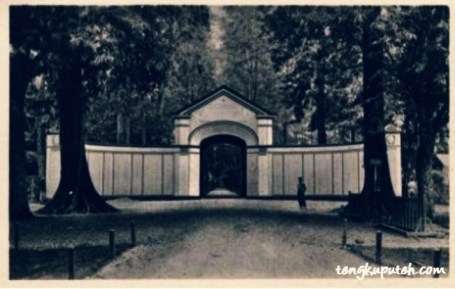
Kherkoff Peucut Gate

PEUCUT KHERKOFF, ACEH-DUTCH WAR MONUMENT

The witness of Aceh-Dutch War

Background Aceh War

The Aceh-Dutch War or abbreviated Aceh War between the Sultanate of Aceh against the Dutch from 1873 to 1904. The Aceh Sultanate surrendered in January 1904, but the Acehnese resistance to guerrilla warfare continued.

Thousands of Dutch soldiers killed in the Aceh war were buried in Peucut Kherkoff

The Aceh War, the most devastating war of the Dutch during the colonial period, according to Wikipedia, recorded more than 100,000 Dutch soldiers killed while on the side of Aceh ranged from 60,000 to 70,000 soldiers killed and 100,000 civilians were massacred by the Dutch. Because so many Dutch soldiers were killed in Aceh the Dutch made a cemetery complex called “Peucut.”

History of Peucut name according to Hikayat Aceh (Oral Tradition)

Peucut Cemetery name is taken from the epitome of Meurah Pupok that existed long before the Dutch came to Aceh

Tomb of Meurah Pupok and some of the magnates of the Aceh Sultanate that existed before the Dutch came.

Before the Dutch used the compound as a cemetery for their troops killed in battle throughout Aceh, the complex had earlier been the tombs of prominent Acehnese, even there is the tomb of the son of Sultan Iskandar Muda, Meurah Pupok who was killed after serving the caning punishment by the Sultan himself.

Peucut itself that got the nickname Meurah Pupok is often called Pocut (Children’s Favor) then from time to time changed to “Peucut”. At the time of Sultan Iskandar Muda punish his son created a hadith maja (The phrase or proverb of Aceh) which reads: “Mate anuek mupat jirat. Gadoh adat pat tamita.” This means “Dead child is known where the grave, lost custom (law) where to look.”

The history of the founding of the Peucut Kerkhoff Grave based on Dutch records.

The “Peucut” cemetery, the name of a place where Dutch soldiers were buried in Banda Aceh, became one of the most useful research materials in studying the state of Aceh during the Dutch colonial period through the records written on the tombs. The history of naming “Peucut” based on Dutch records is still very vague and unclear. The possibility is that the Dutch follow the naming that already exists in the Acehnese society.

To those who are interested in Aceh’s history of this paper to provide information on several things, among others: What and how and why is the tomb of the Dutch heroes called “Peucut”? As we know the present generation can barely recognize the name “Peucut”. The tomb of the Dutch heroes in Banda Aceh called Acehnese people with “kerkop” only

Perhaps we should wonder why the name “Peucut” documented by the Dutch in various writings as its own name for “Kerkhoff” in Banda Aceh, then only known as “kerkop” only, it is suspected that “Peucut” may come from the name of the tomb village of the heroes of the previous Dutch, Peucut location adjacent to the village that has now officially named Blower, which comes from the name “Belower Garden”.

The Origin of Kampong Blower

Peucut is located in Blower village in Banda Aceh City. And if the history is drawn if people tell “Peucut” by itself one should not forget the garden “Belower” derived from the name of a Jew, BOLCHOVER, at first was “Padang Nalueng lakoe” (reeds). When the Dutch came, they made this area into a field of maintenance and care of war horses (Cavalry), then purchased by Mr. Bolchover to become a plantation complex, still vaguely what estates are now leaving the name with the popular name “Belowor” or “Belower”, this name is also in Meulaboh, West Aceh because wherever there is what is called “Kebon Belowor”, formerly known as Sam Su Lo garden.

The names of Dutch soldiers killed in Aceh were inscribed on the wall near the entrance of Peucut Kerkoff entrance located in Blower (now).

In the past Belowor gardens have a very negative connotation. When people mention the name, people directly connect the title with things related to wild sex, but thankfully now in Blower village, there has been a mosque as a meeting center and religious communities there.

Those buried in “Peucut” Kherkoff

In these tombs have been buried more than 2,200 Dutch troops, from ordinary soldiers to the Major General, from the tribes of Indonesia to the Dutch and other nations who became Dutch soldiers. Among the graves are still records that can be read names, ranks and years and where they died. Their names are carved so beautifully on the marble that is the gate wall of honor “erepoort” the tomb of the Dutch heroes.

Lieutenant (Inf) H. Van HENNEKER was killed on Lhoong January 7, 1897

Karel Westendorp died March 10, 1896

Willem Adrianus Post Killed in the Battle of Pante Pirak January 16, 1879

According to the information of a retired K.N.I.L (Testimony of 1975) it is said that those who had been buried in “Peucut” were still less than one-third of all Aceh war victims on the Dutch side, because there are still many left in the grove of trees, rivers, hills, and valleys, and so on in Aceh. These places became “graves” for Dutch colonial troops who had not been “Peucut” or moved here.

From the Dutch record itself, we know that the first officer who was buried in Peucut after the official Peucut as their hero’s grave and given the gate of honor with the magnificent monument was the first lieutenant J.J.P. WEIJERMAN who died in the battle near the Siem Krueng Kalee mosque on October 20, 1883.

This is recorded in the book “DE HEL DEN SERIE”, volume 8 pages 25, with the following words: “Luitenant Weijerman was de eerste Officier die op Peucut na de oprichting van de monumentale poor ter aarde werd besteld”. It means “Lieutenant Weijrman was the first officer to be buried in Peucut after the location was completed by the gate of honor.”

Regarding the death of the lieutenant we can quote again “Krijgsgeschiedenis van N.I. volume 3 pages 352 – 353 and as follows: De hiernevesns vermelde colonne, te Lamnjong Verzameld herstelde op den 20 sten Oktober de verbroken gemeenschap en veroverde twee der stellingen, waarvan die bij Messig t Siem de voornaamste was. De volgenden dag bleek de derde stelling ontruimd te wezen en verliet de vijand zijn positie ten Zuiden van den weg naar Kroeëng Kalé. De actie had ten gevolge het sneuvelen van luitenant J.J.P- Weijerman en drie minderen, terwijl 3 officieren en 32 minderen werden ge-wond”. This means that: “This beside Kolone, gathered in Lamnyong, has restored their turbulence and can seize two fortresses, one of which is important fort Mosque. The next day it turned out that the third fortress had been abandoned and the enemy left their position south of the road to Krueng Kale. The battle resulted in the death of Lieutenant Weijerman and his three subordinates, while the wounded and others consisted of 3 officers and 32 subordinates.”

The Dutch admitted that the land of Aceh was “a burial” for their troops, from time to time since the Dutch began the war on Aceh, in the villages here we may have heard the elders once said that, “dilikót rumoh lön na djeurat kaphé” or roughly around the forest used to be the grave of Kompeuni. In the jungles of Aceh, there are many graves of Kompeuni including the grave of chain people who were forced to become their coolies in those days.

Also Read:  ACEH THE FIRST SOVEREIGN COUNTRY TO RECOGNIZE THE INDEPENDENCE OF THE NETHERLANDS

Dutch soldiers killed in battle, among others in Lhoksukon, Jeuram, Lamia, Blang Keujren, and so on. Many had been buried there, many were later dismantled, their bones alone were carried symbolically and buried again in “Peucut” as a sign of victory and splendor for the person, can be likened to his honor as a star of “Militair Willemsorde” which is famous for the abbreviation M.W O. which consists of several levels.

This visible monument is not a tomb but a monument of honor built by Planters plant owners in East Sumatra to honor the 40th anniversary of the Marsose corps (1930) in Aceh.

The Dutch are very careful to confer the heroic stars so that it becomes very honorable and respected in those days to be buried here. Most of the “Peucut” residents since the burial site was established and inaugurated until the end of Dutch rule in Aceh (March 1942) were those killed in battle, given the title of “dragers” and “dragers” from M WO, even “ridder van Oranje Nassau”, while the bronze star given is “vtev” (voor trouw en verdienste) that is because of loyalty, or service of many and or too much to the Dutch Colonial government.

The star user is sometimes an ordinary soldier, is the only one member of the troop who gets it while the commander of the troops may not be able to get a star of service, because “the system can all have to get also” is not in the Dutch dictionary.

The Sign of Love at Peucut Kherkoff
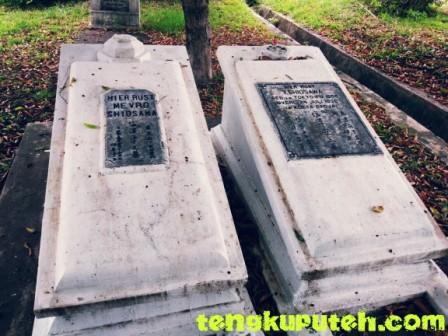
Tomb of Mr. Shiosana and wife of Tokyo Japan died 1926 was buried in Peucut Kherkoff

From the tombstones in the “Peucut” which are still readable, there are intimate, heartwarming writings about the intention of writing on the headstone, either from a mother to a son, or from a wife to her husband, as well as from friends and colleagues against a “krijgsmakker” (comrade in arms). All of it shows the seriousness of the Dutch to subdue Aceh.

Peucut Kherkoff Proof of Heroic Symbols
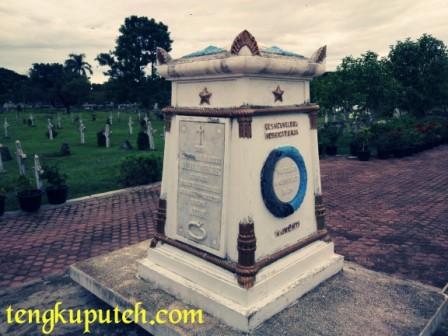
Tombs Major General Kohler who died was hit by long-range shots while leading the first Dutch aggression to Aceh (1873).

“Peucut” is not only one of the honorable gardens for the Dutch that still exists in Banda Aceh, but also a symbol of the splendor and heroism of the Acehnese who armed with a “sincere fighting spirit”, the people of Aceh is a challenge that should not be taken lightly by the Dutch because in such ancient wars the Dutch have lost some Generals among them, General Pel and General Kohler were buried in “Peucut”. Initially, General Kohler, who died on the first expedition of 1873, was buried in Jakarta, in 1978 Kohler’s body was moved from Jakarta (due to eviction) to Banda Aceh, where the graves of General Demmini and De Moulin were not buried in Peucut. All as victims of Aceh’s war on the Dutch side, which embarrasses them in the face of the international world.

The Death of the Dutch Generals in Aceh

At the side of the gate is written In Memoriam Generaal-Majoor J.H.R Kohler gesneuveld 14 April 1873

General Kohler’s death occurred near the Great Mosque of Baiturrahman, he was hit by a bullet fired by the Acehnese warriors from a distance, the sniper shot when the Dutchman became fascinated by the unexpected accuracy of the Acehnese fire.
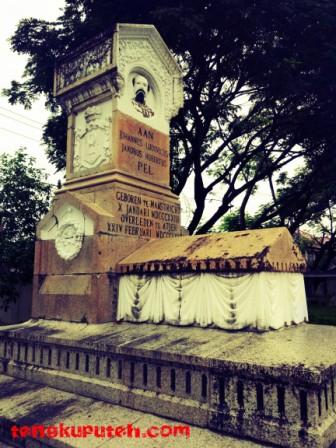
The grave monument of General Major J.L.J.H. Pel in “Peucut”, Before the death of this General served as “Civiel en Militair Bevelhebber” (Commander of civil and military) in Aceh. His body was not buried in the monument. But in one corner of complex “Peucut” without any sign. (Side view)

The grave monument of General Major J.L.J.H. Pel in “Peucut”, Before the death of this General served as “Civiel en Militair Bevelhebber” (Commander of civil and military) in Aceh. His body was not buried in the monument. But in one corner of complex “Peucut” without any sign. (Front look).
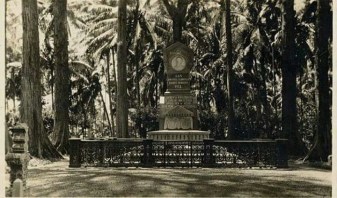
Grave of Major General J.L.J.H. Pel in Peucut, conditions in 1910.

Then Major General J.L.J.H. Pel. was killed in Aceh Besar, around the Lamnyong bridge. The Pel’s body was buried in Peucut with a rather large and modest monument, which could still be clearly read by the name and position of the high-ranking officer when he met his death on 24/25 February 1876. According to the Dutch report, Pel suffered a breakup veins.

Know the death of Major General J.L.J.H. This mast is written on the book “De Krijgsgeschiedenis van N.I.”, volume III pages 183-184, as follows:

“Na een dag rust marcheerden de troepen den 25 sten, te 6 ure voormiddadgs, ongehinderd langs den rand van Pinang en door Langgoegoep en Tonga, naar Kroeëng Tjoet, waar zij te half elf voormiddags aankwamen. Daar opende de vijand van de overzijde het vuur op de compagnie der voorhoede, die, hoewel versterkt met 2 compagnieën en een sectie artillerie, niet in staat was dit vuur tot zwijgen te brengen. Een waadbare plaats werd niet gevonden, maar meer zuidelijk een half afgebroken brug ontdekt, die onder bescherming van laatst genoemde troepen onder het vuur des vijands door de mineurs werd hersteld.

De in actie zijnde troenen passeerden nu de lagune en verdreven de Atjehers, waarna de colonne te 4 ure namiddags het bivak aan beide zijden der kreek betrok.

Daar overleed des avonds te elf ure de Bevelhebber, general Pel, aan een Slagaderbreuk. Evenals de overste RAAFF door de overmatige inspanning van zijn krachten stierf, voordat hij zijn plannen tot bestrijding, der Padri’s had kunnen volvoeren, zo werd ook de door zijn troepen zoo hooggeschatte, dappere generaal Pel, weggenomen, voordat hij de consolidatie onzer vestiging te Atjeh overeenkomstig zijn plan ten einde had kunnen brengen.”

means in English:

“After a day of rest, the troops moved on the 25th (February 1876) at 6pm without a hitch along the edge of Pinang and through Lamgugup and Tonga (meaning Tunggai) to Krueng Cut where they arrived at half past eleven. There the enemy (meaning the Aceh army) began to open a rifle attack from the attack on the Company that moved as the front troops, although reinforced by two companies and a section of troop army that was not able to stop the Aceh attack. There is no passable place, but on the far south there is again a bridge that has been half broken/destroyed under the protection of the latter troops and now we have fixed it.

Also Read: DUTCH RAID OPERATION AGAINST CUT MEUTIA (1910)

The moving troops are now passing through the shelter and dispel the Acehnese and our colonists are safely arriving at the bivouac that lies on both sides of the bay at precisely four o’clock in the afternoon.

That is where the death of our Commander-in-Chief, General Pel, at 11 pm due to the breaking or breaking of the veins (slagaderbreuk). As also the RAAFT overste met his death when it was due too tired and because of tense use of his power and his thinking before the RAAFT succeeded in carrying out his plans to root out the Padri, certainly in Minangkabau. Similarly, the death of General Pel is also highly regarded and as a brave general before he has finished carrying out his plans for the stability of our position in Aceh.”

General Demmeni (13 December 1886) and General De Moulin (July 7, 1896) died in Aceh but both officers were not found in “Peucut” and the possibility of their graves being moved to Padang or Jakarta. Their names remained only in history books but although “Peucut” did not keep their bones, the names of the high-ranking officers who led the attacks and deaths in Aceh were still clearly engraved on the Peucut erepoort.

Peucut Kherkoff Cemetery as a historical material

Monument Kapitein F. Darlang in “Peucut”. It is the only monument that still has the remains of a borstbeeld chest with no head.

“Peucut” got the nickname of the Dutch writers at that time as a graveyard that is always able to provide aspirations and historical materials to every visitor especially for those who understand Dutch. The recognition of the Dutch writers was true and reasonable because of almost every grave when it can explain itself to every visitor without the need of a guide. But what’s seen in “Peucut” now? The tomb of the Heroes of Holland was not taken care of anymore. The graves were much damaged and destroyed, the writings of almost every grave had been “pricked” and the letters were deliberately scraped. And it is regrettable by the enthusiasts who visited “Peucut” that once there was a “borstbeeld” above his grave but this borstbeelden has long since disappeared since the Dutch left Aceh in March 1942.

“Peucut” cemetery with lonely grave stones but still “able to talk” if it is not tampered with, it can communicate with visitors who are fond of Aceh’s history.

If we can read the texts on the tombs then you will smile, not because of inhumanity to the dead Dutch soldiers, but because amused and somewhat funny you remember the wiles and strategies of the war of the people of Aceh when it was at war with the Dutch.

One is the story of Kapitein Webb

Kapitein G.J.A Webb

The Acehnese at that time created a “wooden bomb” somewhat similar to a modern bomb. The wood bomb created by the Acehnese in Leubeu Minyeuk (Lhoksukon) was then able to kill a Divisiecommandant Marechaussee and some of his men as they patrolled and hunted Panglima Polem who was still being chased by the Dutch in every jungle between Pidie, Pase and even Idi, wherever there was suspicion of a “de evil” by the Dutch.

Kapitein Webb suffered a head burst so that his body was not allowed to be seen by his wife. “A large piece of a log” has been hung by a Panglima Polem soldier above a wooden tree that Webb has crossed with his men, there (on the tree) has been willing to fight the soldiers of Aceh to cut the rattan binder “bomb” is a small enemy troop pass through. The bomb fell and the head of Webb burst into flames and broke out instantly. According to the Dutch, the Acehnese soldiers always had people willing to die to kill more and more powerful enemies, but the gratitude of the man who cut the ropes was safe and returned safely to his army by producing a victim on the side of the enemy that was not small. This is history, not just Webb stories, there are thousands of other Dutch soldiers rested in “Peucut”.

The Story of Lieutenant H.P. De Bruyn who died in Seunagan (West Aceh) in 1902

Memories of the Dutch soldiers who died in 1902 one of them Lieutenant H.P. De Bruijn.

Lieutenant H.P. de Bruyn

A teenage lieutenant and brave De Bruijn then married at the palace of the Dutch governor-general in Aceh (formerly), but he chose to “Peucut” instead of being a “bride”. For the Dutch, he was considered valiant.

De Bruyn was an officer with the rank of first Dutch lieutenant assigned in Seunangan (West Aceh), he received direct orders from Van Heutsz (Dutch Governor in Aceh at that time) himself. Van Heutsz will also marry De Bruyn with a girl’s daughter a middle officer, the marriage will take place at the residence of Van Heutsz, the governor’s pavilion now.

Unfortunate for De Bruyn because he and most of his men were successfully wiped out by the Aceh fighters from Seunagan with a famous “klewangaanval”. De Bruijn suffered too many strokes so he could not be treated again. He boldly told the doctor who would take care of him on the battlefield (Seunagan): “Dokter, laat mij maar liggen, ik ga toch dood. Help liever de arme marechaussee’s!” (Doctor, let me this, I will die. Better doctors to help other poor soldiers!).

Heard such De Bruijn’s words. one of the other lieutenants approached De Bruijn’s wounded and bloodied body whispering into his ear if he had other messages. So with great difficulty Bruijn continued his will: “zeg aan mijn moeder dat ik mijn plicht heb gedaa!” (Tell my mother that I have fulfilled my duties!).

He did not remember and was not affected by his fiancee. Before he breathed his last breath, he uttered sincere words of satisfaction for their cause: “zeg aan mijn moeder, dat ik mijn best heb gedaan!” (Tell my mother that I have fulfilled my duties!). Just before death, he still remembered his mother and his duties as a soldier who was on duty. And it is not impossible that even many of them are calling for: “Leve de Koningin!” (live the Queen!)

The De Bruijn’s wound that caused his death was a spear wound (lanssteek) on his stomach, the first wound speared from a distance after he collapsed without being able to give resistance, he was bombarded with a ghastly chop. This happened around 1902 in Seunagan / West Aceh.

When De Bruijn’s body arrived at Ulee Lheu by ship from the Dutch Government, his arrival was actually to be the bride or “king of a day” while his fiancee was preparing to wear the wedding dress sent from Java by his father.

Van Heutsz firmly said to the bride: “My daughter De Bruijn has arrived but she is more important “Rest in Peucut” than sitting with you right now”. We can guess how disturbing the plight of Van Heutsz’s residence was This is a piece of history that “Peucut” can tell every visitor that if it is not broken.

Aceh Pungo and Death of two Dutch soldiers who are fond of researching Acehnese culture, Scheepens and Schmidt.

Lieutenant colonel (overste) SCHEEPENS, a well-known researcher on Aceh, as well as SCHMIDT who was also killed in Sigli in 1913. On the monument, we will remember how ridiculous Death Overste Scheepens, whereas he had previously received rather severe injuries in various battles in the thicket of Aceh, and he survived. The injury that caused his death from rencong stabbing suddenly, and never expected when he was presiding over a small trial in Sigli. The man who stabbed him was Uleebalang Titeu who died instantly also chopped up by police agents duty around the office where the trial took place.
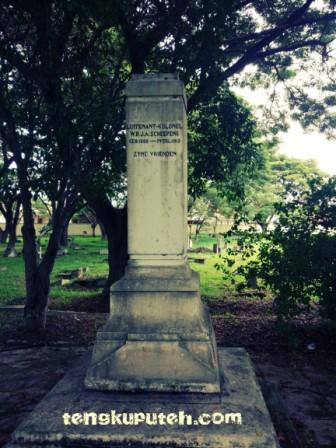
Tomb of Lieutenant Colonel (overste) SCHEEPENS, a famous researcher on Aceh who died in 1913.
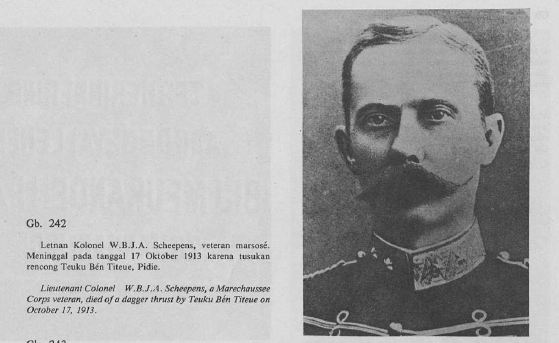
Lieutenant colonel (overste) SCHEEPENS

Before that incident, Aceh was known by the Dutch as one of the strange areas called “Gekke Atjehsche” or better known as “Atjeh Moorden”

Aceh Pungo is a desperate act of a person attacking the Dutch regardless of whether he is a soldier, an adult, even a girl even a child. This action is done anywhere, in the streets, in the barracks, or in the gardens. This was the result of the Dutch violence in the Aceh war, causing deep hatred and resentment for the families of the remaining Acehnese fighters, more so because of their son, son-in-law, relatives or relatives who had fallen victim to the malignancy of the Dutch.

The victims were not necessarily Dutch, sometimes other white people who were thought to be Dutch. The victims of Aceh Pungo di Sigli, among others, a female tourist from the United States named Mrs. Mary Ware has promised Scheepens to be given the best service as she is looking for materials to write the book “FOREIGN COUNTRY THROUGH FOREIGN EYES”.

Kapitein CHARLES EMILE SCHMID

Kapitein CHARLES EMILE SCHMID, commander of the 5th Division Korp Marsose in Lhoksukon on 10 July 1933 died silly unexpectedly on a sunny morning in the military training ground in Lhokukon. Schmid was looking at a small group of soldiers practicing in the morning. He left the field to go home but suddenly he saw an Acehman passing by while giving “tabek” a greeting as the Acehnese custom of honoring the Dutch. The “Tabek” of the person was reciprocated by the captain but unexpectedly, as the hand of the honorable man descended, so rencong anchored to his body and caused a deadly wound. Schmid was carried away but was immediately assisted by some soldiers and he was taken to the hospital, but he could not be helped anymore. Schmid is now one of Peucut’s inhabitants.

According to Dutch sources, the man who stabbed Schmid in Lhoksukon was declared “a man who has tired of life” and sought martyrs, his name is Amat Leupon. He was killed by a soldier Asa Baoek who “for his service and courage” got a bronze cross.

The phenomenon of Aceh Pungo

This typical Aceh killing between 1910 – 1920 has occurred as many as 79 times with victims on the Dutch side 12 dead and 87 injured, while on the 49th Aceh killed. The peak of this murder took place in 1913, 1917, and 1928 that is up to 10 each year. While in 1933 and 1937 respectively 6 and 5 times. The number of victims in the Dutch war in Aceh for ten years at the beginning of XX century (1899-1909) as mentioned by Paul Van’t Veer in his book De Atjeh Oorlog is not less than 21,865 people of Aceh. In other words, that figure is almost 4 percent of the total population at that time. This figure after 5 years later (1914) rose to 23,198 souls and reckoned all casualties (from the Aceh and the Netherlands) in the period is almost the same as that has fallen during the war of 1873 – 1899.

This is not to mention the victims who fell after 1914 to 1942. While at the end of November 1933 two Dutch children playing in Taman Sari Kutaradja (now Banda Aceh) were also victims of this Acehnese murder.

The typical Aceh killing is a stance of the spontaneity of the people who are depressed due to violence committed by the Dutch troops of Marsose. This attitude is also imbued with the spirit of Sabil war teachings for poh kaphe (kafir killing). In addition, there is also a desire to get martyrdom. And to take revenge which in Aceh terms is called tueng bila, a term that describes how furious the Acehnese people have.

Due to the murderous killings committed by the people of Aceh is causing Dutch officials who will be assigned to Aceh think many times. And there are those who do not want to include his family (wife-child) when assigned to Aceh. In fact, there is a repatriate to the Netherlands. Dutch officials in Aceh always imagine and think about the dangers of Atjeh Moorden.
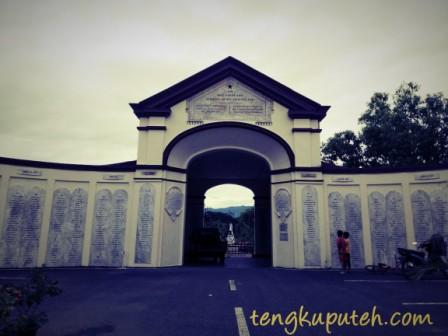
Two Acehnese Children Reading Posts At The Gate of Peucut Kherkoff.

The Gate of Peucut Kherkoff in the Dutch Colonial era (1910).

They can not understand how, just with a single person and armed with rencong tucked in blankets or clothes of Aceh fighters dare to attack the Dutch people, even the Dutch barracks even though. Therefore, among the Dutch people who declared the act “crazy” as impossible for a sane person, there was a term among the Dutch who called it Gekke Atjehsche (Acehnese crazy), which became popular with Aceh Pungo (Aceh Crazy).

To study it the Dutch conducted a psychological study of the people of Aceh. In the research involved Dr. R.H. Kern, a government adviser on indigenous and Arab affairs, the results of this study suggest that the act (Atjeh Moorden) includes symptoms of mental illness. A conclusion that may contain truth, but there may also be mistakes, given the phenomena which are unattainable by the foundations of scientific thought in Atjeh Moorden. According to R.H. Kern what the people of Aceh are doing is a feeling of dissatisfaction because they have been oppressed by the Dutch because his soul will remain against the Dutch.

With the conclusion that many people are mentally ill in Aceh, the Dutch government then established a mental hospital in Sabang. Dr. Latumenten who became head of Mental Hospital in Sabang then also conducted a study of the perpetrators of assassination typical of Aceh which by their Dutch government was alleged to have been infected with neurological or insane. But the results of research Dr. The latumenten indicates that all the perpetrators are normal people. And that encourages them to commit such desperate deeds is due to the nature of a vengeance to the Dutch-owned that is tueng bila (Revenge). Therefore, all violent acts should not be perpetrated against the people of Aceh.

Furthermore, the Dutch East Indies government implemented a new policy known as advanced politics of ideas by C. Snouck Hurgronje. Something politics that shows the peaceful nature in which the Dutch show a gentle attitude to the people of Aceh, they no longer act only by relying on violence, but with other efforts that can generate popular sympathy.

At Peucut Kherkoff There are Many Mass Graves
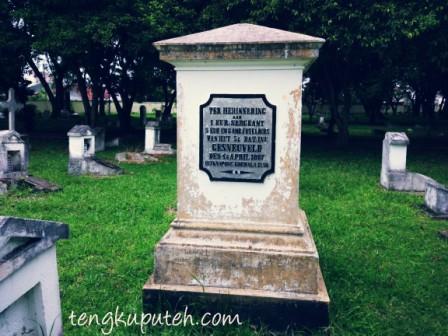
The Dutch soldiers killed in battle attacked Kampung Kuala Zuid on April 4, 1887, buried in a burrow.

The Dutch soldiers who died in battle attacked the city of Pohama on July 26, 1889, buried in a burrow.

In “Peucut” seen by you the rather wide fields in it, impressed that the fields were not contained, uninhabited underneath. Nee, by Zentgraaff and Van Goudoever in their book Sumatraantjes mentioned that it is a “graven mass” or a gigantic cemetery of marechaussee who was buried simply. There are also tombs marked with cross bars or ordinary stones but now many have been “swallowed by the time” until they become common ground. Every nearly every inch of Peucut is full of graves, as mentioned by Zentgraaff and Van Goudoever.

Buried in Peucut Kherkoff is a pride for the Dutch people who once served in Aceh

Not a few Dutch people who had served in Aceh who declared if he died, to be buried dï “Peucut” (Aceh) in the middle of all friends arms. One example of this problem is the last Dutch Governor of Aceh and the famous name is A. Ph. VAN AKEN who died in Jakarta on April 1, 1936, in his position as a member of the Dutch Indies Council. His will was fulfilled by the Dutch East Indies government and the Dutch community at that time, so until now his grave is found in “Peucut” on his grave there is the inscription “The monument is donated by the people of Aceh”. Van Aken was a “rather favored” Dutch colonist in Aceh, who at the time was due to his efforts to repair the Grand Mosque dome in Banda Aceh by adding from one dome to three using the cost of “Rubberfonds” in 1936 before he was transferred to Jakarta and died.

Peucut Kherkoff as a memento for Aceh
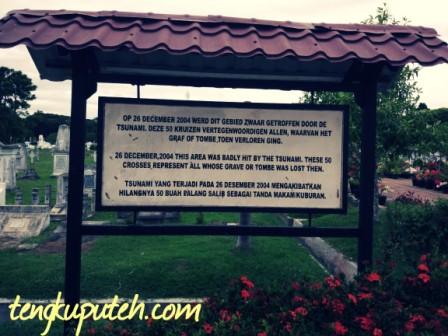
Peucut Kherkoff included an area affected by the Aceh Tsunami on 26 December 2004.

Peucut included an area affected by the Aceh Tsunami on 26 December 2004. Although the tsunami resulted in the loss of 50 cross bars as a sign of the grave in general Peucut was able to withstand the disaster.

Safe and sustaining “Peucut” is not only an advantage to the Dutch and a bond of friendship after a long period of hostility between the two nations but also “Peucut” it will be a fact that can talk about the heroism of the people of Aceh in the past.

Since the death of General Kohler, symbolically the first Dutchman to die in Aceh (though not the first Kohler killed but many other soldiers) in 1873 to the death of Kapitein A J. Haga in a rebellion in Lhoong in 1933, in “Peucut” it is always “someone who enters” at least within a week of one or more people. And this also causes the Dutch to always recognize that among the conquered areas of Indonesia, Aceh is the most difficult to secure and reconcile until they label Aceh “een fanatiek volk” or a nation that embraces stupid “fanaticism”.

Such stamp could have been done by Dutch Colonial but behind there, of course, there are also people who can understand that maintaining the hometown and even a homeland is a noble act. Zentgraaff in comparing the Acehnese with the Dutch, his own people once wrote in his book ATJEH: “nief alle Hollanders zijn helden en niet aüe Atjehcrs zijn verraders!” which means “not all the Dutch are heroes, nor are all the Acehnese belonging to traitors!”

The tomb of the Dutch Heroes “Peucut” is a testament to the memorable and respected history of Acehnese heroes. We can see that Peucut is not just a collection of dead tombstones, but is a living monument that explains the persistence of the spirit of the knights and the heroics of the Acehnese in challenging the occupation.

After already field research in Peucut Kherkoff time to go home using Suzuki Shogun 125 blue motorcycle it. See you later.

Peucut explains, not only how great the resistance of the Acehnese people against the Dutch colonialism, but has shown that the Dutch pay a high price for their presence in Aceh. We must honor and preserve these historical monuments in order to remain a great deal and a warning for posterity that our ancestors have sacrificed much for freedom.

Translate From: Pekuburan Serdadu Belanda Peucut Kherkoff Di Banda Aceh Sebagai Saksi Kedahsyatan Perang Aceh

Bibliography

  1. TJOETJE : “PEUCUT” MEMBUKA TABIR SEDJARAH KEPAHLAWANAN RAKJAT ATJEH;
  2. Hooyer’s: “DE KRIJGSGESCHIEDENIS VAN NED. INDIE” – DEEL III.
  3. Zentgraaf’s: “ATJEH”.
  4. Du Croo’s & Schmidt’s: “GENERAAL SWART, PACIFICATOR VAN ATJEH” ;
  5. GEDENKBOEK KORPS MARECHAUSSEE ATJEH 1390-1940 (susunan majoor Doup);
  6. ZENTGRAAFF/VAN GOUDOEVER’s “SUMATRAANTJES”;
  7. SAID’s “ATJEH SEPANDJANG ABAD”;
  8. MAJALAH ANGKATAN DARAT BELANDA “ONS LEGER” edisi Maret 1972.
  9. DE HELDEN-SERIE-ATJEHSCH LEGER MUSEUM-1940
  10. Paul Van’t Veer; De Atjeh Oorlog

About Aceh:

  1. CUMBOK WAR, A SOCIAL REVOLUTION IN ACEH (1946-1947); 8 April 2017;
  2. CIVILIZATION WITHOUT WRITING; 13 April 2017;
  3. ACEH THE FIRST SOVEREIGN COUNTRY TO RECOGNIZING THE INDEPENDENCE OF THE NETHERLANDS; 27 April 2017;
  4. VISITING THE EXHIBITION ACEH TOMBSTONE AS AN ISLAMIC CULTURAL HERITAGE IN SOUTH-EAST ASIA; 16 May 2017;
  5. DUTCH RAID OPERATION AGAINST CUT MEUTIA (1910); 20 May 2017;
  6. SAMUDERA PASAI AS THE FIRST ISLAMIC KINGDOM IN SOUTHEAST ASIA; 6 June 2017;
  7. ISLAMIC SHARIAH WHO IS AFRAID, A CASE STUDY IN ACEH; 13 June 2017;
  8. ACEH WOMEN FULL POWER; 13 June 2017;
  9. DUSK IN MALACCA; 4 July 2017;
  10. GOLD, INFIDELS, AND DEATH; 10 July 2017;
  11. MANTE THE LOST PYGMY TRIBE; 13 July 2017;
  12. HOW TO TELL HISTORY; 14 August 2017;
  13. THE ORIGIN OF THE COFFEE CULTURE IN ACEH; 19 August 2017;
  14. THE UNTOLD STORY ABOUT HISTORY OF THE COMMUNIST PARTY OF INDONESIA IN ACEH PROVINCE; 28 September 2017;
  15. WHEN CRITICISM IS FORBIDDEN; 14 October 2017;
  16. EXPLOITATION OF NATURAL RESOURCES, WHAT IS IT GOOD FOR ACEH; 5 November 2017;
  17. PEUCUT KHERKOFF, ACEH-DUTCH WAR MONUMENT; 12 November 2017;
  18. THE PRICE OF FREEDOM; 5 December 2017;
  19. ACEH CRAZY OR ACEH PUNGO; 25 February 2018;
Posted in History, International, Photography, Reportase, Review | Tagged , , , , , , , , , , , , , , , , , , , , , | 22 Comments

PEKUBURAN SERDADU BELANDA PEUCUT KERKHOF DI BANDA ACEH SEBAGAI SAKSI KEDAHSYATAN PERANG ACEH

Pintu Gerbang Masuk Peucut Kerkhof

PEKUBURAN SERDADU BELANDA PEUCUT KERKHOF SAKSI KEDAHSYATAN PERANG ACEH

Latar Belakang Perang Aceh

Perang Aceh–Belanda atau disingkat Perang Aceh adalah perang antara Kesultanan Aceh melawan Belanda dimulai pada 1873 hingga 1904. Kesultanan Aceh menyerah pada Januari 1904, tapi perlawanan rakyat Aceh dengan perang gerilya terus berlanjut.

Ribuan Serdadu Belanda yang gugur pada perang Aceh dikuburkan di Peucut Kerkhof

Perang Aceh adalah perang yang paling menyengsarakan Belanda pada masa kolonial, menurut Wikipedia, tercatat lebih dari 100.000 tentara Belanda yang tewas sedang dipihak Aceh berkisar antara 60.000 sampai 70.000 tentara tewas dan 100.000 penduduk sipil dibantai oleh Belanda. Oleh karena sangat banyak serdadu Belanda yang tewas di Aceh maka Belanda membuat sebuah kompleks pekuburan yang dinamakan “Peucut.”

Sejarah nama Peucut menurut Hikayat Aceh (Oral Tradisi)

Nama Pekuburan Peucut diambil dari julukan Meurah Pupok yang telah ada jauh sebelum Belanda datang ke Aceh

Kompleks Makam Meurah Pupok dan beberapa pembesar Kesultanan Aceh yang sudah ada terlebih dahulu

Sebelum Belanda menggunakan kompleks tersebut sebagai pekuburan tentaranya yang tewas dalam peperangan diseluruh Aceh, kompleks tersebut telah lebih dahulu terdapat kuburan-kuburan orang-orang Aceh yang terkemuka, bahkan disana terdapat pusara putera Sultan Iskandar Muda, Meurah Pupok yang terbunuh setelah menjalani hukuman cambuk yang dilakukan oleh Sultan sendiri.

Peucut sendiri berasal julukan dari Meurah Pupok yang sering disebut Pocut (Anak Kesayangan) kemudian seiring zaman berubah menjadi “Peucut”. Pada saat Sultan Iskandar Muda menghukum puteranya inilah lahir hadist maja (Ungkapan atau pribahasa Aceh) yang berbunyi “Mate anuek mupat jirat. Gadoh adat pat tamita.” Artinya “Mati anak diketahui dimana makamnya, hilang adat (hukum) kemana hendak dicari.”

Sejarah berdirinya Pekuburan Peucut Kerkhof berdasarkan pencatatan Belanda.

Pekuburan “Peucut”, adalah nama sebuah tempat dimana serdadu-serdadu Belanda dikuburkan di Banda Aceh, menjadi salah satu bahan penelitian yang sangat berguna bagi kita dalam mempelajari keadaan Aceh pada zaman penjajahan Belanda melalui catatan yang tertulis pada makam-makam tersebut. Sejarah tentang penamaan “Peucut” berdasarkan catatan Belanda masih sangat samar dan kurang jelas.

Kepada mereka yang berminat pada sejarah Aceh tulisan ini untuk memberikan keterangan tentang beberapa hal antara lain: Apa dan bagaimana serta mengapa makam pahlawan Belanda tersebut disebutkan “Peucut?” Sebagaimana yang kita ketahui generasi sekarang nyaris dikenali lagi dengan nama “Peucut“. Antara lain akibat nama makam para pahlawan Belanda di Aceh disebut dengan sebutan “kerkop” saja.

Mungkin kita patut heran, mengapa nama “Peucut” yang didokumentasikan oleh Belanda dalam berbagai tulisan sebagai nama tersendiri bagi “Kerkhoff” di Banda Aceh, kemudian hanya disebut dengan sebutan “kerkop” saja, maka timbulah dugaan, bahwa “Peucut” itu mungkin berasal dari nama kampung makam para pahlawan Belanda sebelumnya, letak Peucut berdekatan dengan kampung yang kini telah resmi bernama Blower, yang berasal dari nama “Kebon Belower”.

Asal Usul Kampung Blower

Peucut terletak pada kampung Blower di Kota Banda Aceh. Dan jika ditarik sejarahnya kalau orang menceriterakan “Peucut” dengan sendirinya orang tak boleh melupakan kebon “Belower” yang berasal dari nama seorang Yahudi, yakni BOLCHOVER, pada awalnya adalah “Padang Nalueng lakoe” (alang-alang). Ketika Belanda datang, mereka menjadikan daerah ini menjadi lapangan pemeliharaan dan perawatan kuda-kuda peperangan (Kavaleri), kemudian dibeli oleh tuan Bolchover untuk seterusnya menjadi kompleks perkebunan,  masih samar-samar perkebunan apakah gerangan yang kini telah meninggalkan nama dengan sebutan yang populer “Belowor” atau “Belower”, nama ini terdapat pula di Meulaboh (Aceh Barat) karena disanapun terdapat apa jang dinamakan “kebon Belowor”, sebelumnya dikenal dengan nama kebun Sam Su Lo.

Nama-nama serdadu Belanda yang tewas di Aceh tertulis pada dinding dekat gerbang pintu masuk “erepoort” Peucut Kerkoff yang terletak dikampung Blower (sekarang).

Pada masa lalu kebon Belowor memiliki konotasi yang sangat negatif. Bila orang menyebutkan nama tersebut, orang langsung menghubungan sebutan itu dengan hal-hal berkaitan dengan sex liar, tetapi syukurlah sekarang ini di kampung Blower itu telah terdapat masjid sebagai pusat pertemuan dan keagamaan masyarakat perkampungan disana.

Mereka yang dimakamkan di “Peucut” Kerkhof

Pada makam-makam ini telah dikuburkan lebih dari 2.200 orang tentara Belanda, dari serdadu biasa sampai Mayor Jenderal, dari suku-suku bangsa Indonesia, bangsa Belanda serta bangsa-bangsa lain yang menjadi serdadu upahan Belanda. Diantara kuburan-kuburan itu masih terdapat catatan yang dapat dibaca nama, pangkat serta tahun serta tempat mereka tewas. Nama-nama mereka diukir demikian indah pada marmer yang merupakan dinding pintu gerbang kehormatan “erepoort” makam para pahlawan Belanda tersebut.

Letnan (Inf) H. Van HENNEKER tewas di Lhoong 7 Januari 1897

Karel Westendorp meninggal 10 Maret 1896

Willem Adrianus Post Tewas pada pertempuran Pante Pirak 16 Januari 1879

Menurut keterangan dari seorang pensiunan K.N.I.L (Kesaksian tahun 1975) dikatakan bahwa yang telah dikuburkan di “Peucut” masih belum sampai sepertiga dari keseluruhan korban perang Aceh dipihak Belanda, karena masih banyak tertinggal di hutan belukar, pinggir sungai, lurah dan lembah, dan sebagainya di Aceh. Tempat-tempat tersebut menjadi “kuburan” bagi para tentara kolonial Belanda yang belum sempat “di-Peucut-kan” atau dipindahkan.

Dari pencatatan Belanda sendiri, kita ketahui bahwa perwira pertama yang  dikuburkan di Peucut seteIah “Peucut” resmi sebagai makam pahlawan mereka dan diberi pintu gerbang kehormatan dengan tugu yang megah itu adalah letnan satu J.J.P. WEIJERMAN jang tewas didalam pertempuran dekat masjid Siem Krueng Kalee pada tanggal 20 Oktober 1883.

Hal ini tercatat dalam buku “DE HEL DEN SERIE”, jilid 8 halaman 25, dengan tulisan sebagai berikut : “Luitenant Weijerman was de eerste Officier die op Peucut na de oprichting van de monumentale poor ter aarde werd besteld”. Artinya “Letnan Weijrman adalah perwira pertama dikuburkan di Peucut setelah lokasi itu dilengkapi bangunan pintu gerbang kehormatan.”

Mengenai tewasnya letnan tersebut dapat kita kutip lagi “Krijgsgeschiedenis van N.I.” jilid 3 halaman 352 – 353 dan sebagai berikut : “De hiernevesns vermelde colonne, te Lamnjong Verzameld herstelde op den 20 sten Oktober de verbroken gemeenschap en veroverde twee der stellingen, waarvan die bij Messig t Siem de voornaamste was. De volgenden dag bleek de derde stelling ontruimd te wezen en verliet de vijand zijn positie ten Zuiden van den weg naar Kroeëng Kalé. De actie had ten gevolge het sneuvelen van luitenant J.J.P- Weijerman en drie minderen, terwijl 3 officieren en 32 minderen werden ge-wond”. Artinya “Kolone yang tersebut disamping ini, berkumpul di Lamnyong, telah memulihkan kocar-kacir mereka dan dapat merebut 2 buah benteng, satu diantaranya yang penting benteng Masjid. Hari berikutnya ternyata benteng ketiga telah ditinggalkan dan musuh meninggalkan posisi mereka sebelah selatan dari jalan menuju Krueng Kalé. Pertempuran itu mengakibatkan tewasnja Letnan Weijerman dan 3 orang bawahannya, sedangkan yang luka-luka dan lain-lainnya terdiri dari 3 orang perwira dan 32 orang para bawahan”.

Belanda mengakui, bahwa tanah Aceh “merupakan perkuburan” bagi tentera mereka, dari masa ke masa sejak Belanda memulai perang terhadap Aceh, di kampung-kampung disini mungkin kita pernah mendengar para orang tua-tua pernah mengatakan bahwa, “dilikót rumoh lön na djeurat kaphé” atau kira-kira di sekitar hutan dulunya ada kuburan kompeni. Di hutan-hutan belantara Aceh banyak terdapat banyak kuburan Kompeuni termasuk kuburan orang-orang rantai yang dipaksa menjadi kuli mereka dimasa itu.

Serdadu-serdadu Belanda yang tewas dalam pertempuran, antara lain di Lhoksukon, Jeuram, Lamia, Blang Keujren, dan sebagainya. Banyak yang telah dikuburkan disana, banyak juga kemudian dibongkar kembali, tulang-belulang mereka saja yang dibawa secara simbolis dan dikuburkan kembali di “Peucut” sebagai satu tanda kemenangan dan kemegahan bagi orang bersangkutan, dapat diumpamakan kehormatannya sebagai bintang “Militair Willemsorde” yang terkenal dengan singkatan M.W O. yang terdiri dari beberapa tingkatan.

Tugu yang terlihat ini bukan kuburan tetapi tugu kehormatan yang dibangun oleh tuan-tuan pemilik kebun Planters di Sumatera Timur dahulu untuk menghormati Ulang Tahun korps Marsose ke-40 tahun (1930) di Aceh.

Belanda sangat berhati-hati menganugerahkan bintang-bintang kepahlawanan, sehingga menjadi sangat terhormat dan dihormati dimasa itu apabila bisa dikuburkan disini. Sebagian besar dari penghuni “Peucut” sejak perkuburan didirikan dan diresmikan sampai akhir kekuasaan Belanda di Aceh (Maret 1942) adalah mereka yang tewas didalam peperangan, diberi gelar “dragers” (pemakai-pemakai) dan bakal “dragers” dari M W.O, bahkan juga “ridder van Oranje Nassau”, sedangkan bintang perunggu yang diberikan adalah”v.t.e.v.” (voor trouw en verdienste) yakni karena kesetiaan, atau jasa banyak dan atau terlalu banyak kepada pemerintah Kolonial Belanda.

Pemakai bintang itu adakalanya seorang serdadu biasa saja, merupakan satu-satu anggota pasukan yang mendapatkannya sedangkan komandan dari pasukan belum tentu bisa mendapatkan bintang jasa, karena “sistim dapat seorang semuanya harus mendapat juga” tidak ada dalam kamus Belanda.

Tanda Kasih di Peucut Kerkhof

Makam Tuan Shiosana dan istri dari Tokyo Jepang meninggal 1926 dikuburkan di Peucut Kerkhof

Dari batu-batu nisan di “Peucut” yang masih dapat dibaca, terdapat tulisan-tulisan mesra yang mengharukan hati, tentang maksud tulisan dibatu nisan tersebut, baik dari seorang ibu kepada seorang putranya, atau dari seorang isteri terhadap suaminya, maupun dari para sahabat dan rekan-rekan sejawat terhadap seorang “krijgsmakker” (kawan seperjuangan). Semua itu menunjukkan kesungguhan Belanda untuk menundukkan Aceh.

Peucut Kerkhof Bukti Simbol Kepahlawanan

Nisan Mayor Jenderal Kohler yang meninggal dunia terkena tembakan jarak jauh pada saat memimpin agresi pertama Belanda ke Aceh (1873).

“Peucut” bukan saja merupakan satu taman kehormatan bagi Belanda yang masih ada di Banda Aceh,  tetapi juga menjadi simbol kemegahan dan kepahlawanan rakyat Aceh yang dengan bersenjatakan “semangat juang yang ikhlas”, rakyat Aceh merupakan tantangan yang tidak boleh dianggap enteng oleh pihak Belanda karena dalam peperangan kuno seperti itu Belanda telah kehilangan beberapa Jenderal diantaranya, Jenderal Pel dan Jenderal Kohler dikuburkan di “Peucut”. Awalnya Jenderal Kohler yang tewas pada expedisi pertama tahun 1873 dimakamkan di Jakarta, pada tahun 1978 jenazah Kohler dipindahkan dari Jakarta (karena digusur) ke Banda Aceh, sedang kuburan Jenderal Demmini dan De Moulin tidak dikuburkan di Peucut. Semuanya sebagai korban perang Aceh dipihak Belanda, yang sangat mempermalukan mereka dihadapan dunia internasional.

Kematian Para Jenderal Belanda di Aceh

Pada disamping pintu gerbang tertulis In Memoriam Generaal-Majoor J.H.R Kohler gesneuveld 14 April 1873

Kematian Jenderal Kohler terjadi di dekat Mesjid Raya Baiturrahman, ia terkena peluru yang ditembakkan oleh pejuang Aceh dari jarak jauh, tembakan jitu itu ketika membuat pihak Belanda menjadi takjub atas ketepatan tembakan pihak Aceh yang tak disangka akan tepat sasaran.

Tugu kuburan Jenderal Major J.L.J.H. Pel di “Peucut”, Sebelum tewas Jenderal ini menjabat “Civiel en Militair Bevelhebber” (Panglima sipil dan militer) di Aceh. Jenazahnya tidak dikuburkan pada monument tersebut. Tetapi disalah satu sudut dikompleks “Peucut” tanpa diberi tanda apa-apa. (Tampak Samping)

Tugu kuburan Jenderal Major J.L.J.H. Pel di “Peucut”, Sebelum tewas Jenderal ini menjabat “Civiel en Militair Bevelhebber” (Panglima sipil dan militer) di Aceh. Jenazahnya tidak dikuburkan pada monument tersebut. Tetapi disalah satu sudut dikompleks “Peucut” tanpa diberi tanda apa-apa. (Tampak Depan).

Kuburan Jenderal Mayor J.L.J.H. Pel di Peucut kondisi tahun 1910

Kemudian Mayor Jenderal J.L.J.H. Pel. tewas pada di Aceh Besar, disekitar jembatan Lamnyong. Jenazah Pel dimakamkan di “Peucut” dengan satu tugu pusara (graf-monument) yang agak besar dan bersahaja, dimana masih dapat jelas dibaca nama dan kedudukan perwira tinggi ketika ia menemui ajalnya pada tanggal 24/25 Februari 1876. Menurut keterangan Belanda Pel menderita putus urat nadi.

Mengenal tewasnya Mayor Jenderal J.L.J.H. Pel ini tertulis pada buku “De Krijgsgeschiedenis van N.I.”, jilid III halaman 183-184, sebagaimana berikut :

“Na een dag rust marcheerden de troepen den 25 sten, te 6 ure voormiddadgs, ongehinderd langs den rand van Pinang en door Langgoegoep en Tonga, naar Kroeëng Tjoet, waar zij te half elf voormiddags aankwamen. Daar opende de vijand van de overzijde het vuur op de compagnie der voorhoede, die, hoewel versterkt met 2 compagnieën en een sectie artillerie, niet in staat was dit vuur tot zwijgen te brengen. Een waadbare plaats werd niet gevonden, maar meer zuidelijk een half afgebroken brug ontdekt, die onder bescherming van laatst genoemde troepen onder het vuur des vijands door de mineurs werd hersteld.

De in actie zijnde troenen passeerden nu de lagune en verdreven de Atjehers, waarna de colonne te 4 ure namiddags het bivak aan beide zijden der kreek betrok.

Daar overleed des avonds te elf ure de Bevelhebber, general Pel, aan een Slagaderbreuk. Evenals de overste RAAFF door de overmatige inspanning van zijn krachten stierf, voordat hij zijn plannen tot bestrijding, der Padri’s had kunnen volvoeren, zo werd ook de door zijn troepen zoo hooggeschatte, dappere generaal Pel, weggenomen, voordat hij de consolidatie onzer vestiging te Atjeh overeenkomstig zijn plan ten einde had kunnen brengen.”

Artinya dalam Bahasa Indonesia;

“Setelah sehari lamanya beristirahat maka para pasukan bergeraklah pada tanggal 25 (Februari 1876) jam 6 sore tanpa suatu halangan sepanjang pinggir Pinang dan melalui Lamgugup dan Tonga (maksudnya Tunggai) ke Krueng Cut dimana mereka tiba jam setengah sebelas malam. Disanalah pihak musuh (maksudnya pasukan kita, Aceh, pen-) mulai membuka serangan bedil dari serangan atas Kompi yang bergerak sebagai pasukan depan yang meskipun diperkuat dengan 2 kompi dan satu seksi pasukan meriam yang ternyata tidak mampu menghentikan serangan Aceh tersebut. Tak dijumpai suatu tempat yang bisa dilewati, tetapi lebih kesebelah selatannya lagi dijumpai sebuah jembatan yang telah setengah rusak/hancur dibawah perlindungan pasukan-pasukan yang disebut belakangan tadi dan kini telah kita perbaiki.

Pasukan-pasukan yang bergerak itu kini melewati naungan air itu dan menghalau orang-orang Aceh kemudian kolonne kita itu selamat tiba pada bivak jang letaknya pada kedua pinggir teluk itu tepat pada jam empat sore.

Disanalah meninggalnya Panglima kita, jenderal Pel, pada jam 11 malam disebabkan karena putus atau pecahnya urat-nadi (slagaderbreuk). Sebagai juga overste RAAFT menemui ajalnya ketika itu disebabkan terlalu penat dan karena tegang penggunaan kekuatan dan daya pikirnya sebelum RAAFT tersebut berhasil melaksanakan rencana-rencananya untuk membasmi kaum Padri, tentu di Minangkabau. Demikian juga matinya Jenderal Pel juga dinilai tinggi dan sebagai jenderal yang berani sebelum ia selesai melaksanakan rencana-rancananya untuk kestabilan kedudukan kita di Aceh.”

Jenderal Demmeni (13 Desember 1886) dan Jenderal De Moulin (7 Juli 1896) meninggal di Aceh tapi kedua jenazah perwira tersebut tidak terdapat di “Peucut” dan kemungkinan kuburan mereka dipindahkan ke Padang atau Jakarta. Nama-nama mereka hanya tinggal dalam buku-buku sejarah, namun meskipun “Peucut” tidak menyimpan tulang-belulang mereka namun nama para perwira tinggi yang memimpin penyerangan dan tewas di Aceh tersebut masih terukir dengan jelas pada ere poort Peucut.

Pekuburan Peucut Kerkhof sebagai bahan sejarah

Monumen Kapitein F. Darlang di “Peucut”. Merupakan satu-satunya monumen yang masih punya sisa patung dada “borstbeeld”  walau tanpa kepala lagi.

“Peucut” mendapat nama julukan dari para penulis Belanda ketika itu sebagai perkuburan yang selalu mampu memberikan aspirasi dan bahan-bahan sejarah kepada setiap pengunjungnya terutama bagi mereka yang mengerti bahasa Belanda. Pengakuan para penulis Belanda itu memang benar dan beralasan sebab hampir setiap kuburan ketika itu dapat menerangkan dirinya sendiri pada setiap para pengunjung tanpa diperlukan seorang guide. Tetapi apa yang terlihat di “Peucut” sekarang? Makam para Pahlawan Belanda itu tidak terurus lagi. Kuburan-kuburan itu banyak yang rusak dan yang dirusakkan, tulisan-tulisan hampir pada setiap kuburan telah “dicongkel” dan huruf-huruf sengaja dikorek-korek. Dan yang sangat disesalkan oleh para peminat yang berkunjung ke “Peucut” yaitu dulu terdapat “borstbeeld” diatas kuburnya tetapi borstbeelden ini telah lama hilang sejak Belanda meninggalkan Aceh pada bulan Maret 1942.

Pekuburan “Peucut” dengan batu-batu kubur yang kesepian tetapi masih “bisa bicara” kalau ia tidak dirusak, ia dapat berkomunikasi dengan pengunjungnya yang gemar akan sejarah.

Jika kita dapat membaca tulisan pada makam-makam tersebut maka anda akan tersenyum, bukan karena tidak berperikemanusiaan kepada tentara Belanda yang tewas itu, tetapi karena geli dan agak lucu anda mengenangkan tipu muslihat serta strategi perang orang-orang Aceh dahulu ketika itu sedang berperang dengan Belanda.

Salah satunya adalah kisah Kapten Webb

Kapten G.J.A. Webb

Orang-orang Aceh ketika itu menciptakan “bom batang kayu” agak serupa dengan bom modern. Bom Kayu ciptaan orang-orang Aceh di Leubeu Minyeuk (Lhoksukon) ketika itu telah mampu menewaskan seorang Divisiecommandant Marechaussee dan beberapa orang anak buahnya ketika mereka berpatroli mencari-cari dan memburu Panglima Polem yang ketika itu masih dikejar-kejar oleh Belanda disetiap hutan belantara antara Pidie, Pase bahkan ke Idi, dimana pun tempat yang ada kecurigaan adanya “de djahat” oleh Belanda.

Kapitein Webb mengalami pecah kepala sehingga jenazahnya tidak diperkenankan dilihat oleh isterinya. “Sepotong batang kayu besar” telah digantungkan oleh seorang prajurit Panglima Polem diatas pohon kayu jang dilewati Webb dengan anak buahnya, disana (atas pohon kayu itu) telah rela berjibaku prajurit Aceh untuk memotong rotan pengikat “bom” tersebut dikala pasukan kecil musuh melewati. Bom jatuh dan tarrrrr kepala Webb berhamburan otak dan pecah seketika. Menurut Belanda, para prajurit Aceh selalu mempunyai orang yang rela mati untuk menewaskan musuhnya lebih banyak serta yang berpengaruh, tetapi syukur orang yang memotong tali tersebut selamat wal afiat dan kembali keinduk pasukannya dengan selamat dengan menghasilkan korban dipihak musuh yang bukan kecil artinya. Inilah sejarah, bukan hanya kisah kapitein Webb saja, ada ribuan serdadu Belanda yang lain diistirahatkan di “Peucut”.

Kisah Letnan H.P. De Bruyn yang tewas di Seunagan (Aceh Barat) tahun 1902

kenangan para serdadu Belanda yang tewas tahun 1902 salah satunya Letnan H.P. De Bruijn.

Letnan H.P. de Bruyn

Seorang letnan yang masih muda remaja dan lajang serta pemberani De Bruijn, saat itu akan menikah di pendopo (dulu), tetapi ia memilih untuk “di-Peucut-kan” daripada menjadi “pengantin”. Bagi Belanda, ia dianggap gagah berani.

De Bruyn adalah perwira dengan pangkat letnan satu dari pihak Belanda yang bertugas di Seunangan (Aceh Barat), ia mendapat perintah langsung dari Van Heutsz (Gubernur Belanda di Aceh ketika itu) sendiri. Van Heutsz juga akan mengawinkan De Bruyn dengan seorang gadis anak seorang perwira menengah, perkawinan tersebut akan berlangsung ditempat kediaman Van Heutsz yaitu pendopo gubernur sekarang.

Naas bagi De Bruyn karena dia dan sebahagian besar anak buahnya berhasil disapu bersih oleh para pejuang Aceh dari Seunagan dengan suatu “klewangaanval” yang terkenal itu. De Bruijn menderita terlalu banyak bacokan sehingga ia tak mungkin dirawat lagi. Dia dengan gagah berani mengatakan kepada dokter yang bakal merawatnya dalam medan perang itu (Seunagan) : “Dokter, laat mij maar liggen, ik ga toch dood. Help liever de arme marechaussee’s!” (Dokter, biarkan saja saya ini, saya akan mati. Lebih baik dokter menolong marsose-marsose malang yang lain!).

Mendengar kata-kata De Bruijn demikian itu. maka salah seorang letnan lainnya mendekati tubuh De Bruijn yang penuh luka dan berlumuran darah seraya membisikkan ke telinganya seandainya ia mempunjai pesan-pesan lain. Maka dengan susah payah Bruijn meneruskan wasiatnya: “zeg aan mijn moeder dat ik mijn plicht heb gedaa!” (Katakan pada ibuku bahwa aku telah menunaikan tugas-tugasku!).

Dia tidak ingat dan tidak terpengaruh oleh tunangannya. Sebelum ia menghembuskan nafas terakhir, ia mengucapkan kata-kata kepuasan yang ikhlas bagi perjuangan mereka : “zeg aan mijn moeder, dat ik mijn best heb gedaan!” (Katakan kepada ibuku, bahwa aku telah menjalankan tugasku dengan sebaik-baiknya). Disaat menjelang maut, ia masih lebih ingat kepada ibunya dan kewajibannya sebagai seorang serdadu yang sedang menjalankan tugas. Dan bukan tidak mungkin ada bahkan banyak diantara mereka yang menyerukan : “Leve de Koningin!” (hidup Seri Ratu!)

Adapun luka De Bruijn yang menyebabkan kematiannya adalah luka kena tombak (lanssteek) pada perutnya, yaitu luka pertama yang ditombak dari jarak jauh, setelah ia roboh tanpa sanggup memberi perlawanan maka ia pun dihujani dengan cencangan kelewang yang mengerikan. Ini terjadi sekitar tahun 1902 di Seunagan/Aceh Barat.

Ketika jenazah De Bruijn tiba di Ulee Lheu dengan kapal dari Pemerintah Belanda, maka ketibaannya itu sebenarnya untuk menjadi mempelai atau “raja sehari” sementara tunangannya telah siap-siap mengenakan pakaian pengantin yang dikirim dari Jawa oleh ayahnya.

Van Heutsz dengan tegas berkata kepada calon pengantin perempuan itu: Anakku, De Bruijn telah tiba tetapi ia lebih penting “di-Peucut-kan” daripada duduk bersanding denganmu sekarang ini”. Kita dapat menduga bagaimana gawatnya keadaan pendopo kediaman Van Heutsz ketika itu. Ini adalah kepingan sejarah yang “Peucut” dapat ceritakan kepada setiap pengunjungnya kalau dia tidak rusak.

Aceh Pungo dan Kematian dua serdadu Belanda yang gemar meneliti kebudayaan Aceh, Scheepens dan Schmidt

Letnan kolonel (overste) SCHEEPENS, adalah seorang peneliti terkenal tentang Aceh, begitu pula SCHMIDT yang juga tewas di Sigli pada tahun 1913. Pada tugu tersebut kita akan terkenang betapa konyol Kematian overste Scheepens, padahal ia sebelumnja pernah mendapat luka-luka yang agak lumayan berat dalam berbagai pertempuran dihutan belukar Aceh, dan dia selamat. Adapun luka yang menyebabkan kematiannya akibat tikaman rencong dengan tiba-tiba, dan tidak pernah disangka ketika dia sedang mengetuai satu sidang pengadilan kecil di Sigli. Orang menikamnya adalah Uleebalang Titeu yang mati seketika itu juga dicincang oleh agen-agen polisi yang bertugas sekitar kantor dimana sidang itu bertempat.

Makam Letnan kolonel (overste) SCHEEPENS, yang seorang peneliti terkenal tentang Aceh yang tewas pada tahun 1913.

Letnan kolonel (overste) SCHEEPENS

Sebelum kejadian itu sebenarnya Aceh telah dikenal oleh Belanda sebagai salah satu daerah yang aneh yang dinamakan “Gekke Atjehsche” atau lebih dikenal sebagai “Atjeh Moorden” (Aceh Pungo; Aceh atau Aceh Gila; Indonesia).

Aceh Pungo adalah tindakan nekat seseorang melakukan penyerangan terhadap orang-orang Belanda tak peduli apakah ia serdadu, dewasa, perempuan bahkan anak-anak sekalipun. Tindakan ini dilakukan dimana saja, di jalan-jalan, di tangsi-tangsi, atau di taman-taman. Ini terjadi akibat kekerasan Belanda dalam perang Aceh sehingga menimbulkan benci dan dendam yang mendalam bagi keluarga pejuang Aceh yang tersisa, lebih-lebih karena anak, menantu, sanak keluarga atau kaumnya yang telah menjadi keganasan pihak Belanda.

Korbannya tak mesti orang Belanda, terkadang juga bangsa kulit putih lain yang disangka sebagai orang Belanda. Korban Aceh Pungo di Sigli antara lain seorang turis wanita dari Amerika Serikat yang bernama Mrs. Mary Ware yang pernah dijanjikan Scheepens untuk diberikan layanan sebaik-baiknya karena ia sedang mencari bahan untuk menulis buku “FOREIGN COUNTRY THROUGH FOREIGN EYES”.

Kapitein CHARLES EMILE SCHMID

Kapitein CHARLES EMILE SCHMID, komandan Divisi 5 Korp Marsose di Lhoksukon pada tanggal 10 Juli 1933 mati konyol dengan tiba-tiba diluar dugaan pada suatu pagi cerah dilapangan tempat latihan militer di Lhoksukon. Schmid sedang melihat sekumpulan kecil serdadu berlatih dipagi hari itu. Ia meninggalkan lapangan tersebut untuk pulang tetapi tiba-tiba dilihatnya seorang Aceh melewatinya sambil memberi “tabek” sebuah salam sebagaimana kebiasaan orang Aceh menghormati Belanda. Tabek orang tersebut dibalas oleh kapitein itu tetapi diluar dugaannya, begitu tangan orang yang menghormatinya itu turun, begitu rencong berlabuh pada tubuhnya dan menyebabkan luka yang mematikan. Schmid terhoyong tetapi langsung dibantu oleh beberapa orang serdadu dan ia digotong ke rumah sakit, namun ia tak dapat ditolong lagi. Schmid kini menjadi salah seorang penghuni Peucut.

Menurut sumber Belanda, orang yang menikam Schmid di Lhoksukon itu dinyatakan sebagai “orang yang telah jemu untuk hidup” dan mencari syahid, namanya Amat Leupon. Ia mati dicincang oleh serdadu Asa Baoek  yang “atas jasa dan keberaniannya” mendapat bintang salib perunggu.

Fenomena Aceh Pungo

Pembunuhan khas Aceh ini antara tahun 1910 – 1920 telah terjadi sebanyak 79 kali dengan korban di pihak Belanda 12 orang mati dan 87 luka-luka, sedang di pihak Aceh 49 tewas. Puncak dari pembunuhan ini terjadi dalam tahun 1913, 1917, dan 1928 yaitu sampai 10 setiap tahunnya. Sedangkan di tahun 1933 dan 1937 masing-masing 6 dan 5 kali. Adapun jumlah korban dalam perang Belanda di Aceh selama sepuluh tahun pada awal abad XX (1899-1909) sebagaimana disebutkan Paul Van’t Veer dalam bukunya De Atjeh Oorlog tidak kurang dari 21.865 jiwa rakyat Aceh. Dengan kata lain, angka itu hampir 4 persen dari jumlah penduduk pada waktu itu. Angka ini setelah 5 tahun kemudian (1914) naik menjadi 23.198 jiwa dan diperhitungkan seluruh korban jiwa (dari pihak Aceh dan Belanda) dalam kurun waktu tersebut hampir sama dengan yang telah jatuh pada masa perang 1873 – 1899.

Hal ini belum lagi korban yang jatuh setelah tahun 1914 hingga tahun 1942. Sementara pada akhir bulan Nopember 1933 dua orang anak-anak Belanda yang sedang bermain di Taman Sari Kutaradja (sekarang Banda Aceh) juga menjadi korban pembunuhan khas Aceh ini.

Pembunuhan khas Aceh adalah sikap spontanitas rakyat yang tertekan akibat tindakan kekerasan yang dilakukan pasukan Marsose Belanda. Sikap ini juga dijiwai oleh semangat ajaran perang Sabil untuk poh kaphe (membunuh kafir). Di samping itu juga adanya suatu keinginan untuk mendapatkan mati syahid. Dan untuk membalas dendam yang dalam istilah Aceh disebut tueng bila, sebuah istilah yang menggambarkan betapa membara semangat yang dimiliki oleh rakyat Aceh.

Akibat adanya pembunuhan nekad yang dilakukan rakyat Aceh tersebut menyebabkan para pejabat Belanda yang akan ditugaskan ke Aceh berpikir berkali-kali. Dan ada di antara mereka yang tidak mau mengikutsertakan keluarganya (anak-istri) bila bertugas ke Aceh. Malahan ada yang memulangkannya ke negeri Belanda. Para pejabat Belanda di Aceh selalu membayangkan dan memikirkan bahaya Atjeh Moorden tersebut.

Dua bocah Aceh Membaca Tulisan (Erepoort Peucut).Pada Gerbang Peucut Kerkhof.

Gerbang Peucut Kerkhof pada era Penjajahan Belanda (1910).

Mereka tidak habis pikir, bagaimana hanya dengan seorang saja dan bersenjata rencong yang diselipkan dalam selimut atau bajunya para pejuang Aceh berani melakukan penyerangan terhadap orang-orang Belanda, bahkan pada tangsi-tangsi Belanda sekalipun. Oleh karena itu, ada di antara orang Belanda yang menyatakan perbuatan itu “gila” yang tidak mungkin dilakukan oleh seorang yang waras, maka timbullah istilah di kalangan orang Belanda yang menyebutnya Gekke Atjehsche (orang Aceh gila), yang kemudian populer dengan sebutan Aceh pungo (Aceh Gila).

Untuk mengkajinya pihak Belanda mengadakan suatu penelitian psikologis terhadap orang-orang Aceh. Dalam penelitian itu terlibat Dr. R.H. Kern, penasihat pemerintah untuk urusan kebumiputeraan dan Arab, Hasil penelitian ini menyebutkan bahwa perbuatan tersebut (Atjeh Moorden) termasuk gejala-gejala sakit jiwa. Suatu kesimpulan yang mungkin mengandung kebenaran, tetapi juga mungkin terdapat kekeliruan, mengingat ada gejala-gejala yang tidak terjangkau oleh dasar-dasar pemikiran ilmiah dalam Atjeh Moorden tersebut. Menurut R.H. Kern apa yang dilakukan rakyat Aceh itu adalah perasaan tidak puas akibat mereka telah ditindas oleh orang Belanda karena itu jiwanya akan tetap melawan Belanda.

Dengan kesimpulan bahwa banyak orang sakit jiwa di Aceh, maka pemerintah Belanda kemudian mendirikan rumah sakit jiwa di Sabang. Dr. Latumenten yang menjadi kepala Rumah Sakit Jiwa di Sabang kemudian juga melakukan studi terhadap pelaku-pelaku pembunuhan khas Aceh yang oleh pemerintah Belanda mereka itu diduga telah dihinggapi penyakit syaraf atau gila. Namun hasil penelitian Dr. Latumenten tersebut menunjukkan bahwa semua pelaku itu adalah orang-orang normal. Dan yang mendorong mereka melakukan perbuatan nekad tersebut adalah karena sifat dendam kepada Belanda yang dimiliki yaitu tueng bila (Balas dendam). Untuk itu, seharusnya segala tindakan kekerasan jangan lagi dilakukan terhadap rakyat Aceh.

Selanjutnya, pemerintah Hindia Belanda melaksanakan kebijaksanaan baru yang dikenal dengan politik pasifikasi lanjutan gagasan yang dicetuskan oleh C. Snouck Hurgronje. Sesuatu politik yang menunjukkan sifat damai di mana Belanda memperlihatkan sikap lunak kepada rakyat Aceh, mereka tidak lagi bertindak hanya dengan mengandalkan kekerasan, tetapi dengan usaha-usaha lain yang dapat menimbulkan simpati rakyat.

Pada Peucut Kerkhof Ada Banyak Kuburan Massal

Para Serdadu Belanda yang gugur pada pertempuran menyerang Kampung Kuala Zuid pada tanggal 4 April 1887 dikuburkan dalam satu liang.

Para Serdadu Belanda yang gugur pada pertempuran menyerang Kota Pohama pada tanggal 26 Juli 1889 dikuburkan dalam satu liang.

Pada “Peucut” terlihat oleh anda lapangan-lapangan yang agak luas didalamnya, berkesan bahwa lapangan-lapangan itu tidak berisi, tidak berpenghuni dibawahnya. Nee, oleh Zentgraaff dan Van Goudoever dalam buku mereka Sumatraantjes disebutkan bahwa itu merupakan “massa graven” atau kuburan beramai-ramai dari para marechaussee yang dikuburkan dengan sederhana. Ada juga diantaranya kuburan yang bertanda  palang salib atau susunan batu-batu biasa saja tetapi kini banyak yang telah “ditelan waktu” hingga ia menjadi lapangan biasa. Setiap hampir setiap jengkal Peucut penuh dengan kuburan, demikian sebagaimana disebutkan oleh Zentgraaff dan Van Goudoever.

Dikuburkan di Peucut Kerkhof adalah sebuah kebanggaan bagi orang-orang Belanda yang pernah bertugas di Aceh

Tidak sedikit orang-orang Belanda yang pernah bertugas di Aceh yang mewasiatkan andaikata ia mati, agar dimakamkan dï “Peucut” (Aceh) ditengah-tengan semua teman seperjuangannya. Salah satu contoh dari pada masalah ini adalah Gubernur Belanda untuk Aceh yang terakhir dan terkenal bernama A. Ph. VAN AKEN jang meninggal dunia di Jakarta tanggal 1 April 1936 dalam kedudukannya sebagai anggota Dewan Hindia Belanda. Wasiatnya dipenuhi oleh Pemerintah Hindia Belanda dan masyarakat Belanda ketika itu sehingga sampai kini kuburannya terdapat di “Peucut” pada kuburannya terdapat tulisan “Tugu perkuburan ini disumbangkan oleh penduduk Aceh”. Van Aken merupakan seorang alat penjajahan Belanda yang “agak disukai” di Aceh yang pada ketika itu karena usahanya memperbaiki kubah Masjid Raya di Banda Aceh dengan penambahan dari satu kubah menjadi tiga menggunakan biaya dari “Rubberfonds” (Dana Getah tahun 1936) sebelum ia dipindakan ke Jakarta dan meninggal dunia.

Peucut Kerkhof sebagai kenang-kenangan bagi Aceh

Peucut Kerkhof termasuk sebuah kawasan terkena Tsunami Aceh pada tanggal 26 Desember 2004.

Peucut Kerkhof termasuk sebuah kawasan terkena Tsunami Aceh pada tanggal 26 Desember 2004. Meskipun tsunami mengakibatkan hilangnya 50 palang salib sebagai tanda kubur namun secara umum Peucut Kerkhof dapat bertahan menghadapi musibah tersebut.

Dengan selamat dan tetap terpeliharanja “Peucut” bukan saja merupakan satu keuntungan bagi pihak Belanda dan tanda ikatan persahabatan setelah lama bermusuhan antara kedua bangsa, tetapi pun “Peucut” itu akan menjadi sebuah fakta yang dapat bicara mengenai kepahlawanan rakyat Aceh, lebih-lebih mengenai dimasa lampau.

Sejak tewasnya Jenderal Kohler, yang secara simbolis sebagai orang Belanda pertama tewas di Aceh (padahal bukan Kohler pertama tewas melainkan banyak serdadu lain) pada tahun 1873 sampai kepada tewasnya kapitein A J. Haga dalam satu pemberontakan di Lhoong pada tahun 1933, di “Peucut” itu selalu “ada orang yang masuk” sedikitnya dalam jangka waktu seminggu satu orang atau lebih. Dan ini pula yang menyebabkan Belanda selalu mengakui bahwa diantara daerah-daerah di Indonesia yang telah ditaklukkan Aceh adalah yang paling sukar diamankan dan damaikan hingga mereka mencap Aceh “een fanatiek volk” atau bangsa yang menganut “fanatisme” yang bodoh.

Cap demikian boleh saja dilakukan oleh Kolonial Belanda tetapi dibalik itu tentu ada juga orang yang dapat mengerti bahwa mempertahankan kampung halaman bahkan tanah air adalah perbuatan yang mulia. Zentgraaff dalam membandingkan antara orang Aceh dengan orang Belanda, bangsanya sendiri pernah menulis dalam bukunja ATJEH: nief alle Hollanders zijn helden en niet aüe Atjehcrs zijn verraders!” yang artinya “bukan semuanya orang-orang Belanda itu para pahlawan, dan bukan pula semua orang Aceh itu tergolong sebagai pengkhianat!”

Makam para Pahlawan Belanda “Peucut” adalah bukti dari kepingan sejarah kepahlawanan Rakyat Aceh yang patut dikenang dan dihormati. Kita dapat melihat bahwa Peucut bukan sekadar kumpulan batu-batu nisan yang mati, akan tetapi merupakan monumen-monumen hidup yang menjelaskan tentang keteguhan semangat kesatria dan kepahlawanan Rakyat Aceh dalam menantang penjajahan.

Usai sudah penelitian lapangan di Peucut Kerkhof saatnya pulang dengan menggunakan sepeda motor Suzuki Shogun 125 biru itu. Sampai Jumpa.

Peucut menjelaskan, bukan saja bagaimana dahsyatnya perlawanan Rakyat Aceh menentang penjajahan Belanda, akan tetapi telah menunjukkan bahwa Belanda membayar mahal untuk kehadirannya di Aceh. Kita harus menghargai dan memelihara monumen-monumen bersejarah ini untuk tetap menjadi iktibar dan peringatan bagi anak cucu nantinya bahwa para nenek moyang kita telah berkorban banyak untuk kemerdekaan.

DAFTAR PUSTAKA

  1. TJOETJE : “PEUCUT” MEMBUKA TABIR SEDJARAH KEPAHLAWANAN RAKJAT ATJEH;
  2. Hooyer’s: “DE KRIJGSGESCHIEDENIS VAN NED. INDIE” – DEEL III.
  3. Zentgraaf’s: “ATJEH”.
  4. Du Croo’s & Schmidt’s: “GENERAAL SWART, PACIFICATOR VAN ATJEH” ;
  5. GEDENKBOEK KORPS MARECHAUSSEE ATJEH 1390-1940 (susunan majoor Doup);
  6. ZENTGRAAFF/VAN GOUDOEVER’s “SUMATRAANTJES”;
  7. SAID’s “ATJEH SEPANDJANG ABAD”;
  8. MAJALAH ANGKATAN DARAT BELANDA “ONS LEGER” edisi Maret 1972.
  9. DE HELDEN-SERIE-ATJEHSCH LEGER MUSEUM-1940
  10. Paul Van’t Veer; De Atjeh Oorlog

Artikel-artikel lain tentang Aceh:

  1. PEREMPUAN ACEH FULL POWER 4 AGUSTUS 2008;
  2. MENYUSURI JEJAK DARA PORTUGIS DI ACEH 6 DESEMBER 2008;
  3. TEUKU UMAR PAHLAWAN 11 FEBRUARI 2011;
  4. FILOSOFI GOB 10 OKTOBER 2011;
  5. KEBENARAN YANG SAMAR 28 FEBRUARI 2013;
  6. GAM CANTOI TIADA 30 MARET 2013;
  7. PERANG CUMBOK SEBUAH REVOLUSI SOSIAL DI ACEH (1946-1947) 18 JUNI 2013;
  8. TSUNAMI 26 DESEMBER 2015;
  9. PERADABAN TANPA TULISAN 25 FEBRUARI 2016;
  10. SURAT TENGKU CHIK DI TIRO KEPADA RESIDEN VAN LANGEN AGAR TERCAPAI PERDAMAIAN DALAM PERANG ACEH MAKA BELANDA HARUS MEMELUK AGAMA ISLAM DI TAHUN 1885 4 NOVEMBER 2016;
  11. PARA PENYEBAR KEBOHONGAN 13 NOVEMBER 2016;
  12. MENGUNJUNGI RUMAH PAHLAWAN NASIONAL CUT MEUTIA 17 APRIL 2017;
  13. SAMUDERA PASAI SEBAGAI TITIK TOLAK ISLAM DI ASIA TENGGARA, SEBUAH UPAYA MELAWAN PSEUDO SEJARAH 24 APRIL 2017;
  14. EMAS, KAFIR DAN MAUT 20 APRIL 2017;
  15. MENGENAL LEBIH DEKAT POCUT BAREN 5 MEI 2017;
  16. OPERASI PENYERGAPAN BELANDA TERHADAP CUT MEUTIA 7 MEI 2017;
  17. MENGUNJUNGI PAMERAN BATU NISAN ACEH SEBAGAI WARISAN BUDAYA ISLAM DI ASIA TENGGARA 15 MEI 2017;
  18. KESULTANAN ACEH NEGARA BERDAULAT PERTAMA YANG MENGAKUI KEMERDEKAAN REPUBLIK BELANDA DARI KERAJAAN SPANYOL DI TAHUN 1602 18 MEI 2017;
  19. SYARIAT ISLAM SIAPA TAKUT 6 JUNI 2017;
  20. SENJA DI MALAKA 14 JUNI 2017;
  21. KRITIK KEPADA SULTAN ISKANDAR MUDA 4 JULI 2017;
  22. HIKAYAT SUKU MANTE 5 JULI 2017;
  23. TEUKU NYAK MAKAM, PAHLAWAN ACEH TANPA KEPALA 30 JULI 2017;
  24. ASAL MUASAL BUDAYA KOPI DI ACEH 1 AGUSTUS 2017;
  25. MUSIBAH TENGGELAMNYA KMP GURITA 6 AGUSTUS 2017;
  26. PERANG ACEH, KISAH KEGAGALAN SNOUCK HURGRONJE 7 AGUSTUS 2017;
  27. ACEH DI MATA KOLONIALIS 8 AGUSTUS 2017;
  28. MELUKIS SEJARAH 10 AGUSTUS 2017;
  29. NASIHAT-NASIHAT C. SNOUCK HURGRONJE SEMASA KEPEGAWAIANNYA KEPADA PEMERINTAH HINDIA BELANDA 1889-1936 14 AGUSTUS 2017;
  30. ACEH SEPANJANG ABAD 16 AGUSTUS 2017;
  31. PERANG DI JALAN ALLAH 30 AGUSTUS 2017;
  32. ACEH DAERAH MODAL 7 SEPTEMBER 2017;
  33. 59 TAHUN ACEH MERDEKA DI BAWAH PEMERINTAHAN RATU 12 SEPTEMBER 2017;
  34. KERAJAAN ACEH PADA JAMAN SULTAN ISKANDAR MUDA (1609-1636) 13 SEPTEMBER 2017;
  35. PERISTIWA KEMERDEKAAN DI ACEH 14 SEPTEMBER 2017;
  36. PASAI DALAM PERJALANAN SEJARAH 17 SEPTEMBER 2017;
  37. MATA UANG EMAS KERAJAAN-KERAJAAN DI ACEH 19 SEPTEMBER 2017;
  38. ACEH MENDAKWA 21 SEPTEMBER 2017;
  39. MISI MENCARI MAKAM PARA SULTANAH ACEH 6 OKTOBER 2017;
  40. BERZIARAH KE MAKAM SULTANAH MALIKAH NAHRASYIYAH 8 OKTOBER 2017;
  41. EKSPLOITASI SUMBER DAYA ALAM APAKAH BAGUS UNTUK ACEH 15 OKTOBER 2017;
  42. AROMA MEMIKAT DARI DAPUR ACEH 16 OKTOBER 2017;
  43. TARIKH ACEH DAN NUSANTARA 29 OKTOBER 2017;
  44. PEMBERONTAKAN KAUM REPUBLIK KASUS DARUL ISLAM ACEH 17 NOVEMBER 2017;
  45. TUANKU HASYIM WALI NANGGROE YANG DILUPAKAN SEJARAH 19 NOVEMBER 2017;
  46. KOPRS MARSOSE SERDADU PRIBUMI PELAYAN RATU BELANDA 8 DESEMBER 2017;
  47. HIKAYAT-HIKAYAT DARI NEGERI ACEH 16 DESEMBER 2017;
  48. LEGENDA GAJAH PUTIH SEBAGAI ASAL NAMA KABUPATEN BENER MERIAH; 12 JANUARI 2018;
  49. SECANGKIR KOPI DARI ACEH; 22 JANUARI 2018;
  50. ACEH PUNGO (ACEH GILA); 8 FEBRUARI 2018;
  51. SIAPAKAH ORANG ACEH SEBENARNYA; 6 APRIL 2018;
  52. ORANG ACEH DALAM SEJARAH SUMATERA; 15 APRIL 2018;
  53. KETIKA IBNU BATTUTA MELAWAT SAMUDERA PASAI; 16 APRIL 2018;
  54. KISAH HIDUP LAKSAMANA MALAHAYATI; 18 APRIL 2018;
  55. PERANAN LEMBAGA TUHA PEUET DALAM MASYARAKAT ACEH PADA MASA LAMPAU; 5 MEI 2018;
  56. MENYINGKAP MAKNA SYAIR KUTINDHIENG SELAKU MANTRA SIHIR ACEH KUNO; 15 MEI 2018;
  57. SEJARAH KERAJAAN LAMURI; 24 JUNI 2018;
  58. KEBIJAKAN POLITIK ISLAM OLEH SNOUCK HURGRONJE SEBAGAI SARAN KEPADA PEMERINTAH HINDIA BELANDA UNTUK MENGHANCURKAN KEKUATAN ISLAM DI INDONESIA; 25 JUNI 2018;
  59. MASA DEPAN POLITIK DUNIA MELAYU; 28 JULI 2018;
Posted in Cuplikan Sejarah, Data dan Fakta, Kisah-Kisah, Mari Berpikir, Reportase | Tagged , , , , , , , , , , , , , , , , , , , , , , , , , , , , , , | 70 Comments

A NOTE FROM A LOSER

Forgive me to leave you, forgive if your heart hurt.

A NOTE FROM A LOSER

This is the day when I feel better if my head on the floor, rolling over, it’s worse than being punished or even beheaded. The moment when I find you crying and my fingers are powerless to wipe the tears from your cheeks. I am a loser whose hands can’t stroke your hair while you are sobbing.

I love you more than myself, I miss you more than anything. Forgive me to leave you, forgive if your heart hurt. I will always love you until I leave this world, My sincerity will not change even though we can’t unite. You are the best for me.

And when the whole world is hostile to me, the world where you are not involved. You have always been my faithful believer. I chose to betray you. I chose to leave you, deny my promises. So let yourself be, even now I really hate myself.

Often I ask if life is fair? It is not easy to say goodbye. All about regret, bringing wounds to the soul. Sometimes I want to run far away with you leaving all the reality. And I can’t.

And I admit you are more resilient than myself in the face of life, your submissiveness is really touching me. Somehow I waded through life without you, In every prayer, your name I call it, may you later be happy in life in this world and the hereafter. Hopefully, after this day, no sorrow touches you. Just happy with you.

Translate From: Catatan Seorang Pecundang

Posted in Fiction, International, Poetry, Story | Tagged , , , , , , , | 9 Comments

DIATAS PUING-PUING

Didalam mata-mata yang lelah menangis

DIATAS PUING-PUING

Aceh Lon Sayang


Adakah yang tersisa dilangkah kita

Sekian lama terlempar jauh dalam keangkuhan

Menyaksikan puing-puing harapan terkubur

Siratkan dasyatnya taufan badai menjelma


Roman lalu masih membekas

Tinggalkan bait-bait elegi berwarna kebencian

Nista amarah menjadi satu dengan kepedihan

Rangkaian makna bertemakan duka


Didalam mata-mata yang lelah menangis

Di tangga penantian rapuh termakan usia

Mengharapkan kembalinya keberanian kita

Untuk mengakhiri ini semua


Banda Aceh, Senin 25 Februari 2002

Posted in Cerita, Cuplikan Sejarah, Kisah-Kisah, Literature, Puisiku | Tagged , , , , , , , , , , , , , , , , , | 4 Comments

EXPLOITATION OF NATURAL RESOURCES, WHAT IS IT GOOD FOR ACEH

The palace of the Sultanate of Aceh during the height of the glory of the seventeenth century

EXPLOITATION OF NATURAL RESOURCES, WHAT IS IT GOOD FOR ACEH

History of Aceh

The ancient map of the Aceh Sultanate

Ottoman traders yelled to the shipyard, as the Aceh traders rushed back and forth along the harbor, selling their goods. Several merchant ships from the Dutch East Indies anchored on the dock, filled with expensive and exotic spices to be brought around Europe. This is the Sultanate of Aceh, which was once one of the most powerful empires in Southeast Asia.

Also read: Aceh The First Sovereign Country To Recognize The Independence of The Netherlands

Hundreds of years ago, the archipelago was not yet a single country, Indonesia still has not stood, but it was a war zone of many separate kingdoms. The great European colonial powers saw the kingdom as an opportunity to expand their ever-increasing wealth, and many of them created trade relations with the kingdoms. The Aceh Sultanate is located in a strategic position, at the western tip of Indonesia. Many trades in past Southeast Asia passed Aceh, and traders spread their culture to Aceh first. The Ottoman Empire had strong trade and defense relations with Aceh and spread the teachings of Islam to Aceh, which eventually spread to other parts of Indonesia.

Also read: Samudera Pasai As The First Islamic Kingdom In Southeast Asia

Aceh has against foreign influences, from winning the war against the Dutch to fighting and resisting Japanese occupation at the start of the Second World War. In 1953, as soon as the Second World War was over, and Indonesia became a united state, Aceh rebelled again in the form of DI / TII (Darul Islam / Tentara Islam Indonesia). Indonesia’s first president, Soekarno, has promised the Acehnese he will make Aceh a province, as a special area that will run the Shari’a of Islam. He then ignored his promise and combined Aceh with other areas into a province, called North Sumatra that sparked a 9-year insurgency (1953-1962).

Aceh was at peace between 1962 and 1976. then peace in Aceh did not last long. The Free Aceh Movement or Gerakan Aceh Merdeka (GAM) was created on 4 December 1976 by Hasan Tiro when many US oil and gas plantations began exploiting natural resources in Aceh. This exploration of natural resources was made with the approval of the Indonesian central government, which the Acehnese felt did not represent them. They asked for new infrastructure in Aceh, and Aceh independence. In 1989 a series of security incidents prompted the Indonesian government to send troops to the Aceh region, known as the Red Nets Operation or Military Operation Area (DOM) managed to make the activities of GAM smaller and make AM activists forced to continue their struggle abroad but on the other hand resulted in a number of major human rights violations in Aceh.

When Orde Baru collapsed and second President Suharto resigned (1998) due to reform in Indonesia, tensions in Aceh increased again. The government responded to the growing unrest by sending thousands of Indonesian troops. Wars and revolutions have created a very dangerous environment for people in Aceh, with thousands of lives and wounding tens of thousands of people. On the other hand, during this time of the dispute, foreign companies seeking natural resources to be exploited have ignored Aceh, due to fierce fighting. The Leuser Ecosystem, which is entirely unique in Sumatra, is indirectly protected from the threat of foreign resources due to the conflict in Aceh.

Peak of Conflict Aceh and Finally Tsunami

Condition of Baiturrahman Great Mosque during tsunami (2004)

The conflict between the government of the Republic of Indonesia and GAM continued so that Megawati Soekarno Putri (fourth president) government implemented Military Emergency status in Aceh in 2003, and sent 12,000 Indonesian Armed Forces troops to Aceh. In 2004, the war in Aceh was alive and well, and the same could be said for the forest. Although there is something great in the Indian Ocean, something that will change the whole region forever. An 8.9 earthquake on the Richter scale of the sea created a tsunami that killed more than 170,000 Acehnese, causing the Free Aceh Movement (GAM) to sign a peace deal with the Indonesian government on 15 August 2005 in Helsinki, Finland.

The Current State of Aceh (After 2004)

Now Aceh is the main target of exploitation, with an estimated 500,000 displaced from a wave of palm oil plantations, rubber plantations, cement plant opening to gold mining and coal mining, Acehnese is in serious trouble. Selling the family land to foreign plantation companies to earn money for their children to study at university, to pay for housing, or to pay off increasing debts.

Of course, the end of the war is a joy for the people of this region. The Aceh War (1976-2005) has killed 15,000 people, and basically stopped all regional economic development for 30 years. With a $ 7 billion donation collected from the Indonesian government and donors around the world, Aceh is now very different from Aceh before 2004. The tsunami may have destroyed hundreds of thousands of lives, but it provides an opportunity to build a new Aceh. Massive transport systems are increasing across the region, allowing faster and more secure evacuation in case of other disasters like this.

Aceh’s natural state after peace is achieved

With the war over, and the province is changing, the Aceh region experienced a massive forest destruction movement due to exploitation. Hundreds of people selling their family land in the rainforest quickly needed money, and a second tsunami came, which cut and burned the forest. This new tsunami is not very legal and very expansive and damaging to hit the Leuser ecosystem and more deforestation than ever before. What is done on behalf of investment pretext is done by national and international companies? The conflict in Aceh has protected the forests, but now with people too weak to fight their wars global economy, Leuser ecosystem bears the burden of punishment experienced by Acehnese people who have been suspended for decades.

Logging for Investment

The massive exploitation of nature has never been profitable for nature and the surrounding community, which has greatly benefited big investors and government officials who earn fast money. Deforestation of the Nature Reserve area of Kuala Tripa by coal mining companies not only destroys the population but also destroys the area of ancient Sumatran tigers to eat crabs from the Leuser forest through mangrove forests on the coast.

As the gas exploitation in Arun, North Aceh, by Mobile oil and later Exxon Mobile, which has not benefited the surrounding community since the 1970s, the plan to build a cement factory in Laweung tends to bring moral damage to the surrounding community. It’s no secret in Aceh if the people around the mine tend to be beggars who will roam across Aceh carrying the holy verses of the Qur’an, it’s a shame!

Should Aceh be unkind Investors? If the leaders of Aceh today want to learn a little history. So they should understand that the progress of Aceh in the past is not to destroy nature, not by selling a piece of land for oil palm plantations for example. But by exploiting nature, strategic geographical location to take part in world trade.

Aceh is a blind alley in Indonesia, the position of the West end puts Aceh if it wants to sell something to Jakarta to get the least profit, and when buy get the highest cost price. The solution is to open global access, empower the port of Sabang. Unfortunately, there has never been a serious attempt at it, either forgot or turned a blind eye.

Jalur Sutera sebagai Alur Perdagangan

Silk Road (sea and Mainland) as an ancient trade groove between nations

It should be Banda Aceh, which since the year 1200 AD has become the center of world trade is currently forgotten in the corner of the archipelago. That Bandar Aceh Darussalam (Now, Banda Aceh) once became a “Cosmopolitan” city for him was a place of mixed race that inhabited the world, now we hear Cosmopolitan, then imagined cities like Hong Kong, New York, Singapore, Tokyo, London, Paris, not Samarkand, Bukhara, Damascus, Merv, Esfahan, Baghdad or Banda Aceh. Times are changing, the cities that used to be the center of civilization where the gathering of all nations, now forgotten, confined within the new boundary lines that are immersed in the colorful maps of the world.

Wake up Aceh! An awareness that they may be caught in a danger that is simply drifting into life, lulled into a special economic status and not giving glorious scores in the world’s history.

Translate From: Eksploitasi Sumber Daya Alam Apakah Bagus Untuk Aceh

About Aceh:

  1. CUMBOK WAR, A SOCIAL REVOLUTION IN ACEH (1946-1947); 8 April 2017;
  2. CIVILIZATION WITHOUT WRITING; 13 April 2017;
  3. ACEH THE FIRST SOVEREIGN COUNTRY TO RECOGNIZING THE INDEPENDENCE OF THE NETHERLANDS; 27 April 2017;
  4. VISITING THE EXHIBITION ACEH TOMBSTONE AS AN ISLAMIC CULTURAL HERITAGE IN SOUTH-EAST ASIA; 16 May 2017;
  5. DUTCH RAID OPERATION AGAINST CUT MEUTIA (1910); 20 May 2017;
  6. SAMUDERA PASAI AS THE FIRST ISLAMIC KINGDOM IN SOUTHEAST ASIA; 6 June 2017;
  7. ISLAMIC SHARIAH WHO IS AFRAID, A CASE STUDY IN ACEH; 13 June 2017;
  8. ACEH WOMEN FULL POWER; 13 June 2017;
  9. DUSK IN MALACCA; 4 July 2017;
  10. GOLD, INFIDELS, AND DEATH; 10 July 2017;
  11. MANTE THE LOST PYGMY TRIBE; 13 July 2017;
  12. HOW TO TELL HISTORY; 14 August 2017;
  13. THE ORIGIN OF THE COFFEE CULTURE IN ACEH; 19 August 2017;
  14. THE UNTOLD STORY ABOUT HISTORY OF THE COMMUNIST PARTY OF INDONESIA IN ACEH PROVINCE; 28 September 2017;
  15. WHEN CRITICISM IS FORBIDDEN; 14 October 2017;
  16. PEUCUT KHERKOFF, ACEH-DUTCH WAR MONUMENT; 12 November 2017;
  17. THE PRICE OF FREEDOM; 5 December 2017;
  18. ACEH CRAZY OR ACEH PUNGO; 25 February 2018;

  19. MARSOSE CORPS, THE DUTCH SPESIAL ARMY DURING ACEH WAR; 19 March 2018;
  20. ISLAMIC POLITICS BY SNOUCK HURGRONJE AS ADVICE TO DUTCH INDIES GOVERNMENT TO REDUCE ISLAM POWER IN INDONESIA; 9 July 2018;


Posted in History, International, Opinion, Reportase, Story | Tagged , , , , , , , , , , , , , , , , , , | 24 Comments

POHON KEKEKALAN

Pada dasarnya setiap manusia mengejar pohon kekekalan (khuldi) tersebut dengan bentuk yang berbeda pada tiap individu.

POHON KEKEKALAN

“Hai Adam, maukah aku tunjukkan kepada kamu pohon kekekalan (khuldi) dan kerajaan yang tidak akan binasa?”

Surga menyediakan apapun, buah-buahan melimpah dan semuanya boleh dimakan tanpa kekenyangan, dan keinginan buang hajat. Namun ada sebuah pantangan, Allah S.W.T memberi pengecualian kepada Adam dan Hawa untuk mendekati sebuah pohon, apalagi memakannya.

Terpukaulah pikiran Adam setelah mendengar bisikan Iblis, dan ragu-ragulah hatinya terhadap pernyataan Allah S.W.T. Didalam kebimbangan itulah Iblis bersumpah, bahwa dia betul-betul menasehati yang baik tidak menyesatkannya.

Adam sebagai manusia dilengkapi akal dan nafsu. Iblis mengetahui hal tersebut, maka dia mempengaruhi Adam melalui hawa nafsunya. Hawa nafsu tersebut dipengaruhi terus-menerus oleh Iblis agar Adam keluar dari fitrahnya, yaitu melanggar batas.  Akhirnya tergelincirlah Adam beserta istrinya Hawa memakan buah kekekalan (khuldi) yang terlarang itu, dan mereka menjadi manusia pertama “melanggar perintah Allah.”

Allah S.W.T tidak pernah menyebutkan nama dan jenis pohon terlarang itu. Nama Khuldi sendiri diberikan oleh Iblis, ia memberitahukan kepada Adam tentang buah khuldi dan kerajaan yang tidak akan pernah binasa.

Adam menyesali perbuatannya dan mengakui kesalahan yang dilakukan, disitulah perbedaan Adam dengan Iblis. Iblis tidak menurut perintah Allah, dengan sadar dan tahu serta tidak mengakui perbuatannya. Karena itu dia tidak meminta ampun dan taubat, sedang Adam bersedia kembali berbakti dan taat kepada Allah S.W.T.

Sejak kejadian itulah mereka diturunkan ke bumi, manusia dan iblis di bumi tempat ketetapannya untuk hidup, sampai suatu masa yang akan ditentukan oleh Allah, satu sama lain akan saling bermusuh-musuhan antara syetan dan manusia.

Allah S.W.T berfirman : “Turunlah kamu berdua dari surga bersama-sama, sebagian kamu menjadi musuh sebagian yang lain. Maka jika datang kepadamu pentunjuk daripada-KU, lalu barang siapa yang mengikuti petunjuk-KU, ia tidak akan sesat dan ia tidak akan celaka.” (QS At-Thaha : 123)

Setelah itu Adam dan Hawa diturunkan dari surga ke bumi dan kemudian berketurunan, maka Allah memberikan hidayah atau petunjuk jalan yang benar, supaya manusia dalam ketentraman dan aman.

Seluruh manusia yang hidup di muka bumi hari ini meski bukanlah cetakan murni dari Nabi Adam a.s tapi tetap merupakan keturunannya, tak pelak kita juga menghadapi godaan pohon khuldi juga. Jikalah sebelumnya khuldi itu adalah kekekalan, maka kita manusia akan menghadapi cobaan yang berbagai macam jenisnya.

Di antara tepi hidayah itu, terbentanglah jurang berbahaya. Iblis dan bala tentaranya berada dijurang tersebut, mengajak manusia mendekatinya, kemudian didorong dengan bujukan agar jatuh ke dalamnya. Iblis senantiasa membujuk manusia untuk keluar dari fitrahnya yaitu agar manusia melebihi batas.

Godaan Iblis kepada manusia berbagai macam bentuknya, pada dasarnya setiap manusia mengejar pohon kekekalan (khuldi) tersebut dengan bentuk yang berbeda pada tiap individu. Ada yang dianjurkan kikir dan ada yang dianjurkan boros. Ada yang dirayu untuk mengutamakan dunia, tapi ada juga yang dibujuk untuk mengutamakan akhirat saja. Ada yang bisikkan agar riya. Ada yang diuji dengan belum memiliki anak, jodoh, harta serta ada juga yang diuji dengan memiliki anak, harta dan rezeki lain. Paling berbahaya adalah orang-orang yang tidak sadar jika dia sedang diuji oleh bujuk rayu Iblis.

Jika rezeki bisa menjadi cobaan, maka apa rezeki yang paling berharga di dunia ini. Rezeki yang peling berharga bagi manusia adalah pemahaman agama yang benar, jika manusia memahami hal ini maka ia niscaya tidak keluar dari fitrahnya. Sebagaimana yang diterangkan oleh Nabi Muhammad s.a.w

“Sesungguhnya Allah Ta’ala tidak menerima satupun amal, melainkan yang dikerjakan dengan ikhlas karena-Nya, dan menuntut keridhaan-Nya.” (Riwayat Nasai)

Maka orang-orang yang ikhlas karena Allah tidak dapat diganggu, tidak dapat diperdaya dan ditipu oleh Iblis dan bala tentaranya. Pertanyaannya dapatkah kita? Iblis telah berumur panjang melebihi manusia pertama, Adam. Ia telah berjanji akan menjadikan segala yang buruk menjadi indah, ia telah bekerja keras selama ribuan tahun sedang kita baru hidup belasan, atau puluhan tahun saja. Mampukah kita membendung usaha Iblis memperdaya kita? Tidak ada jawaban yang pasti karena hati manusia ini sangat mudah berbolak balik. Maka berusahalah dan memohonlah kepada Allah S.W.T, supaya kita tetap mentaati pentunjuk-Nya, agar kita selamat dari godaan syetan.

Rasulullah s.a.w sendiri berdoa, “Wahai Rabb yang membolak-balikkan hati, teguhkan hatiku pada agama-MU.” (HR. Tirmidzi) berkata Ummu Salamah r.a doa ini merupakan doa Nabi yang paling banyak dibaca, doa ini selalu diamalkan oleh orang-orang saleh sepanjang zaman sebagai sunnah Rasulullah s.a.w. Dan semoga hati kita semua diarahkan untuk taat kepada Allah S.W.T dan diteguhkan hati kepada agama-Nya. Amin ya rabbal alamin.

KATALOG HIKMAH

  1. Hanyalah Seorang Hamba; 20 November 2008;
  2. Orang Asing Yang Terasing; 3 Februari 2009;
  3. Kekuatan Syair; 3 Maret 2009;
  4. Menyerahkan Nasib Pada Takdir; 3 September 2009;
  5. Menegakkan Keadilan; 3 November 2009;
  6. Pahit; 8 Maret 2012;
  7. Kenangan Ayahanda; 24 Maret 2014;
  8. Persahabatan Kambing Dan Serigala; 19 Desember 2014;
  9. Bagaimana Mengubah Timah Hitam Menjadi Emas; 11 April 2015;
  10. Manusia Semesta; 21 November 2017;
  11. Rindu Kami Padamu Ya Rasul; 9 Desember 2017;
  12. Pertemuan Dengan Sang Iblis; 1 Januari 2018;
  13. Bacalah Ini Disaat Engkau Merasa Kalah; 28 Maret 2018;
  14. Dengarlah Suara Kematian; 15 Juli 2018;
  15. Jika Hari Ini Adalah Kemarin; 20 Februari 2019;
Posted in Cerita, Kisah-Kisah, Kolom, Mari Berpikir, Pengembangan diri | Tagged , , , , , , , , , , , , , , , , , , , , , , , , , | 11 Comments

THE GHOST AND THE DARKNESS

Keangkuhan Iblis

A ghost who is hovering over the dark night looking for the victims.

THE GHOST AND THE DARKNESS

Ghost, according to the common sense that circulated in the community is the soul of the deceased, this tradition may be derived from the Hindu-Buddhist heritage in ancient Indonesia is a sign that the deceased person has not reached the perfect level to reach nirvana so that haunts in the world.

Ghosts, the Indonesian version, of course, is very different from the American version of the monsters who arguably have no cultural roots in their country. In Indonesia, Ghosts, scared everywhere, in the villages of parents scaring their children with ghosts and also in the city.

Indonesian ghosts such as Kuntilanak, Genderowo, Tuyul, and the like are more horrible than the American Ghosts like Candyman and the ghosts of other country versions, it also shows that our country is rich in ghost stories.

Ghost, ironically has no basis in Islam, Islam which is the religion of the majority of the population of this country. Although Islam acknowledges the existence of supernatural beings such as Genie, Satan, and Devil but the literature on the dead is resurrected is impossible in religious doctrine. Is it a big question why the majority Muslim population actually believes in something that is not recognized by their religion?

A ghost may be a magical creature like a genie, who identifies with a deceased person to deceive the living as if the person is rising from the grave.

Ghosts, today promises multiple benefits. Do not believe Look at our filming is full of ghosts. The ghost of today also calls the young generation to yell in the cinema after paying the tickets.

The low cost of filmmaking and the doubling of profits makes manufacturers compete for horror movies, no matter it’s done without deep research, no matter the constantly pressing criticism, their nature is like a ghost, no matter. The principle is “No ghost movies are losers, all are profitable.”

Ghosts are basically those who do not deserve to exist in the world, talking about it is a waste of time, let alone watching it.

Translate From: Hantu

Posted in History, International, Opinion, Reportase | Tagged , , , , , , , , , , , , , | 2 Comments

TARIKH ACEH DAN NUSANTARA

TARICH ATJEH DAN NUSANTARA; oleh H.M. Zainuddin;

TARIKH ACEH DAN NUSANTARA

Sumber Sejarah Aceh

Tarikh (sejarah) Aceh dan Nusantara ditulis tidak hanya menggunakan sumber tertulis tentang Aceh namun juga menambahkan mitos-mitos yang H.M. Zainuddin kumpulkan dari para orang tua yang memahami sejarah Aceh antara lain: Teungku Syech Ibrahim, Waki Usuh, Teungku Nyak Banta Lamreung (Panglima Sagi XXVI), Teungku Meurah Lamkapang, Tuanku Raja Keumala, dan lain-lain.

TARICH ATJEH DAN NUSANTARA; oleh H.M. Zainuddin; Jilid 1; Cetakan Pertama; Penerbit Pustaka ISKANDAR MUDA Medan Jalan Amaliun nomor 14 A; Tahun 1961.

Free Download buku Tarikh Aceh dan Nusantara

TARICH ACEH DAN KESULTANAN NUSANTARA – H.M ZAINUDDIN

Review buku Tarikh Aceh dan Nusantara

Keadaan geografis Aceh kuno (Abad ke-8 Masehi)

Berbagai informasi menarik dan kuno tersaji disini, salah satunya adalah keadaan geografis Aceh dahulu yang telah berbeda dengan keadaan sekarang. Adapun lembah Aceh Besar (Aceh tiga segi) dahulu lautnya (pantai) terletak di Indrapuri dan Tanoh Abee (tanah pasir halus) merupakan kediaman orang-orang Hindu. Blang Bintang, Ulee Kareng (pada masa itu disebut Ulee Kareung atau kepala/ujung karang), Lam Baro, Lam Ateuk, Lam Nyong, Tungkop, Lam Nga, Tibang masih berupa lautan.

Bahkan menurut mitos, sampai abad ke-8 Masehi, pelabuhan berhaji ada di Aneuk Glee. Montasik yang sekarang daerah pengunungan berasal dari bahasa Arab Manasik, menjadi perigi pelaut singgah untuk mengambil air, berada dipinggir laut. Kampung Ateuk sendiri berasal dari kata “gateuk” sejenis ketam yang hidup di air payau yang berdekatan dengan laut. Pantai atau tepi laut masa itu di Aceh Besar sampai dekat Indrapuri dan Tanoh Abee di kaki bukit barisan (Aneuk Glee) merupakan pemandangan teluk yang sangat indah.

Asaliah atau Asal Usul Orang Aceh

Suku bangsa Aceh termasuk kedalam lingkungan rumpun bangsa Melayu, yaitu bangsa-bangsa : Mante (Bante), Lanun, Sakai Djakun, Semang (orang laut), Senui dan lain-lain jang berasal dari negeri Perak dan Pahang dari Tanah Semenandjung Melaka. Bangsa-bangsa ini menurut ethnologie, ada hubungannja dengan bangsa Phonesia di Babylonia dan bangsa Dravida dilembah sungai Indus dan Gangga. Yang mungkin juga orang Batak/Karo pun berhubungan rapat dengan bangsa ini dan ada kemungkinan pula perhubungan rapat dengan bangsa Gayo dan Alas.

Baca Juga : Hikayat Suku Mante

Satu keterangan lain menerangkan tentang bangsa Mante jang tersebut diatas, terutama penduduk Aceh Besar. Menurut cerita orang-orang tua (mythe), berkediaman dikampung Seumileuk jang djuga disebut kampung Rumoh Dua Blaih (Kampung 12 Rumah), Ietaknya diatas Seulimeum antara kampung Jantho dengan Tangsé. Seumileuk artinja dataran jang luas. Bangsa Mante inilah yang berkembang biak keseluruh Aceh dan kemudian berpindah ke berbagai  tempat.

Download e-book lainnya

Sebagaimana pulau Jawa, Sumatera walaupun sedikit mengalami juga pengaruh Hindu, akan tetapi pengaruh itu selalu ditekan oleh pengaruh Islam (Arab). Sjam (Suriya atau Sureën kata orang Aceh) yang banyak berdagang di pasar-pasar, mereka dalam kepercayaan berdasarkan syariat Nabi Ibrahim a.s  yang senantiasa bertentangan dengan kepercayaan orang-orang Hindu.

Asal Nama Negeri Aceh

Sesudah sekitar tahun 400 Masehi, Sumatera bagian Utara dinamai orang Arab : Rami (Ramni), oleh orang Tionghoa : Lan-li, Lan-wu-li dan Nan-poli.  Nama sebenarnja sebutan Aceh adalah Lam Muri, oleh sejarah Melaju: Lambri (lamiri) dan oleh Marco Polo disebut Lambri. Sesudah kedatangan Portugis, nama Lambri tidak tersebut lagi. melainkan Achem (Aceh).

Peta Aceh Sumatera dan Semenajung Melayu Arsip Kekhalifahan Turki Usmani

Peta Aceh Sumatera dan Semenajung Melayu Arsip Kekhalifahan Turki Usmani

Orang Portugis dan Italia biasanya mengatakan Achem, Achen, Acen dan orang Arab menyebutkan lagi : Asji, atau juga dengan Dachem, Dagin, Dacin. Penulis-penulis Perancis mengatakan : Achem, Achen, Achin, Acheh, orang Inggeris menyebut : Atcheen, Achheen. Achin dan akhirnya orang-orang Belanda menjebutkan : Achem, Achim, Atchin, Atchein, Atjin, Atsjiem, Atsjeh dan akhirnya menjadi Atjeh. Orang Aceh sendiri mengatakan “Atjeh”. Begitu pula nama daerah ini tersebut didalam Tarikh Melayu, Undang-Undang Melayu, didalam surat-surat Aceh lama (Sarakata) dan pada mata uang Atjeh, emas (derham), uang timah (keueh) tertulis Atjeh. Tentang asal nama ini belum ada keterangan atau penelitian jang menjelaskan lebih rinci.

Buku ini sendiri dapat dikatakan sebagai sebuah penelitan yang belum selesai, menyajikan berbagai informasi yang mungkin sudah tidak kenali lagi, sehingga sangat menarik untuk dibaca. Sangat direkomendasikan untuk dibaca, sebagai jembatan ingatan kepada masa lampau. Tidak mengetahui apa yang terjadi sebelum engkau lahir berarti engkau selalu menjadi kanak-kanak. Karena apalah arti hidup manusia, kecuali jika hidup itu terjalin dengan hidup para leluhur, melalui catatan sejarah.

Artikel-artikel tentang Aceh:

  1. PEREMPUAN ACEH FULL POWER 4 AGUSTUS 2008;
  2. MENYUSURI JEJAK DARA PORTUGIS DI ACEH 6 DESEMBER 2008;
  3. TEUKU UMAR PAHLAWAN 11 FEBRUARI 2011;
  4. FILOSOFI GOB 10 OKTOBER 2011;
  5. KEBENARAN YANG SAMAR 28 FEBRUARI 2013;
  6. GAM CANTOI TIADA 30 MARET 2013;
  7. PERANG CUMBOK SEBUAH REVOLUSI SOSIAL DI ACEH (1946-1947) 18 JUNI 2013;
  8. TSUNAMI 26 DESEMBER 2015;
  9. PERADABAN TANPA TULISAN 25 FEBRUARI 2016;
  10. SURAT TENGKU CHIK DI TIRO KEPADA RESIDEN VAN LANGEN AGAR TERCAPAI PERDAMAIAN DALAM PERANG ACEH MAKA BELANDA HARUS MEMELUK AGAMA ISLAM DI TAHUN 1885 4 NOVEMBER 2016;
  11. PARA PENYEBAR KEBOHONGAN 13 NOVEMBER 2016;
  12. MENGUNJUNGI RUMAH PAHLAWAN NASIONAL CUT MEUTIA 17 APRIL 2017;
  13. SAMUDERA PASAI SEBAGAI TITIK TOLAK ISLAM DI ASIA TENGGARA, SEBUAH UPAYA MELAWAN PSEUDO SEJARAH 24 APRIL 2017;
  14. EMAS, KAFIR DAN MAUT 20 APRIL 2017;
  15. MENGENAL LEBIH DEKAT POCUT BAREN 5 MEI 2017;
  16. OPERASI PENYERGAPAN BELANDA TERHADAP CUT MEUTIA 7 MEI 2017;
  17. MENGUNJUNGI PAMERAN BATU NISAN ACEH SEBAGAI WARISAN BUDAYA ISLAM DI ASIA TENGGARA 15 MEI 2017;
  18. KESULTANAN ACEH NEGARA BERDAULAT PERTAMA YANG MENGAKUI KEMERDEKAAN REPUBLIK BELANDA DARI KERAJAAN SPANYOL DI TAHUN 1602 18 MEI 2017;
  19. SYARIAT ISLAM SIAPA TAKUT 6 JUNI 2017;
  20. SENJA DI MALAKA 14 JUNI 2017;
  21. KRITIK KEPADA SULTAN ISKANDAR MUDA 4 JULI 2017;
  22. HIKAYAT SUKU MANTE 5 JULI 2017;
  23. TEUKU NYAK MAKAM, PAHLAWAN ACEH TANPA KEPALA 30 JULI 2017;
  24. ASAL MUASAL BUDAYA KOPI DI ACEH 1 AGUSTUS 2017;
  25. MUSIBAH TENGGELAMNYA KMP GURITA 6 AGUSTUS 2017;
  26. PERANG ACEH, KISAH KEGAGALAN SNOUCK HURGRONJE 7 AGUSTUS 2017;
  27. ACEH DI MATA KOLONIALIS 8 AGUSTUS 2017;
  28. MELUKIS SEJARAH 10 AGUSTUS 2017;
  29. NASIHAT-NASIHAT C. SNOUCK HURGRONJE SEMASA KEPEGAWAIANNYA KEPADA PEMERINTAH HINDIA BELANDA 1889-1936 14 AGUSTUS 2017;
  30. ACEH SEPANJANG ABAD 16 AGUSTUS 2017;
  31. PERANG DI JALAN ALLAH 30 AGUSTUS 2017;
  32. ACEH DAERAH MODAL 7 SEPTEMBER 2017;
  33. 59 TAHUN ACEH MERDEKA DI BAWAH PEMERINTAHAN RATU 12 SEPTEMBER 2017;
  34. KERAJAAN ACEH PADA JAMAN SULTAN ISKANDAR MUDA (1609-1636) 13 SEPTEMBER 2017;
  35. PERISTIWA KEMERDEKAAN DI ACEH 14 SEPTEMBER 2017;
  36. PASAI DALAM PERJALANAN SEJARAH 17 SEPTEMBER 2017;
  37. MATA UANG EMAS KERAJAAN-KERAJAAN DI ACEH 19 SEPTEMBER 2017;
  38. ACEH MENDAKWA 21 SEPTEMBER 2017;
  39. MISI MENCARI MAKAM PARA SULTANAH ACEH 6 OKTOBER 2017;
  40. BERZIARAH KE MAKAM SULTANAH MALIKAH NAHRASYIYAH 8 OKTOBER 2017;
  41. EKSPLOITASI SUMBER DAYA ALAM APAKAH BAGUS UNTUK ACEH 15 OKTOBER 2017;
  42. AROMA MEMIKAT DARI DAPUR ACEH 16 OKTOBER 2017;
  43. PEKUBURAN SERDADU BELANDA PEUCUT KHERKHOF DI BANDA ACEH SEBAGAI SAKSI KEDAHSYATAN PERANG ACEH 11 NOVEMBER 2017;
  44. PEMBERONTAKAN KAUM REPUBLIK KASUS DARUL ISLAM ACEH 17 NOVEMBER 2017;
  45. TUANKU HASYIM WALI NANGGROE YANG DILUPAKAN SEJARAH 19 NOVEMBER 2017;
  46. KOPRS MARSOSE SERDADU PRIBUMI PELAYAN RATU BELANDA 8 DESEMBER 2017;
  47. HIKAYAT-HIKAYAT DARI NEGERI ACEH 16 DESEMBER 2017;
  48. LEGENDA GAJAH PUTIH SEBAGAI ASAL NAMA KABUPATEN BENER MERIAH; 12 JANUARI 2018;
  49. SECANGKIR KOPI DARI ACEH; 22 JANUARI 2018;
  50. ACEH PUNGO (ACEH GILA); 8 FEBRUARI 2018;
  51. SIAPAKAH ORANG ACEH SEBENARNYA; 6 APRIL 2018;
  52. ORANG ACEH DALAM SEJARAH SUMATERA; 15 APRIL 2018;
  53. KETIKA IBNU BATTUTA MELAWAT SAMUDERA PASAI; 16 APRIL 2018;
  54. KISAH HIDUP LAKSAMANA MALAHAYATI; 18 APRIL 2018;
  55. PERANAN LEMBAGA TUHA PEUET DALAM MASYARAKAT ACEH PADA MASA LAMPAU; 5 MEI 2018;
  56. MENYINGKAP MAKNA SYAIR KUTINDHIENG SELAKU MANTRA SIHIR ACEH KUNO; 15 MEI 2018;
  57. SEJARAH KERAJAAN LAMURI; 24 JUNI 2018;
  58. KEBIJAKAN POLITIK ISLAM OLEH SNOUCK HURGRONJE SEBAGAI SARAN KEPADA PEMERINTAH HINDIA BELANDA UNTUK MENGHANCURKAN KEKUATAN ISLAM DI INDONESIA; 25 JUNI 2018;
  59. MASA DEPAN POLITIK DUNIA MELAYU; 28 JULI 2018;
Posted in Buku, Cuplikan Sejarah, Data dan Fakta, Download, E-Book, Kisah-Kisah, Kolom, Mari Berpikir, Review | Tagged , , , , , , , , , , , , , , , , , , , , , , , , , , | 128 Comments

FRIENDSHIP BETWEEN GOATS AND WOLVES

So, be careful of any behavior of people who are clearly contrary to the principle of his life.

FRIENDSHIP BETWEEN GOATS AND WOLVES

Once upon a time, there lived a farmer named Mansyur. He also keeps the goats. He was very happy when his goat gave birth to a daughter. A good sign, because in some time, of course, the goats will grow.

One day when the Mansyur entered the forest looking for wood, he found him under a tree there was a wolf-boy. He pity, because the wolf boy is very thin, maybe his mother died, shot by hunters. wolf children brought home, then given goat’s milk. Thus after a long time, the wolf’s child was healthy, it was apparent that the wolf and the goat’s child had played together, like twins.

Mansyur thinks, apparently between wolves and goats can be preached. Probably because on the body of the wolf’s child, has been flowing goat blood for milk from the mother goat. So for a while, the two are getting bigger and the relationship between them is good.

One time Mansyur and his wife went to the market, selling their crops. Mother goat is tied to a tree in front of the house. In the afternoon Mansyur returns. He heard the mother goat thrashed for his son. The goat and the wolf’s child, look no further, no matter where it goes.

Soon Mansyur looked into the forest behind the house. To her surprise, when he met the goat, lay down, and goat neck was bitten. It was obvious who had pounced on her, the wolf-boy who had disappeared into the wilderness right then and there.

Feeling sorry and irritated, he brought the corpse of the goat into the house to be buried, and in the heart of Mansyur impression. “That, however, there is no use for the good of people of different souls and instincts, then the hostile person is always looking for an opportunity to kill his friend.”

So, be careful of any behavior of people who are clearly contrary to the principle of his life.

Translate From: Persahabatan antara kambing dan serigala

Posted in Fiction, International, Opinion, Story | Tagged , , , , , , , , , | 9 Comments