DUTCH RAID OPERATION AGAINST CUT MEUTIA (1910)

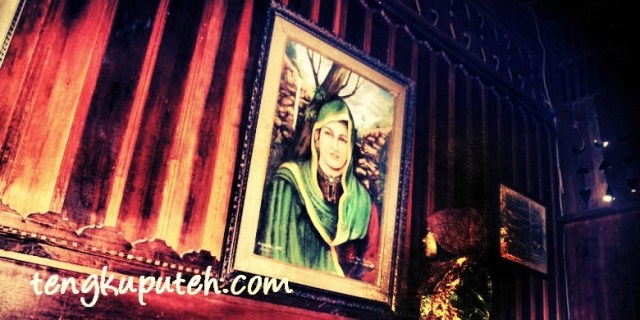
Painting of Cut Meutia, Beuringen Pirak Village, Matangkuli Sub-district, North Aceh.

DUTCH RAID OPERATION AGAINST CUT MEUTIA (1910)

The heroism of Cut Meutia was obtained at an expensive price, his life. There is a tragic story that we may not see again, a story whereas the children of this nation, shed tears when reading it. The story of the killing of Cut Meutia at the hands of Dutch troops on 25 October 1910 in Pucok Krueng Keureuto, North Aceh.

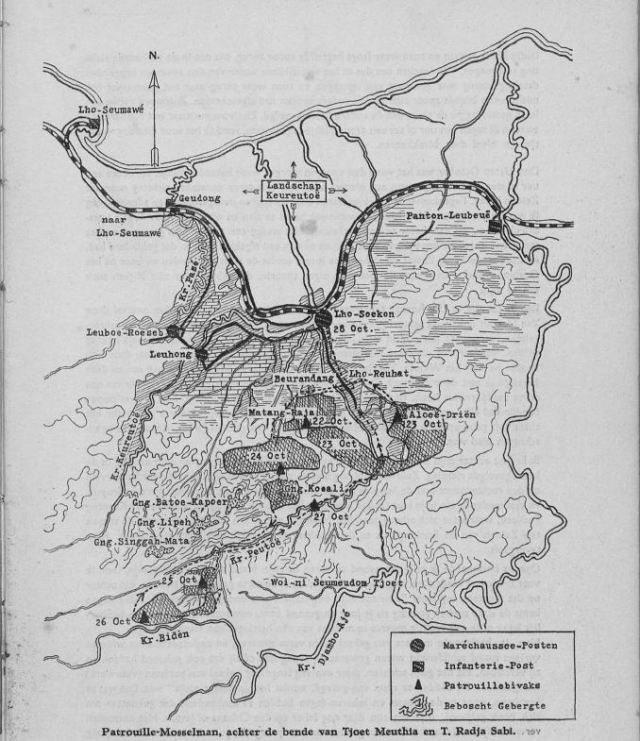
Sgt. Mosselman, a prominent brigade leader in guerrilla warfare, reported that on October 22, 1910, he was assigned to trail the troops of a herd allegedly in Lhok Reuhat and on the third day he found a new footprint on the branch of the Krueng Peutoe river, despite Acehnese guerrilla forces Has tried to eliminate it.

Dutch troop pursuit of Cut Meutia

“… The farther down the river, the wider the river, the more heavier and the greater. The mountain boulders grew more and more and there were more small meters of water, glassy slippery stones where the water flowed continuously on the carbines and other equipment. After a long climb and waiting for my friends to observe all the circumstances around him, then at about 4 pm, not far ahead of me, I saw a cloud of smoke rolling in the air between the wooden trees. Again the hairs on my neck stood up, a sign of a human being, if he was in danger.

I try to keep the spirit of my men and move forward. What I am left with is the chosen members. However, it is difficult to achieve such a feat of strength. Just marsose Manado Mahamit, nrp 68750 and marsose Java Tarmin, nrp 71065, a very nimble boy from Malang who hides behind a boulder, then turns me and every member of the climbing marsose can see the cues I give.

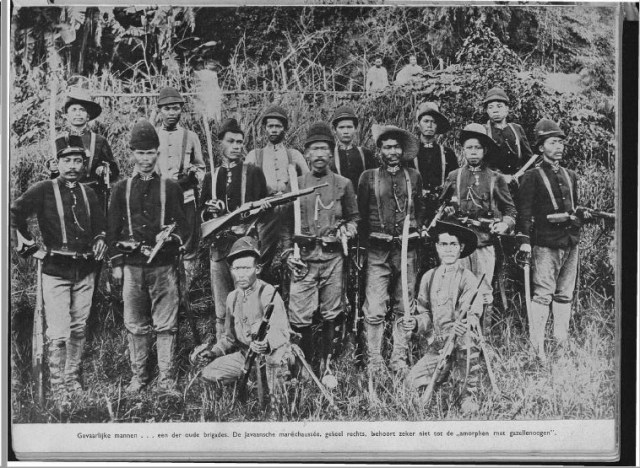
They are dangerous, Marsose troops. Dutch pride, they are capable subordinates.

After we got together I ordered the troop members to release their rucksacks. When I was about to creep into the forest to see the terrain more clearly so that I could take the best course if I wanted to do a reconnaissance or ambush, suddenly a member of my squad called out: “There!” In the direction called about 200 meters from us seen the people of Aceh are running to a groove. We are unlikely to ambush and only speed can deliver success. “Attack …!” n a moment of lightning run to our seven forwards, to a groove where the man had run away. Despite falling on the rocks but we continue to advance and just stop at a child’s groove. At a distance of approximately 150 meters from the estuary of a groove we encounter a cottage that is being done in abandoned circumstances and its supplies. I wailed, but no one was able to follow me. Together we arrived at the cottage and the three of them stormed into it. After a 200-meter run we came to a sharp tackle line and faced several opposing men, about 30 meters who were trying to cross the river channel. Mamahit who was in front of occasionally pointed to an old man who was escorted by three men to escape into the forest. He fired a shot at the old man who was right on his target and then the old man collapsed.

Immediately raging shoot-out. The three of us were fired at in a very close direction, from the edge of the groove, from the forest, from all directions. Instantly our view of the three met, really mad, that at times like that we both need to look at each other. I think, (then say also Tarmin and Mamahit what they think it is), that the last moment has come for us. It turned out that we had a great success. I jumped into the water in the groove, while behind us stretched the steep hill wall. We stand in the water to the stomach or literally, with our backs against the wall.

We were completely exhausted and fired like a whale blast. We can hardly shoot. The opponents of the opponent scattered before us in the shrinking waters of the hill wall behind us, all misses, but our shots were the same. In panting it is not possible to fire the right shot. In short we have to calm down, to do the raid is not possible because I know very well, that we are now in the midst of opponent forces. Therefore we must strive in this place, if we are hit by opponent bullets, to sell our lives at a price as expensive.

The opposite seems to be panicking. We felt lucky to have calmed down before they could attack us.

An invading gesture was given by a lean woman, yellow-white face with loose hair, swung her machete as her yelled that suddenly attacked from the forest. Her fell down like all the other young men who followed in his footsteps by a shot that hit his head as he stormed a few feet in front of us.

The sound of gunfire rumbled again, even more terrible than before. I sensed that the opponents were getting closer to us. What a critical thing at all while I still have not seen one of our troop members. Then they doubt the actual scene, even though the sound of the gunshots is so hectic! When at first there was a terrific fire on the backs of the opponents. That is a tactic! And really, if they appear like water droplets, the one on the groove, it would be less interesting, then it is certain that we all have names.

The three of us cursed in three languages. Mahamit interrupted his Manadon accent. From the mouth of Tarmin among the “typical” Javanese, I heard repeatedly the words “dog” and “pig” in each shot. The sound of gunfire resembled a thundering music in our ears and suddenly, somewhat obliquely in front of us, in the cracks of the gunfire, came the screaming of people: “Go forward, smite marsose!” Opponents thought that they had been surrounded. Does not it make sense, that the Dutch just sent three marsose men deep into the forest.

The eruption of the shot was somewhat stalled. The shouts of “Allah il Allah” slowly sounded lethargic and suddenly we were five of us with Wakary and Sinkey jumping from the edge of the grove overgrown to the bottom of the groove, storming into the forest in front of us which I suspect the opponent’s place is hiding.

In front of us lay an elderly man whose friend had been hit by our bullets. From behind huge boulders jumped two young men swiftly forward. Each of them protects the old man’s body with their body, wielding a machete in his hand. Both of them had to be killed with our machetes. When I stepped on it I saw that the old man had died. He lies on the ground in a state of motion regardless of the things that happen to him. For a moment I saw the gold-plated weapon, the famous “keris” weapon and suddenly flashed through my head that it must be a sacred person. This is evidenced by the sacrifice of the two young men who actually face death in a hero.

We are not yet time to rest and continue to storm into the forest. Opponent gunners will not wait for us. Only someone has recorded us with a glance from behind a log. I saw a big mole near his nose, a terrible feeling aroused me when my machete flew over his neck.

W.J Mosselman

As I tell this story now I feel as though it was only yesterday that I experienced it even though it was over 27 years ago. I still see the look of that yellow white woman with her intelligent face, fueled by her burning feelings to die as a martyr. With wild eyes and hair loose on his head, which swung a machete attacked us. Did she get tired of his escape? What was her act, so it occurred to me later to know who she was, for the sake of her son? We did not see her son at all, the young men who carried the old parents with their unshining eyes (the cleric was later identified as Tengku Seupot Mata) were the youngest members of the opponent.

For one person there may be no limit to the suffering she can endure, but there is suffering to bear. Her second husband was sentenced to death, the third (Pang Nanggroe) was shot too, a persistent pursuit addressed to her, A terrible suffering in his life, constantly escaping, probably because of his fate following her, crossed her mind: “God’s will” All the worship and praise of her, who determined His time and with His permission also made me the cause of her death.

It is therefore not a certainty, that the woman bought her death with confidence to meet those who had preceded it? Both she and Pang Nanggroe are people who do not know, what he said later, “mel” (= Report)! Those who are young will tell later in various mosques, that they have been martyred in 1910 … “

This W.J Mosselman Report (1937) is recorded in Aceh (1938), H.C Zentgraf, which was translated into Indonesian by Aboe Bakar (1983) Page 227-231.

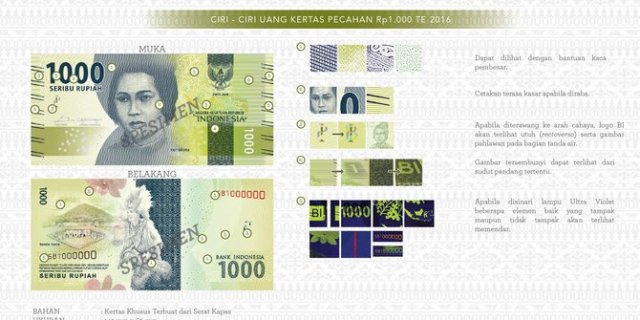
Explanation of Central Bank of Cut Meutia in Rp denominations Rp.1000, –

The death of Cut Meutia and Tengku Seupot Mata is only a break in the battle. The Dutch colonial government realized there would be resistance from the people of Aceh to the colonial government, although after Cut Meutia the Aceh resistance was only sporadic and small. The Dutch never calmed down even until they left Aceh in 1942.

Translation in Indonesia

About Aceh:

  1. CUMBOK WAR, A SOCIAL REVOLUTION IN ACEH (1946-1947); 8 April 2017;
  2. CIVILIZATION WITHOUT WRITING; 13 April 2017;
  3. ACEH THE FIRST SOVEREIGN COUNTRY TO RECOGNIZING THE INDEPENDENCE OF THE NETHERLANDS; 27 April 2017;
  4. VISITING THE EXHIBITION ACEH TOMBSTONE AS AN ISLAMIC CULTURAL HERITAGE IN SOUTH-EAST ASIA; 16 May 2017;
  5. DUTCH RAID OPERATION AGAINST CUT MEUTIA (1910); 20 May 2017;
  6. SAMUDERA PASAI AS THE FIRST ISLAMIC KINGDOM IN SOUTHEAST ASIA; 6 June 2017;
  7. ISLAMIC SHARIAH WHO IS AFRAID, A CASE STUDY IN ACEH; 13 June 2017;
  8. ACEH WOMEN FULL POWER; 13 June 2017;
  9. DUSK IN MALACCA; 4 July 2017;
  10. GOLD, INFIDELS, AND DEATH; 10 July 2017;
  11. MANTE THE LOST PYGMY TRIBE; 13 July 2017;
  12. HOW TO TELL HISTORY; 14 August 2017;
  13. THE ORIGIN OF THE COFFEE CULTURE IN ACEH; 19 August 2017;
  14. THE UNTOLD STORY ABOUT HISTORY OF THE COMMUNIST PARTY OF INDONESIA IN ACEH PROVINCE; 28 September 2017;
  15. WHEN CRITICISM IS FORBIDDEN; 14 October 2017;
  16. EXPLOITATION OF NATURAL RESOURCES, WHAT IS IT GOOD FOR ACEH; 5 November 2017;
  17. PEUCUT KHERKOFF, ACEH-DUTCH WAR MONUMENT; 12 November 2017;
  18. THE PRICE OF FREEDOM; 5 December 2017;
  19. ACEH CRAZY OR ACEH PUNGO; 25 February 2018;
Posted in History, International, Reportase | Tagged , , , , , , , , , , , , , , , | 27 Comments

HISTORY OF SARONG

People “sarungan” all over Indonesia, unite !!!

HISTORY OF SARONG

All stories begin with “once upon a time” or with “in ancient times”. But when was time immemorial? When you were a kid when you were still crawling? You do not remember so your father and mother were small as well. Your grandparents too. Grandparents also have grandparents. They also say “in ancient times”, there is always the same expression again.

So this story begins with a sentence, in ancient times. An unknown genius finds a very precious object: a sarong. The shape, a hundred square centimeters of fabric, various shades, two edges linked lengthwise. The English call it sarong and certainly imitate the word Malay, “sarung”. Although they are reluctant to use it.

The British consider it an impractical dress. No matter, the British “practical” size is different from us. For us, sarong precisely a technology appropriate for all benefits. We can wear it for prayers to the mosque or wedding party, make to the latrine, make a cold blanket, protect from the heat, can be a mask. In a state not as a clothing, a sarong can be a wrapper or book, for example when we move house.

Maybe a genius might find something like that. Or maybe, through a long process.

But something has happened to the sarong. Perhaps because also the experience of a culture always has a changed social relations. Sarongs, which can be both elegant and casual as Calvin Klein designs, are now receding into something very private, just for the bedroom, in the bathroom, or for prayer. The only chance when a sarong comes into the public sphere is when going to the mosque, on Fridays and festivals. The rest, he just a troublesome ornament.

It is not surprising, then, that a sarong can be a symbol of something shrunken natives, something “people” but urgent, something that suits the environment but is threatened by the flooding modernization flows. Slowly, finally, sarongs also become a symbol of modest independence in the face of the fake plastic-fisted cement.

A bit strange is the history of sarongs. There was a time when he became the identity of a mocked layer. At the beginning of the Soeharto regime in Indonesia (1965-1998), there was a slogan warning to be wary of “sarongs”. No specific who, but immediately the phrase becomes clear.

At that time, the tension was felt but rarely spoken, between abangan, with the marginalized (santri) on the one hand. And as a periphery, the santri who dressed in sarongs for a long time were not the people who were heard in the cultural arena. They are “hicks”.

Time certainly changes the dispute. Perhaps “hick” things are now being weighed again and by social, economic or political change even appreciated. However, (as a diligent reader), I never forget the story of Doel on Lebaran day in Aman Dt Modjoindo’s book, this Betawi boy, with all the dreams of a village boy, trying to wear a hat and tie. But his knees, the fierce teacher of the Koran, sprayed him. Si Doel returns wearing a sarong, but his heart is crushed. This romance was composed in the Dutch colonial era. We know where Aman, author of Balai Pustaka which is controlled by the O.K & W Department is (forced) to take sides. The Dutch colonial government clearly “hates” the sarong.

In the third world, most of the colonized peoples, the history of clothing is indeed a history of a cultural and political clash, which sometimes erupts loudly sometimes like lava in the belly of the mountain. In Turkey, to modernize his people, Mustafa Kemal cut the turbus off the heads of many people. In India, as well as to liberate his people, Gandhi maintained the results of the khadi industry. In Indonesia, sarong has also become a socio-cultural item in an era of transition. It is also a point of conflict.

We can see it, precisely because it is versatile, as a sign of our limitations. But we can also, on the other hand, as well as other times, see it with a sense of miss. We can be a snob who scoffs at it as a sacred item. But we can also hoist it aloft, just so as not to be equated with the glamorous rich.

Therefore we love sarongs, the tools that always exist in the ruling house, or the commoners.

Artikel Dalam Bahasa Indonesia

Posted in History, International, Literature, Opinion, Reportase, Story | Tagged , , , , , , , , , , , , , | 5 Comments

ACEH NEGARA BERDAULAT PERTAMA YANG MENGAKUI KEMERDEKAAN BELANDA DARI SPANYOL TAHUN 1602

Duta besar pertama kerajaan di Asia Tenggara kepada bangsa-bangsa Eropa. (The first ambassador of the kingdom in Southeast Asia to the Europeans).

Kesultanan Aceh Negara Berdaulat Pertama yang Mengakui Kemerdekaan Republik Belanda dari Kerajaan Spanyol di Tahun 1602

Surat kabar Provinciealse Zeeuwse Courant yang terbit di Middelburg (Belanda) pada tanggal 25 Oktober 1978 menceritakan peristiwa upacara sebuah monumen yang didirikan di kota Middelburg, sebagai kenangan Duta Kesultanan Aceh Darussalam, Tengku Abdul Hamid, yang meninggal di Belanda pada tanggal 10 Agustus 1602.

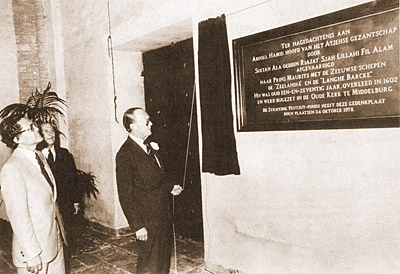
Pangeran Benhard atas nama Kerajaan Belanda meresmikan Monumen Kenangan kapada Duta Kesultanan Aceh Darussalam Abdul Hamid. Gambar di atas Pangeran Benhard baru selesai membuka tirai yang menutupi sarakata di atas marmer pada monumen ; di belakang Drs. Garnawan Dharmaputera Kuasa Usaha yang mewakili Duta Besar Republik Indonesia di Negeri Belanda

Menurut surat kabar tersebut, upacara peresmian monumen kenangan kepada Duta Kesultanan itu berlangsung khidmat. Dihadiri oleh pembesar sipil dan militer. Duta Besar Republik Indonesia di Belanda yang diwakili oleh kuasa usahanya Drs. Garnawan Dharmaputera, sementara provinsi Aceh diwakili Drs. Teuku Iskandar, Abubakar dan Dokter Teuku Hasan Ubit.

Di antara para tamu penting yang hadir, yaitu Pangeran Bernhard (suami Ratu Juliana), Drs. A.J. Piekaar, Letnan Jenderal F van der Veen (Ketua Stichting Peutjut Fond), Komisaris van de koningin dr. C. Boetien dan Walikota Middleburg Drs. P.A. Wolters.

Pendirian monumen kenangan kepada Abdul Hamid di Belanda harus dilihat dari segi sejarah kebesaran bangsa Indonesia sebagai mata rantai pertama silsilah pembentukan perwakilan Indonesia di luar negeri terutama di Eropa.

Surat Pangeran Maurice kepada Sultan Aceh

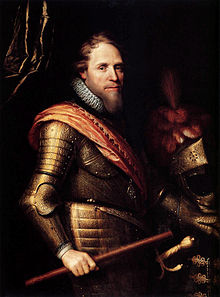
Maurice of Orange. Portrait by Michiel Jansz. van Mierevelt, 1607.

Pada akhir abad ke-16 sampai awal abad ke-17 Belanda membebaskan diri dari penjajahan Spanyol, Pangeran Maurice memproklamirkan berdirinya Republik Belanda yang merdeka dan berdaulat. Akibatnya, rakyat Belanda melakukan peperangan yang lama terhadap kekuasaan Spanyol sebagai Negara imperialis terbesar saat itu.

Saat itu, Negara-negara di Eropa belum berani mengakui kemerdekaan Belanda, karena takut pada kekuasaan Spanyol. Maka Pangeran Maurice selaku ketua dari Republik Belanda yang baru didirikan mencari teman dan dukungan ke bagian lain dunia, Asia.

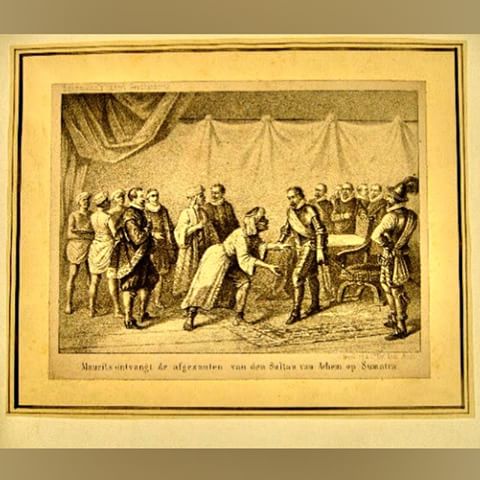
Republik Belanda mengambil keputusan mengadakan hubungan diplomatik dengan Kesultanan Aceh Darussalam. Untuk melaksanakan keputusan tersebut Pangeran Maurice mengirimkan sebuah delegasi yang dipimpin oleh Komisaris Negara Gerard de Roy dan Laksamana Laurens Bicker, dengan empat buah kapal, yaitu Zeelandia, Middelburg, Langhe Bracke dan de Sonne. Mereka berangkat menuju Aceh 29 Januari 1601 dan tiba 23 Agustus 1601.

Delegasi Gerald de Roy membawa sepucuk surat dari Kepala Republik Belanda Pangeran Maurice, yang maksudnya bahwa Republik Belanda yang baru ingin bersahabat dengan Kesultanan Aceh Darussalam. Berikut isi surat tersebut :

“Pada tahun yang baru lewat, 1598 Masehi, atas perintah telahpun bertolak dua buah kapal dagang dari negeri ini, dengan tujuan mengadakan perniagaan di Hindia Timur, kapal mana sudah tiba di sana pada tanggal 15 Agustus  tahun itu juga.

Telah dikabarkan kepada beta betapa baiknya sambutan yang diberikan kepada mereka oleh Yang Mulia dan betapa cermatnya pelayanan yang diberikan mereka ketika mereka tiba di kerajaan Yang Mulia, disamping itu betapun mendapat kabar juga bahwa dengan memenuhi peraturan yang berlaku dan dengan segala kejujuran mereka telah melaksanakan maksud-maksud perdagangan tersebut.

Tapi tatkala orang-orang Portugis yang menjadi warga dari Kerajaan Spanyol, musuh kami, mendapat kabar bahwa mereka sedang mendapat perlindungan dan bantuan yang dijanjikan oleh Yang Mulia, merekapun lalu menceritakan hal-hal yang dusta, untuk menyesatkan Yang Mulia, diantaranya dikatakanlah oleh mereka bahwa para saudagar Belanda itu adalah bajak laut, dan bahwa kedatangan mereka adalah untuk merampas kerajaan Yang Mulia.

Hasil pendustaan itu, Yang Mulia telah menitahkan menangkap Frederick de Houtman, nahkoda salah satu dari kapal itu, bersama beberapa awak kapal, serta menahan mereka, hal mana berakibat penderitaan mereka.

Dengan keyakinan akan belas kasihan Yang Mulia terhadap mereka, inginlah beta menyampaikan harapan agar kiranya Yang Mulia menitahkan mereka dipelihara dengan baik, sebagai juga dilakukan terhadap setiap warga yang berkunjung ke kerajaan Yang Mulia, yang bebas telah kembali, semoga para tawanan yang sekarang berada di negeri Yang Mulia dapat pula mengecap kebebasannya kembali.

Kepada beta dikabarkan pula bahwa orang-orang Portugis telah mengadakan peperangan terhadap kerajaan Yang Mulia atas perintah Raja Spanyol, dengan tujuan untuk merampas negeri itu dan menjadikan warganya hamba sahaya, sebagaimana yang demikian telah dilakukannya selama lebih dari 30 tahun di negeri kami.

Tapi Tuhan Yang Maha Kuasa tidaklah sekali-kali ingin demikian, dan sebaliknya kami telah mengangkat senjata menentang penjajahan itu dan akan melakukannya sampai berhasil.

Oleh sebab-sebab itulah beta bermohon kepada Yang Mulia agar kiranya tidak mempercayai orang-orang Portugis tersebut, dan supaya Yang Mulia tidak perlu mencurigai lagi kepada warga yang datang dari negeri beta dan untuk mendapat kesempatan berniaga, maka inilah beta menugaskan perutusan beberapa wakil beta membawa surat ini, terdiri dari para delegasi berkuasa penuh sejumlah empat orang, yaitu nahkoda-nahkoda Cornelis Bastiaanse, Jan Tonneman, Matthys Antonisse dan Cornelis Adriaanse, bersama beberapa komisaris (zaakgelastigden), yaitu Geradl de Roy, Laurens Begger, Jan Jacobs dan Nicolas van der Lee, kesemuanya berangkat dengan empat kapal untuk, atas nama beta, mengadakan perundingan dengan Yang Mulia, untuk membicarakan bantuan-bantuan apakah yang dikehendaki untuk menumpas musuh-musuh.

Demikian pula kepada mereka telah beta beri izin tugas untuk memberikan bingkisan-bingkisan yang lazim kepada Yang Mulia sebagai bukti dari idam-idaman beta mengadakan pesahabatan dengan Yang Mulia.

Beta mohon agar bingkisan yang dikirim itu mendapat sambutan. Dan dengan ini beta mendoakan kepada Tuhan agar Yang Mulia dan kerajaannya bertambah luas sesuai dengan keinginannya.

Termaktub di Den Haag, Belanda, pada tanggal 11 Desember 1600

Tangan yang dicium oleh hambanya

Tertanda Maurice de Nassau

Delegasi Tengku Abdul Hamid

Isi surat Pangeran Maurice kepada Sultan Aceh, pada waktu itu yaitu Sultan Alaidin Riayat Syah Saidil Mukammil (997-1011 Hijriah / 1589-1604 Masehi) dibicarakan oleh Sultan dalam sidang Dewan Kerajaan, kemudian memutuskan antara lain :

  1. Menerima baik keinginan Pangeran Maurice sebagai Kepala Republik Belanda untuk mengadakan hubungan diplomatik dan ekonomi dengan Belanda;
  2. Mengakui Republik Belanda sebagai Negara yang merdeka dan berdaulat penuh;
  3. Mengirimkan sebuah delegasi ke Belanda, sebagai balasan kunjungan.

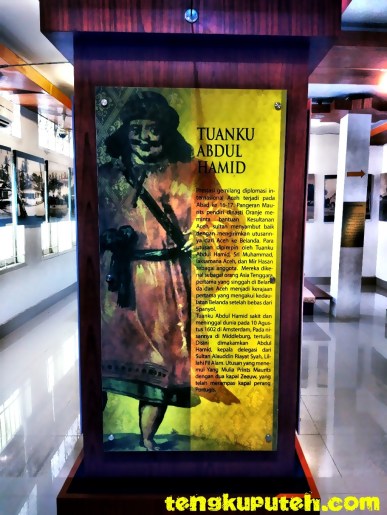
Delegasi Aceh dipimpin Tengku Abdul Hamid, seorang ulama dan negarawan terkenal, Laksamana Sri Muhammad, seorang perwira tinggi Angkatan Laut yang berpengalaman, Mir Hasan seorang diplomat dan negarawan pada Wizarah Badlul Muluk (Depertemen Luar Negeri), Leonard Werner alias Pusque Camis, keturunan Luxemburg sebagai juru bahasa dan sejumlah perwira serta prajurit Angkatan Laut.

Dalam perjalanan menuju Belanda, kapal Belanda yang membawa delegasi Aceh dicegat oleh kapal Portugis “San Jabo”, sehingga terjadi pertempuran laut, dimana prajurit dan perwira Aceh terlibat dalam pertempuran ini. Kapal “San Jabo” dapat dikalahkan dan barang-barang di dalamnya dirampas dan dibawa ke Belanda. Pada 20 Juli 1602 Kapal Belanda tiba dengan selamat di Zeeland.

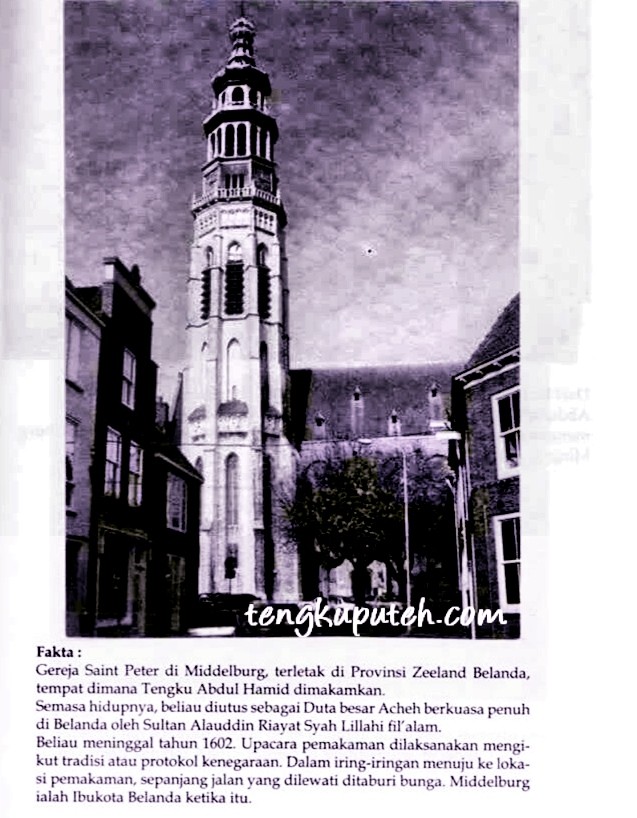
Gereja Saint Peter, tempat Tengku Abdul Hamid dimakamkan.

Pada saat delegasi Aceh tiba di Belanda, Pangeran Maurice sedang berada di markas perangnya di sebuah kampung bernama Grave. Menurut Dr. Wap dalam bukunya Het Gezantschap van den Sultan Aceh, pada tanggal 10 Agustus 1602 akibat pertukaran udara, dikebumikan pada 11 Agustus 1602 dalam gereja St. Pieter di kota Middelburg. Meninggalnya Abdul Hamid sebelum berjumpa dengan Pangeran Maurice, Laksamana Sri Muhammad mengantikannya kemudian sebagai Ketua Delegasi. Pada batu nisan Abdul Hamid tertulis :

Hic Situs Est

Abdul Zamat Princeps Legationis

A Rege Tabrobanae Seu Sumatrae

Sultan Alcien Raietza Lillo Lahe

Felalam Ad Illustriss Princip

Mauritium

Missae

Cum Duap. Navi. Zeeland Quae

In Dedit. Acceper.

Liburnicum Lusitanam

Vixit An. LXXI Obiit Anno CI]I] II

H.M.P.C


Di sini dimakamkan

Abdulhamid, Kepala Delegasi dari

Sultan Alaiddin Riayat Syah

Utusan untuk menemui

Yang Mulia Pangeran Maurits dengan

Kapal Zeeuw, yang telah merampas

Kapal Perang Portugis

Tutup usia 71 tahun, meninggal

Di tahun 1602

Kompeni Hindia Timur membuat peringatan

Menyerahkan Surat Kepercayaan dan Surat Pengakuan tehadap Republik Belanda

Setelah selesai masa berkabung atas meninggalnya Tengku Abdul Hamid, pada tanggal 1 September 1602 delegasi Aceh dibawah pimpinan Laksamana Sri Muhammad menghadap Pengeran Maurice di markasnya

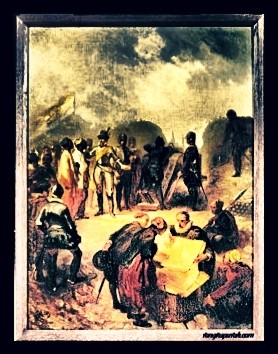
Pertemuan Delegasi Aceh dengan Pangeran Maurice van Orange (1602)

Pertemuan delegasi Kerajaan Aceh yang pertama dengan Belanda tahun 1602 dilukis oleh oleh Charles Rochussen tahun 1854. Koleksi Tropenmuseum Amsterdam.

Dalam kesempatan tersebut, Ketua Delegasi Aceh menyerahkan surat kepada Pangeran Maurice Surat Kepercayaan dan Surat Pengakuan Aceh terhadap Republik Belanda, juga disampaikan dengan khidmat bingkisan-bingkisan dari Sultan Alaiddin Riayat Syah Saidil Mukammil.

Upacara penerimaan Delegasi Aceh diadakan dengan khidmat dan meriah. Selesai pembicaraan resmi dengan Pangeran Maurice, kepada Delegasi Aceh diperlihatkan hasil-hasil perang menghadapi Spanyol, juga meninjau kota-kota dan kampung-kampung di Belanda. Menurut catatan sejarah, Aceh merupakan Negara berdaulat pertama di dunia yang mengakui kemerdekaan Belanda yang baru lahir secara de facto dan de jure.

Madu dibalas dengan tuba

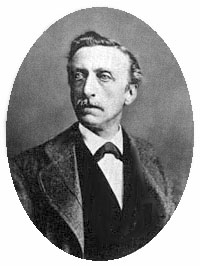
Eduard Douwes Dekker, also known as Multatuli

Di tahun 1872, sewaktu Kerajaan Belanda mengadakan persiapan menyerang Kesultanan Aceh Darussalam, dalam surat-surat kepada Raja Belanda, Multatuli pernah mengingatkan kembali peristiwa pengakuan Aceh kepada Republik Belanda, bahkan Multatuli berbicara dalam sebuah rapat di Wiesbaden ditegaskannya : “Ketika Belanda memperjuangkan kemerdekaannya dari Spanyol, Kerajaan Acehlah yang pertama mengakui Belanda sebagai satu bangsa yang merdeka”.

Rupanya madu dibalas dengan tuba!

Sungguhpun demikian, di tahun 1978 kebaikan dan kebesaran jiwa sekali lagi diperlihatkan kepada Belanda, ketika Gubernur Aceh A. Muzakkir Walad atas nama rakyat Aceh meminta kepada Dutabesar Belanda agar kerangka mayat Mayor Jenderal Kohler yang kuburannya digusur di Jakarta dibawa ke Aceh dan dimakamkan kembali di Peucut Aceh.

Pada makam-makam ini telah dikuburkan lebih dari 2.200 orang tentara Belanda yang tewas selama Perang Aceh-Belanda.

Orang yang tak menghayati jiwa Aceh, mungkin tidak mengerti mengapa Mayor Jenderal Kohler yang memimpin penyerangan pertama ke Aceh sebagai “Panglima Agressor” dan tewas sewaktu memimpin pembakaran terhadap Masjid Raya Baiturrahman, setelah Jakarta menggusur kuburannya, Peucut di Banda Aceh menyediakan diri untuk menerima kerangka mayat musuh utamanya.

Pekuburan Peucut adalah tempat ditanamnya sekian perwira tinggi dan perwira menengah serta prajurit Belanda yang mati dalam masa puluhan tahun peperangan dahsyat antara Belanda dan Aceh.

Untuk mengurus dan memagar kembali pekuburan Peucut itu, di Belanda dibentuk satu yayasan bernama “Stichting Peucut Fonds” (Yayasan Dana Peucut), yang didirikan dan dipimpin oleh perwira-perwira Belanda yang telah pensiun yang dulunya pernah di Aceh, seperti Letnan Jenderal F. van der Veen, Kolonel J.H.J Brendgen dan lain-lain.

Agar jangan dikatakan lagi “madu dibalas tuba” maka Stichting Peucut Fonds mengambil prakarsa untuk mendirikan monumen bagi Tengku Abdul Hamid, Ketua Delegasi Kerajaan Aceh Darussalam yang meninggal di kota Middelburg pada tanggal 10 Agustus 1602.

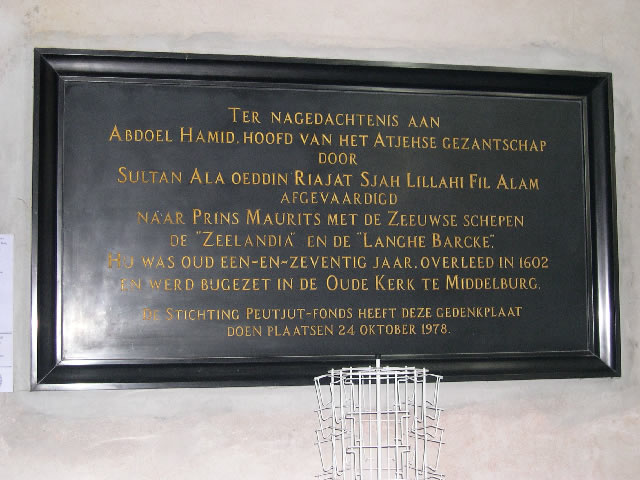
Stichting Peucut Fonds berhasil menggerakkan pemerintah dan masyarakat Belanda untuk memperbaiki kesalahan-kesalahan yang lalu, antara lain dengan mendirikan monumen yang pada tanggal 24 Oktober 1978 diresmikan oleh Pangeran Benhard (suami Ratu Juliana) atas nama Kerajaan Belanda. Pada batu marmer yang melekat pada monumen terekam tulisan sebagai berikut :

Ter Nagadachtenis Aan

Abdoel Hamid Hoffd van het Atjehse Gezantsechap

Door

Sultan Alaoeddin Riajat Syah Lillahi Fil Alam

Afgefaardigd

Naar Prins Maurits Met de Zeeuwse Sechepen

De Zeelandia en de Langhe Barcke

Hij Was Oud Een-en-zeventig Jaar Overleed in 1602

En Werd Bigezet In de Oude Kerk te Middulburg

De Stichting Peutjut Fonds Heeft Dese Dedenkplaat

Doen Plaatsen 24 Oktober 1978.

Kenangan kepada Abdulhamid

Ketua Perutusan Aceh yang diutus

Oleh Sultan Alauddin Riayat Syah Lillahi Fil Alam

Kepada Pangeran Maurits yang berangkat dengan kapal-kapal

Zeeland de Zeelandia dan Langhe Barcke

Beliau meninggal dalam usia 71 tahun

Dimakamkan dalam gereja tua di Middelburg

Yayasan Dana Peucut yang membuat monumen ini

Pada tanggal 24 Oktober 1978.

Arti dan makna Monumen Tengku Abdul Hamid

Dalam nukilan sekelumit sejarah tempo dulu, jelaslah bahwa Monumen Kenangan kepada Abdul Hamid, Ketua Perutusan Kesultanan Aceh Darussalam, sebagai Dutabesar bangsa Indonesia, mempunyai pengertian sejarah yang amat penting sekali dalam sejarah hubungan diplomatik bangsa kita.

Monumen Kenangan Dutabesar Kesultanan Aceh Darussalam, Tengku Abdul Hamid di Middelburg, Belanda

Seperti yang dikutip pada pidato Dutabesar Republik Indonesia untuk Belanda yang diwakili oleh Drs. Garnawan  Dharmaputera yang dalam pidato sambutannya mengatakan, “Bagi bangsa Indonesia tentu dianggap sangat penting, karena Tengku Abdul Hamid adalah Dutabesar bangsa Indonesia yang pertama memimpin misi diplomatik di negeri Belanda, sehingga beliau dan para anggota perutusan lainnya merupakan pelopor pembentukan perwakilan Republik Indonesia sekarang ini di Belanda.”

Sudah pasti pula bagi bangsa Belanda peristiwa tersebut dianggap sangat penting dan bersejarah pula, sehingga peresmiannya dilakukan sendiri oleh Pangeran Benhard sendiri, tidak umpamanya oleh Walikota Middelburg.

Hari ini, peristiwa peresmian monumen Abdul Hamid, yang berlangsung pada tanggal 24 Oktober 1978 di Middelburg kita ungkapkan kembali untuk diketahui segenap bangsa Indonesia.

Referensi :

  1. Ali Hasjmy; Aceh Negara Berdaulat Pertama Yang Mengakui Kemerdekaan Negeri Belanda; Sinar Darussalam No. 10 Mei/Juni 1979.
  2. Surat Kabar Provinciealse Zeeuwse Courant yang terbit di Middelburg (Belanda) pada tanggal 25 Oktober 1978.
  3. Mohammad Said; Aceh Sepanjang Abad; Halaman 128-129.
  4. Dr. Wap; Het Gezantsschap van den Sultan Aceh.

XXX

Simak pula kunjungan tim Tengkuputeh ke museum Aceh dalam rangka pameran Batu Nisan Aceh sebagai Warisan Budaya Islam di Asia Tenggara dalam video berikut :

Artikel-artikel tentang Aceh:

  1. PEREMPUAN ACEH FULL POWER 4 AGUSTUS 2008;
  2. MENYUSURI JEJAK DARA PORTUGIS DI ACEH 6 DESEMBER 2008;
  3. TEUKU UMAR PAHLAWAN 11 FEBRUARI 2011;
  4. FILOSOFI GOB 10 OKTOBER 2011;
  5. KEBENARAN YANG SAMAR 28 FEBRUARI 2013;
  6. GAM CANTOI TIADA 30 MARET 2013;
  7. PERANG CUMBOK SEBUAH REVOLUSI SOSIAL DI ACEH (1946-1947) 18 JUNI 2013;
  8. TSUNAMI 26 DESEMBER 2015;
  9. PERADABAN TANPA TULISAN 25 FEBRUARI 2016;
  10. SURAT TENGKU CHIK DI TIRO KEPADA RESIDEN VAN LANGEN AGAR TERCAPAI PERDAMAIAN DALAM PERANG ACEH MAKA BELANDA HARUS MEMELUK AGAMA ISLAM DI TAHUN 1885 4 NOVEMBER 2016;
  11. PARA PENYEBAR KEBOHONGAN 13 NOVEMBER 2016;
  12. MENGUNJUNGI RUMAH PAHLAWAN NASIONAL CUT MEUTIA 17 APRIL 2017;
  13. SAMUDERA PASAI SEBAGAI TITIK TOLAK ISLAM DI ASIA TENGGARA, SEBUAH UPAYA MELAWAN PSEUDO SEJARAH 24 APRIL 2017;
  14. EMAS, KAFIR DAN MAUT 20 APRIL 2017;
  15. MENGENAL LEBIH DEKAT POCUT BAREN 5 MEI 2017;
  16. OPERASI PENYERGAPAN BELANDA TERHADAP CUT MEUTIA 7 MEI 2017;
  17. MENGUNJUNGI PAMERAN BATU NISAN ACEH SEBAGAI WARISAN BUDAYA ISLAM DI ASIA TENGGARA 15 MEI 2017;
  18. KESULTANAN ACEH NEGARA BERDAULAT PERTAMA YANG MENGAKUI KEMERDEKAAN REPUBLIK BELANDA DARI KERAJAAN SPANYOL DI TAHUN 1602 18 MEI 2017;
  19. SYARIAT ISLAM SIAPA TAKUT 6 JUNI 2017;
  20. SENJA DI MALAKA 14 JUNI 2017;
  21. KRITIK KEPADA SULTAN ISKANDAR MUDA 4 JULI 2017;
  22. HIKAYAT SUKU MANTE 5 JULI 2017;
  23. TEUKU NYAK MAKAM, PAHLAWAN ACEH TANPA KEPALA 30 JULI 2017;
  24. ASAL MUASAL BUDAYA KOPI DI ACEH 1 AGUSTUS 2017;
  25. MUSIBAH TENGGELAMNYA KMP GURITA 6 AGUSTUS 2017;
  26. PERANG ACEH, KISAH KEGAGALAN SNOUCK HURGRONJE 7 AGUSTUS 2017;
  27. ACEH DI MATA KOLONIALIS 8 AGUSTUS 2017;
  28. MELUKIS SEJARAH 10 AGUSTUS 2017;
  29. NASIHAT-NASIHAT C. SNOUCK HURGRONJE SEMASA KEPEGAWAIANNYA KEPADA PEMERINTAH HINDIA BELANDA 1889-1936 14 AGUSTUS 2017;
  30. ACEH SEPANJANG ABAD 16 AGUSTUS 2017;
  31. PERANG DI JALAN ALLAH 30 AGUSTUS 2017;
  32. ACEH DAERAH MODAL 7 SEPTEMBER 2017;
  33. 59 TAHUN ACEH MERDEKA DI BAWAH PEMERINTAHAN RATU 12 SEPTEMBER 2017;
  34. KERAJAAN ACEH PADA JAMAN SULTAN ISKANDAR MUDA (1609-1636) 13 SEPTEMBER 2017;
  35. PERISTIWA KEMERDEKAAN DI ACEH 14 SEPTEMBER 2017;
  36. PASAI DALAM PERJALANAN SEJARAH 17 SEPTEMBER 2017;
  37. MATA UANG EMAS KERAJAAN-KERAJAAN DI ACEH 19 SEPTEMBER 2017;
  38. ACEH MENDAKWA 21 SEPTEMBER 2017;
  39. MISI MENCARI MAKAM PARA SULTANAH ACEH 6 OKTOBER 2017;
  40. BERZIARAH KE MAKAM SULTANAH MALIKAH NAHRASYIYAH 8 OKTOBER 2017;
  41. EKSPLOITASI SUMBER DAYA ALAM APAKAH BAGUS UNTUK ACEH 15 OKTOBER 2017;
  42. AROMA MEMIKAT DARI DAPUR ACEH 16 OKTOBER 2017;
  43. TARIKH ACEH DAN NUSANTARA 29 OKTOBER 2017;
  44. PEMBERONTAKAN KAUM REPUBLIK KASUS DARUL ISLAM ACEH 17 NOVEMBER 2017;
  45. TUANKU HASYIM WALI NANGGROE YANG DILUPAKAN SEJARAH 19 NOVEMBER 2017;
  46. KOPRS MARSOSE SERDADU PRIBUMI PELAYAN RATU BELANDA 8 DESEMBER 2017;
  47. HIKAYAT-HIKAYAT DARI NEGERI ACEH 16 DESEMBER 2017;
  48. LEGENDA GAJAH PUTIH SEBAGAI ASAL NAMA KABUPATEN BENER MERIAH; 12 JANUARI 2018;
  49. SECANGKIR KOPI DARI ACEH; 22 JANUARI 2018;
  50. ACEH PUNGO (ACEH GILA); 8 FEBRUARI 2018;
  51. SIAPAKAH ORANG ACEH SEBENARNYA; 6 APRIL 2018;
  52. ORANG ACEH DALAM SEJARAH SUMATERA; 15 APRIL 2018;
  53. KETIKA IBNU BATTUTA MELAWAT SAMUDERA PASAI; 16 APRIL 2018;
  54. KISAH HIDUP LAKSAMANA MALAHAYATI; 18 APRIL 2018;
  55. PERANAN LEMBAGA TUHA PEUET DALAM MASYARAKAT ACEH PADA MASA LAMPAU; 5 MEI 2018;
  56. MENYINGKAP MAKNA SYAIR KUTINDHIENG SELAKU MANTRA SIHIR ACEH KUNO; 15 MEI 2018;
  57. SEJARAH KERAJAAN LAMURI; 24 JUNI 2018;
  58. KEBIJAKAN POLITIK ISLAM OLEH SNOUCK HURGRONJE SEBAGAI SARAN KEPADA PEMERINTAH HINDIA BELANDA UNTUK MENGHANCURKAN KEKUATAN ISLAM DI INDONESIA; 25 JUNI 2018;
  59. MASA DEPAN POLITIK DUNIA MELAYU; 28 JULI 2018;
Posted in Cuplikan Sejarah, Data dan Fakta, International, Kolom, Opini, Reportase | Tagged , , , , , , , , , , , , , , , , , , , , , , , , , , , , , , , , | 92 Comments

HISTORY OF COFFEE

To reach us, Coffee has a long history

HISTORY OF COFFEE

Introduction to European Culture and Coffee

Until the seventeenth century, knowledge of the “westerners” about coffee was arguably minimal. Chronicles circa 1600, which contains a group of church leaders coming to Pope Clement VIII to ask him to speak illicit coffee, illustrating how unfamiliar they are with coffee. Note Sir George Sandys, an English poet, in 1610 still shows the same thing. He writes, Turkish people can talk for most of the day while sipping drinks described as “as black as soot, and unusual taste”. Sandys also said that this drink, “as they (the Turks) say, make digestion smooth and refresh the body.”

In 1615 the Europeans formally became acquainted with coffee. At that time the traders from Venezia, Italy, brought home coffee from the Levant region, now known as the Middle East area, covering Israel, Jordan, Lebanon, and Syria. A year later, as the gallacoffee.co.uk website owner James Grierson noted in the article “History of Coffee: Part III – Colonization of Coffee”, it was the turn of the Dutch who brought coffee from the Adan region of Yemen and cultivated it from Ceylon (now Sri Lanka) to Indonesia. The Dutch finally reap the rewards. They monopolize the world coffee industry and even can determine the price. Peak, in the 1700s, Java’s coffee production competed with Mocha coffee, Yemen, as the most popular coffee product in the world.

Initially, the Europeans treat coffee as a medical material that gives a positive effect on the body. The price is expensive. Generally consumed by high-class society. In the 1650s, when vendors of lemon drinks in Italy included coffee as merchandise, while UK coffee shops emerged, the drink began to find its social dimension; Consumed while talking.

As coffee began to spread to the major European countries, the old story repeated itself. Appears the opposing parties. According to Linda Civitello in Cuisine and Culture: A History of Food and People, in 1679, doctors from France made a bad note about coffee. He said, “… with horror that coffee makes people no longer fond of wine.” This attack was followed by a young doctor who considers coffee can lead to fatigue, causing bad things in the human brain, gnawing body functions, and the cause impotence.

The defending party immediately voiced. A doctor, also of French origin, Philippe Sylvestre Dufour, published a book that positively assesses this exotic drink. Then in 1696, a French doctor also said that coffee is good for the body and refreshes the skin. However, as we shall see, the opposition to coffee does not stop here.

When it began to discover its social dimension, coffee was no longer just a drink that was routinely consumed but also involved in many socio-political changes in Europe. Linda Civitello said, for the first time people (Europe) have a reason to gather in public spaces without involving alcohol. This activity also developed into a political social routine. As written on The Economist website on July 7, 2011, “Back to the coffee house”, in that era the concept of mass media has not been known. News spread from mouth to mouth in the coffee shops, through a dialogical process.

In Germany, the popularity of coffee disrupts its ruler, Frederick the Great. In 1777, he issued a manifesto in favor of a traditional German drink, a beer: “It is disgusting to see the increasing quantity of coffee consumed by my people, and the implications, the amount of money coming out of our country. My people have to drink beer. Ever since our ancestors, our glory has been raised by beer.” Something similar happened in France when coffee began to compete with wine. While in England, King George II was hostile to coffee because people who gathered in coffee shops often mocked him.

But there was no strongest opposition to the existence of a coffee shop in London rather than the Women’s Petition in 1674, which protested the wasted time of men in coffee shops, and did not allow women to visit coffee shops, as in France. Then, on December 29, 1675, King Charles II issued a declaration about the Coffee Shop Ban, citing people’s neglect of social responsibility and disrupting the stability of the kingdom. Protest voices were popping up in London. In the climax, two days before the rule took effect, the king resigned.

The siege of Vienna by Turkey can be regarded as the starting point for European nations to know coffee

In another part of Europe, Vienna, Austria, the introduction of this country with coffee is like repeating the classic story that has happened elsewhere. In July 1683, defeated Turkish troops left behind a variety of goods, including five hundred large sacks of strange beans, which the soldiers regarded as camel food. Because it turns out the camels are not hooked, they throw hundreds of sacks into the fire. Kolschitzky, a soldier who had lived in the Arabian Peninsula, was awakened by the burning aroma.

“By the Holy Mary!” Cried Kolschitzky. “What you burn is coffee! If you do not know the point, give it to me.” So with that stock, he opened a coffee shop that included the early generation in Vienna. Several decades later, coffee-colored the intellectual life of the city.

But the picture of coffee shops not only dominated the positive note. As soon as such places are open, people from different social and character backgrounds meet together. Therefore, as a note noted by Mark Pendergrast quotes, in coffee shops people read, chatted; Passers-by, smokers, and a variety of scents mixed together, like a barge cabin.

Other countries in Europe began to recognize coffee around the same period. While the Scandinavian countries, the most protuberantly acquainted with coffee, as the 2002 data listed on nationmaster.com, are now the region with the highest per capita coffee consumption in the world.

The Early History of coffee, from the origin of the plant to the trading of coffee beans.

Mocha Port in Yemen is an important part of the first coffee spread

The history of coffee records the origins of coffee plants from Abyssinia, an area of Africa that currently covers the territory of Ethiopia and Eritrea. Coffee became a commercial commodity after being brought by Arab traders to Yemen. In the Arabian peninsula, popular coffee is a refreshing drink. In the early days, the Arabs monopolized the trading of coffee beans. They control the trade through Mocha, a port city located in Yemen.

At that time Mocha became the only trade gate trade coffee beans. So important is the meaning of the port, the Europeans sometimes call coffee the name Mocha. Entering the 17th century the Europeans began to develop their own coffee plantations. They cultivate coffee plants in their colonies scattered in various corners of the earth. One of them is Java developed by the Dutch. For a certain period coffee from Java had dominated the world coffee market. At that time a cup of coffee was more popularly called “cup of java”, literally meaning “a cup of coffee from Java”.

The etymology of coffee terms

Before further tracing the history of coffee we should start with the etymology of the word “coffee” itself. According to Wiliam H. Ukers in his book All About Coffe (1922) the word “coffee” began to enter into European languages around the 1600s. The word is adapted from the Arabic “qahwa”. Or perhaps not directly from the Arabic term but through the Turkish term “kahveh”. In Arabic, the term “qahwa” is not intended for the name of the plant but refers to the name of the drink. In fact, there are some notes that mention the term originally referred to one type of drink from wine. There is no clear explanation of when to start used to call coffee drinks. But experts believe the word “qahwa” is used to refer to drinks made from seeds brewed with hot water.

Today’s coffee culture is a post-modern culture in the world.

There are also those who deny the term coffee is taken from Arabic. According to them, the term coffee comes from the language where the coffee plant originated the Abyssinia. Adapted from the word “kaffa” the name of a city in the Shoa area, in South Southwest Abyssinia. But this assumption is refuted because it is not supported by strong evidence. Other evidence shows in the city the coffee fruit is called by another name, “bun”. In Arabic records “bun” or “bunn” is used to refer to coffee beans instead of drinks.

From the Arabic, the term “qahwa” is adapted into other languages such as Turkish “kahve”, Dutch “koffie”, French “café”, Italian “caffè”, English “coffee”, Chinese “kia-fey”, Japanese “kehi”, and Malay language “kawa”. In fact, almost all the terms for coffee in different languages have the same sound as the Arabic term.

Especially in the case of Indonesia, most likely the word “coffee” is adapted from the Arabic term through the Dutch “koffie”. Allegations are logical because the Dutch first opened a coffee plantation in Indonesia. But did not rule out that the word is adapted directly from Arabic or Turkish. Given the many parties in Indonesia who have relations with the Arabs before the Europeans came.

Legends and myths

Anyone who tries to trace the origins of coffee may find two very famous legends. The story is “Kaldi and goat” and the story of “Ali bin Omar al Shadhili”. Both legends tell the early humans to process coffee beans.

Kaldi and the goat

Kaldi and goat dancing

This story is taken from a growing legend in Ethiopia. In the past, there was a goat owner named Kaldi. One day the Kaldi found his goats hyperactive, jumping to and fro like dancing. After an investigation, it turns out the goat has been eating red berries from trees that have not been recognized. Curiously the Kaldi tried the fruit. After eating it he found himself behaving like a goat.

Kaldi reported this incident to a monk. The monk was interested in Kaldi’s story and he tried the fruit. The effect the monk feels like gets extra energy, he can wake up at night without being sleepy to pray. Because the taste of this fruit is slightly bitter, other monks begin to process it by baking and brewing the fruit. Since then coffee is known to be a beverage that can provide extra strength and chase away drowsiness.

Ali bin Omar al Sadhili

The story of Ali bin Omar the inventor of coffee

It is said that in the city of Mocha, Yemen, lived a physician as well as a devoted Sufi worshiper, whose name is Ali bin Omar al Shadhili. Omar is famous as a reliable healer who can cure illnesses by combining medical and prayer actions. But the lunge Omar is not favored by local rulers. With a variety of intrigues, Omar is rumored to ally with the devil to heal his patient. Finally, the people of Mocha drove Omar out of town.

After being expelled from the city, Omar took refuge in a cave he found on the way. He began to starve and found red berries. Omar ate the fruit to ward off his hunger. Because it tastes bitter, he began to process the fruit by baking and boiling it.

But Omar’s processed beans remain inedible. He can only drink water. Unexpectedly the water he drinks gives extra strength. Long story short, water steep made Omar start famous. Many people have asked Omar. Until the phenomenon sounded the city ruler. Then Omar was called back to live in the city. The elixir of black liquid is called Mocha.

Early coffee culture

Ar-Razi cures illness with coffee

The oldest written document about coffee is found in the records of Al-Razi (850-922) a Muslim scientist who is also a medical expert. He calls a beverage whose characteristics look like coffee as bunshum. This note is reinforced by a medical expert thereafter, Ibn Sina (980-1037), who describes a seed that can be brewed and efficacious cure one the stomach ailments. All the information given by Ibn Sina refers to the characteristics of coffee that we know today. He called the drink bunshum and seeds with the name of bun. Coffee becomes an important economic commodity in the Islamic world. The coffee drink is very popular among pilgrims in the city of Mecca, although it has been declared a prohibited drink several times. Pilgrims drink coffee to stay awake when worshiping at night.

The popularity of coffee was widespread in the days of the Ottoman Empire. In telling coffee drinks to be the main dish at every celebration in Istanbul. At this time also coffee began to be favored by the Europeans. In the early 1600s merchants in Venice bought coffee from the port of Mocha in Yemen. From this place spread to other European regions. Then in 1668 the coffee began to cross the Atlantic Ocean and arrived in New York when it was still a Dutch colony.

Mass cultivation of coffee plants

Arabs are believed to find a way of drinking coffee from Ethiopians

Almost all literature on coffee history approves the origin of coffee plants from Abyssinia, an area of Africa that once existed under the Ethiopian Empire. Today the territory covers the territories of Ethiopia and Eritrea. In the early days, all the cultivated coffee plants were a type of Arabica coffee.

From Abyssinia, coffee plants are brought and cultivated in Yemen. It is estimated that the coffee plant began cultivated in Yemen in 575. At this time the development of coffee cultivation is slow. Coffee beans are only traded out of Arabia through the port of Mocha in Yemen.

Arab traders try to protect exclusivity by requiring the boiling of coffee beans first. With the hope that coffee beans can not be grown into plants.

Spread to South Asia and Southeast Asia

Attempts to isolate coffee beans by Arab traders were unsuccessful. In 1616 the Dutch managed to bring the coffee plant from the port of Mocha to Holand, the Netherlands. In 1658 the Dutch began trying to cultivate coffee crops in Sri Lanka. No reports of cultivation of this plant reaped great success. Known also the Europeans have tried to cultivate coffee plants in Dijon, France. But this effort failed miserably, coffee can not grow on European soil. In addition to passing the harbor turns many other entrances that allow traffic trading coffee beans. One of them is through the journey of pilgrims who want to pilgrimage to Mecca and Medina. In 1695 Baba Budan, a pilgrim from India managed to bring productive coffee beans out of Arabia. He cultivated a coffee plant in Chikmagalur, southern India.

In 1696 the Dutch brought coffee from Malabar, India, to the island of Java. The coffee plant comes from the beans that are brought from Yemen to Malabar. The coffee plant was planted in Kadawung, but this effort failed due to flooding.

Three years later the Dutch brought back the coffee cuttings from Malabar. This effort was successful. Coffee grows well in plantations in Java. Production results shifted the dominance of Yemeni coffee. Even then the Netherlands became the largest exporter of coffee in the world.

Spread to America and the surrounding islands

Coffee is brought to America and the surrounding islands by two doors. Beginning in 1706 when the Dutch brought coffee plants from Java to the botanical gardens in Amsterdam. From Amsterdam, the coffee plant is brought to Suriname. Others were given as gifts to King Louis XIV in Paris. In 1720 a coffee plant from Paris was brought to be planted in a French colony in the Caribbean Islands. The story of coffee plant travel is very popular. Told a coffee tree that was brought to the French ship could stay alive because watered with drinking water belonging to the official carrier. All the coffee plants from the source in Amsterdam are known as Typica cultivars.

Another way the coffee plant goes to America is via Bourbon Island, now La Reunion. The plant originated from the seed given by the Sultan of Yemen’s envoy to King Louis XIV in 1715. France received 60 coffee seeds at Bourbon. Then this seed spread to French colonies in America and other regions. This coffee plant is known as the Bourbon cultivar. Both arabica coffee cultivars, namely Typica and Bourbon are believed to be the source of coffee plants that are currently being developed in various plantations.

The history of coffee in Indonesia

The Netherlands introduced the way of coffee cultivation to the Indonesian nation

The history of coffee in Indonesia began in 1696 when the Dutch brought coffee from Malabar, India, to Java. They cultivated the coffee plantation in Kedawung, a plantation located near Batavia. But this effort failed because the plant was damaged by earthquakes and floods. The second attempt was made in 1699 by bringing the coffee tree cuttings from Malabar. In 1706 coffee samples produced from plants in Java were sent to the Netherlands for study at the Amsterdam Botanical Garden. The result was a great success, the resulting coffee has excellent quality. Furthermore, this coffee plant is used as the seed for all plantations developed in Indonesia. The Netherlands also expanded the area of coffee cultivation to Sumatra, Sulawesi, Bali, Timor, and other islands in Indonesia.

In 1878 there was a heartbreaking tragedy. Almost all coffee plantations in Indonesia, especially in the lowlands damaged by leaf rust disease or Hemileia vastatrix (HV). At that time all the coffee plants in Indonesia is a type of Arabica. To cope, the Netherlands brought in a species of liberica coffee that is thought to be more resistant to leaf rust disease. Until a few years, liberal coffee replaced arabica coffee in lowland plantations. In the European market, the liberal coffee at that time was appreciated equally by arabica. But apparently, the liberal coffee plant is also experiencing the same thing, damaged by leaf rust. Then in 1907, the Dutch brought in another species of robusta coffee (Coffea canephora). The effort this time is successful until now the robusta coffee plantations in the lowlands can survive. After the independence of Indonesia in 1945, the entire Dutch coffee plantation in Indonesia in the nationalization. Since then the Dutch are no longer the world’s coffee supplier.

Trading of coffee beans

Based on International Coffee Organization (ICO) records, there are 4 types of coffee that are traded globally namely arabica coffee, robusta coffee, liberica coffee and excelsa coffee. The four types of coffee come from 3 species of coffee plants. Arabica is produced by the Coffea arabica plant. Robusta produced Coffea canephora plant. While liberica and excelsa are produced by Coffea liberica plant, exactly Coffea liberica var. Liberica for coffee liberica and Coffea liberica var. Dewevrei for excelsa coffee.

Early era

In the early days, coffee was only known in Islamic societies in the Arabian peninsula. In the early 17th century coffee began to be traded out of Arabia via the port of Mocha in Yemen. Arab merchants monopolize this commodity for a long time In the 18th century, Europeans began to produce coffee outside Arabia. Until 1720, the Dutch shifted Yemen as a world coffee exporter. Dutch products are obtained from coffee plantations in Java and the surrounding islands, currently Indonesia. Indonesia became the world’s largest coffee producer for almost a century. In 1830 Indonesia’s position as the largest coffee producer shifted to Brazil. Until now, Brazil is the world’s largest coffee producer.

The modern era

Today coffee is grown in more than 50 countries in the world. Brazil, Vietnam, Colombia, Indonesia, and Ethiopia are the largest coffee-producing countries. Brazil is the dominant coffee producer. The amount of coffee produces about one-third of the world’s total coffee production. By 2015 Brazil produces about 2.5 million tons of coffee beans. Coffee production in Brazil is dominated by arabica about 80%, and the rest is robusta. Arabica coffee is considered better and appreciated higher than other types of coffee. Meanwhile, in 2015 Indonesia occupies the position of the four coffee-producing countries. According to the Indonesian Coffee Exporters Association (GAEKI), about 83% of Indonesia’s coffee production is from robusta and 17% arabica. Indonesia also produces coffee types of liberica and excelsa but the amount is not significant when compared to arabica and robusta.

Terjemahan : KOPI DALAM LINTASAN SEJARAH DUNIA

Historia:
  1. PIRATE, REBEL OR EVIL; 4 April 2017;
  2. THE HISTORY OF INDONESIAN POETRY; 6 April 2017;
  3. CUMBOK WAR, A SOCIAL REVOLUTION IN ACEH (1946-1947); 8 April 2017;
  4. YUKIMURA SANADA, THE LAST GENERAL; 10 April 2017;
  5. CIVILIZATION WITHOUT WRITING; 13 April 2017;
  6. TOKUGAWA IEYASU, THE ASURA; 19 April 2017;
  7. BEHIND THE SCENES MACHIAVELLI WROTE THE PRINCE; 23 April 2017;
  8. ACEH THE FIRST SOVEREIGN COUNTRY TO RECOGNIZING THE INDEPENDENCE OF THE NETHERLANDS; 27 April 2017;
  9. THE NOBLE VEIL, ODA NOBUNAGA; 13 May 2017;
  10. HISTORY OF SARONG; 20 May 2017;
  11. DUTCH RAID OPERATION AGAINST CUT MEUTIA (1910); 20 May 2017;
  12. HISTORY OF SUGAR; 5 June 2017;
  13. SAMUDERA PASAI AS THE FIRST ISLAMIC KINGDOM IN SOUTHEAST ASIA; 6 June 2017;
  14. GATE WITHOUT GATE, THE MILITARY STRATEGY OF IEYASU TOKUGAWA; 10 JUNE 2017;
  15. CONQUEST OF CULTURE; 15 June 2017;
Posted in History, International, Opinion, Reportase | Tagged , , , , , , , , , , , , , , , , , , , , , , , , | 6 Comments

VISITING THE EXHIBITION ACEH TOMBSTONE AS AN ISLAMIC CULTURAL HERITAGE IN SOUTHEAST ASIA

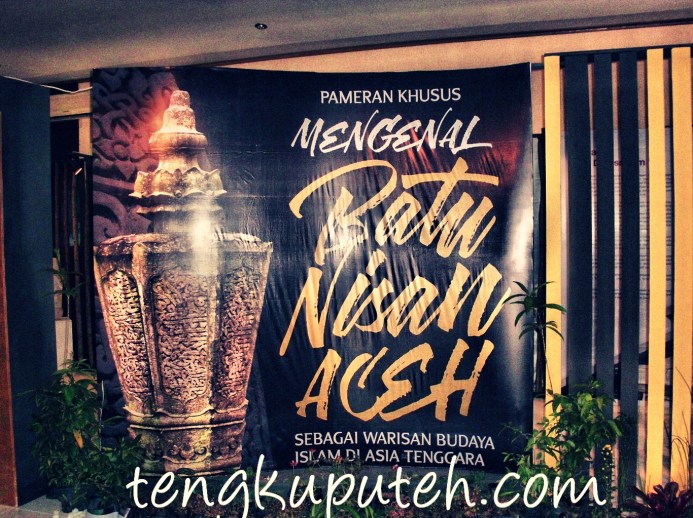
The exhibition entitled “Aceh Tombstone as an Islamic Cultural Heritage in Southeast Asia” at the Aceh Museum.

VISITING THE EXHIBITION ACEH TOMBSTONE AS AN ISLAMIC CULTURAL HERITAGE IN SOUTHEAST ASIA

Reports in Indonesian

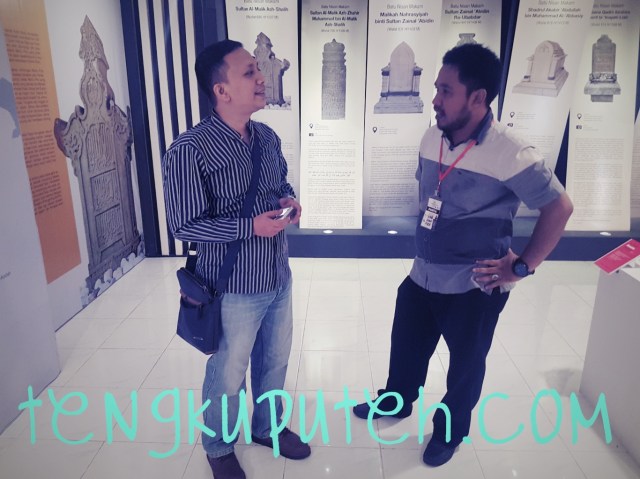
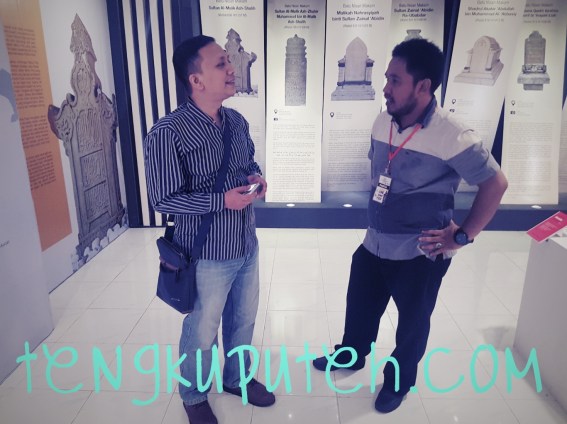
Not because the signs of death come closer, not a sign of seeking to bless. We, Saturday, May 13, 2017, visited some ancient headstone. It’s all because of love in history, love of science.

On 9-16 May 2017 Aceh Government through Culture and Tourism Office in cooperation with Mapesa, (Aceh History Concern Society) held an exhibition titled “Aceh Tombstone as the Heritage of Islamic Culture in Southeast Asia” at Museum Aceh. The tombstone exhibit features an original collection of 18 headstones, four from the Samudera Pasai Sultanate, three from the Lamuri Sultanate and 11 collections of gravestones from the time of the Sultanate of Aceh Darussalam.

Greeted by Muhajir Asyie, a member of Mapesa who became the guide that day, we went around. According to him, this exhibition just entered the introduction stage of Aceh gravestone, still in the simple process has not covered all types and models of the headstone. For the introduction stage this exhibition itself can be said to be successful, but in the future expected more can be displayed and has its own tombstone museum.

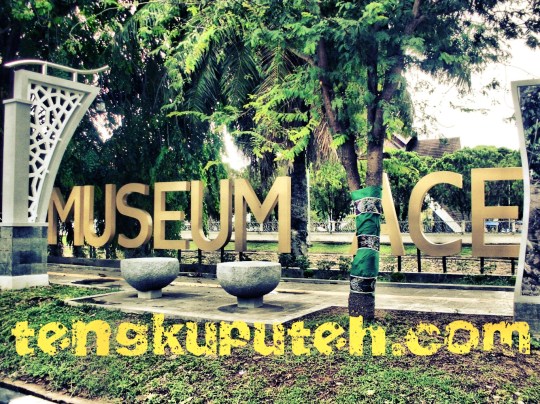
Museum Aceh is an ethnographic museum of indigenous tribes that inhabit Aceh.
Address: Sultan Alaiddin Mahmudsyah Street number 10, Peuniti, Baiturrahman, Banda Aceh City, State of Aceh, Republic of Indonesia, zip code 23116

The exhibition itself in a few days took place more visited by elementary, junior and senior high school students around Banda Aceh and Aceh Besar and surrounding areas. According to Muhajir Asyie is in accordance with the desired target because this exhibition wants to teach history, especially the younger generation.

Listening to an explanation of the history of Aceh’s gravestone from Muhajir Asyie an exhibition guide

The exhibition materials are mostly from Mapesa. Muhajir Asyie added that this Aceh tombstone exhibition is the first after several decades, in the hope that with this exhibition, the general public will keep the Aceh tombstones as cultural assets, should not be used as a knife sharpener or used as an ox binder.

As we toured the exhibition area, from the three sultanates whose gravestones were exhibited, the distinction between the tombstones of the Lamuri Sultanate (andesite) was very hard and rough. While the tombstones from the Sultanate of Samudera Pasai and the Sultanate of Aceh Darussalam are made of fine stone coming from the mountains. In this case, according to Muhajir say that tombstone of the Sultanate of Samudera Pasai and Sultanate of Aceh Darussalam this some found to serve as a tool knife sharpener. This is a pity because Aceh’s gravestones are a legacy to be saved. Therefore, the tombstone is a historical evidence that Aceh has a high culture in the past.

How should the younger generation understand Aceh’s history? According to Muhajir Asyie, the young generation should understand that the gravestone is “Islamic Art” is a culture arising from the Islamization process of the archipelago, is a long process started from the Sultanate of Samudera Pasai along with the Sultanate of Lamuri and continued by the Sultanate of Aceh Darussalam. The history must be inherited so that the younger generation does not regard the gravestone as a heresy tool, “god stone”, as well as other mystical thoughts. Why? Because the wrong thinking will produce the wrong conclusion as well.

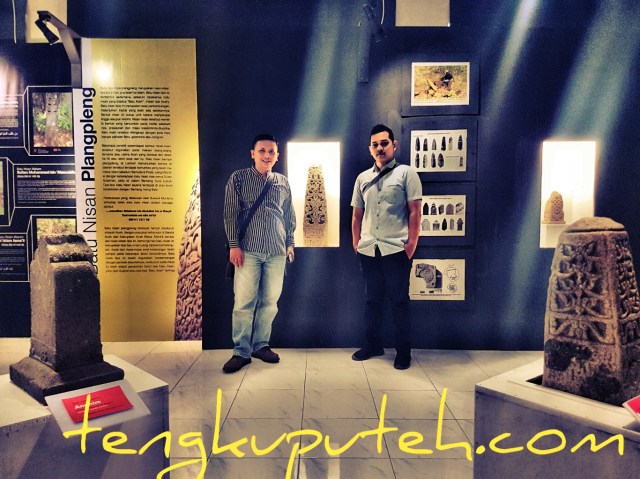
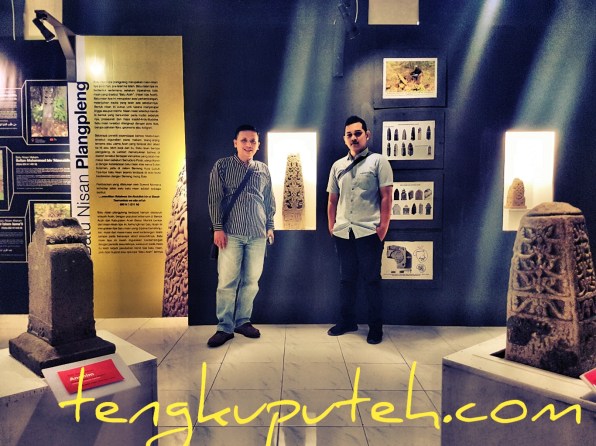
We at the Aceh Museum

We agree in this matter, history, if not told correctly, will only be a myth and legend alone. There are many historical stories that just become saga that never seems to happen, let’s together straighten it. What for? We are not getting wealth or treasure by studying history. In our opinion it is simple, to enrich the mind and strengthen our memories.

About Aceh

  1. CUMBOK WAR, A SOCIAL REVOLUTION IN ACEH (1946-1947); 8 April 2017;
  2. CIVILIZATION WITHOUT WRITING; 13 April 2017;
  3. ACEH THE FIRST SOVEREIGN COUNTRY TO RECOGNIZING THE INDEPENDENCE OF THE NETHERLANDS; 27 April 2017;
  4. VISITING THE EXHIBITION ACEH TOMBSTONE AS AN ISLAMIC CULTURAL HERITAGE IN SOUTH-EAST ASIA; 16 May 2017;
  5. DUTCH RAID OPERATION AGAINST CUT MEUTIA (1910); 20 May 2017;
  6. SAMUDERA PASAI AS THE FIRST ISLAMIC KINGDOM IN SOUTHEAST ASIA; 6 June 2017;
  7. ISLAMIC SHARIAH WHO IS AFRAID, A CASE STUDY IN ACEH; 13 June 2017;
  8. ACEH WOMEN FULL POWER; 13 June 2017;
  9. DUSK IN MALACCA; 4 July 2017;
  10. GOLD, INFIDELS, AND DEATH; 10 July 2017;
  11. MANTE THE LOST PYGMY TRIBE; 13 July 2017;
  12. HOW TO TELL HISTORY; 14 August 2017;
  13. THE ORIGIN OF THE COFFEE CULTURE IN ACEH; 19 August 2017;
  14. THE UNTOLD STORY ABOUT HISTORY OF THE COMMUNIST PARTY OF INDONESIA IN ACEH PROVINCE; 28 September 2017;
  15. WHEN CRITICISM IS FORBIDDEN; 14 October 2017;
  16. EXPLOITATION OF NATURAL RESOURCES, WHAT IS IT GOOD FOR ACEH; 5 November 2017;
  17. PEUCUT KHERKOFF, ACEH-DUTCH WAR MONUMENT; 12 November 2017;
  18. THE PRICE OF FREEDOM; 5 December 2017;
  19. ACEH CRAZY OR ACEH PUNGO; 25 February 2018;

Check out the visit of Tengkuputeh team to Aceh museum in the following video:

Posted in History, International, Literature, Opinion, Reportase, Story | Tagged , , , , , , , , , , , , , , , | 28 Comments

THE CLOAK OF FATE

Truly the past, present and future do not exist. All is just motion, just.

Indonesian Version

THE CLOAK OF FATE

Why did the smoke never go back to cigarettes? Why are the molecules far apart from each other? Why do ink droplets never come back? Because the universe is inclined to evolve increasingly chaotic, it is related to the arrow of time, the result of the expansion of the universe. What would happen if the time met with the force of gravity? What happens at the time? Will it spin upside down? No one knows for sure the answer.

To be honest, this is not a story about someone who wants to be understood for his actions in the past, many years back. Not that someone has a super-ego, the first to arrive with ambition, high ideals, and terrible pressure. This is the story of a person when confronted with an impossible choice when his only movement is immobile. Previously, he could not choose because he did not know what would happen. Then even though he knows what will happen, he still can not choose.

This life is a set of possibilities that interweave one another forming a well-intentioned or non-branched avenue of choice. It is possible that we are not born human. Or have we ever calculated what the likelihood ratio is, that we are the one chosen to be born? And maybe we have been through one, two, three or even more events that may take our lives faster than today.

A human being may never be able to choose some possibilities such as being born where, by whom, at any time or gender. But he is able to choose some things like who are friends, love, or even the enemy. Often, in life, there is only one chance to choose, if bad still to be faced. Humans do not slip due to big rocks, but because of gravel.

In the future, there may be more possibilities. And if imagined it might make all the possibilities clear or perhaps even blurred. As can not choose where and when to leave the world, but at least someone can still choose how the possibilities how to go through it. The problem is, humans can not go back in time because that’s very difficult to choose. He must make the right choice, plus, as long as not choosing everything is still possible. Therefore he doubted. Perhaps the theory may be difficult to define. I found no other explanation for this situation, only that is likely.

When the season changes. The same time stream is still flowing. Sometimes calm, sometimes bubbling anger. Sometimes the width of the tub is infinite, sometimes shrinking in the cold of winter. But he kept flowing because he was the divider of destiny.

Perhaps, it is important to believe that all life choices are real, all paths are true, they can be anything and as meaningful. You know people say, everything can be fixed in the end, though bad. Hope, our prayer as a human to the Ruler of Destiny is Khusnul Khatimah (Good End).

Posted in International, Literature, Poetry, Story | Tagged , , , , , , , , , , , , , , | 6 Comments

BATU NISAN ACEH SEBAGAI WARISAN BUDAYA ISLAM

Pameran bertajuk “Batu Nisan Aceh sebagai Warisan Budaya Islam di Asia Tenggara” di Museum Aceh.

MENGUNJUNGI PAMERAN BATU NISAN ACEH SEBAGAI WARISAN BUDAYA ISLAM DI ASIA TENGGARA

Pameran Batu Nisan Aceh

Bukan karena pertanda ajal semakin dekat, bukan pertanda mencari berkat. Tim Tengkuputeh, sabtu pada tanggal 13 Mei 2017 mengunjungi beberapa nisan kuno. Ini semua karena cinta pada sejarah, cinta kepada ilmu pengetahuan.

Pada tanggal 9-16 Mei 2017 Pemerintah Aceh melalui Dinas Kebudayaan dan Pariwisata bekerjasama dengan Mapesa (Masyarakat Peduli Sejarah Aceh) menggelar pameran bertajuk “Batu Nisan Aceh sebagai Warisan Budaya Islam di Asia Tenggara”  di Museum Aceh. Pameran batu nisan tersebut memamerkan koleksi asli 18 batu nisan, empat dari Kesultanan Samudera Pasai, tiga dari Kesultanan Lamuri serta 11 koleksi batu nisan dari zaman Kesultanan Aceh Darussalam.

Museum Aceh adalah sebuah museum etnografi dari suku bangsa-suku bangsa asli yang mendiami Aceh. Alamat: Jl. Sultan Alaiddin Mahmudsyah No.10, Peuniti, Baiturrahman, Kota Banda Aceh, Aceh 23116

Disambut Muhajir Asyie, seorang anggota Mapesa yang menjadi pemandu hari itu, tim tengkuputeh berkeliling. Menurutnya sendiri, pameran ini baru masuk tahap pengenalan batu nisan Aceh, masih dalam proses sederhana belum mencakup seluruh tipe dan model nisan. Untuk tahap pengenalan pameran ini sendiri dapat dikatakan sukses, namun ke depan diharapkan lebih banyak yang dapat ditampilkan, serta memiliki museum nisan tersendiri.

Pameran sendiri dalam beberapa hari berlangsung lebih banyak didatangi oleh siswa SD, SMP dan SMA serta mahasiswa yang berada di sekitar Banda Aceh dan Aceh Besar khususnya dan Aceh pada umumnya. Menurut Muhajir Asyie ini sesuai dengan target yang diinginkan, karena pameran ini ingin mengajarkan sejarah terutama generasi muda.

Mendengarkan penjelasan tentang sejarah batu nisan Aceh dari pemandu pameran

Bahan-bahan pameran sendiri kebanyakan dari Mapesa. Muhajir Asyie menambahkan, pameran batu nisan Aceh ini adalah pertama setelah beberapa dekade, dengan harapan dengan adanya pameran ini maka masyarakat umum lebih menjaga batu nisan Aceh sebagai aset kebudayaan, jangan dijadikan alat asah parang atau dijadikan alat pengikat lembu.

Perbedaan Batu Nisan Lamuri dengan Pasai dan Aceh

Ketika tim Tengkuputeh berkeliling area pameran, dari ketiga kesultanan yang jenis batu nisannya dipamerkan, terlihat perbedaan antara batu nisan dari Kesultanan Lamuri yang terbuat dari batu sungai (andesit) yang sangat keras dan kasar. Sedangkan batu nisan dari Kesultanan Samudera Pasai dan Kesultanan Aceh Darussalam terbuat dari batu halus yang berasal dari pegunungan. Dalam hal ini menurut Muhajir mangatakan bahwa batu nisan dari Kesultanan Samudera Pasai dan Kesultanan Aceh Darussalam ini beberapa ditemukan dijadikan sebagai alat pengasah parang atau pisau. Hal ini sangat disayangkan karena batu nisan Aceh merupakan warisan yang harus diselamatkan. Sebab, batu nisan tersebut merupakan bukti sejarah bahwa Aceh memiliki kebudayaan tinggi di masa lalu.

Batu Nisan adalah Seni Islam dalam proses Islamisasi Nusantara

Bagaimana generasi muda sebaiknya memahami sejarah Aceh? Menurut Muhajir Asyie, generasi muda sebaiknya memahami bahwa batu nisan adalah “Seni Islam” merupakan kebudayaan yang timbul dari proses Islamisasi Nusantara, merupakan proses yang panjang dimulai dari Kesultanan Samudera Pasai beriringan dengan Kesultanan Lamuri dan dilanjutkan oleh Kesultanan Aceh Darussalam. Sejarah tersebut harus diwariskan agar generasi muda tidak menganggap batu nisan sebagai alat klenik, “batu dewa”, serta pemikiran-pemikiran mistis lainnya. Kenapa? Karena pemikiran yang salah akan menghasilkan kesimpulan yang salah pula.

Tim tengkuputeh berpose di Musem Aceh

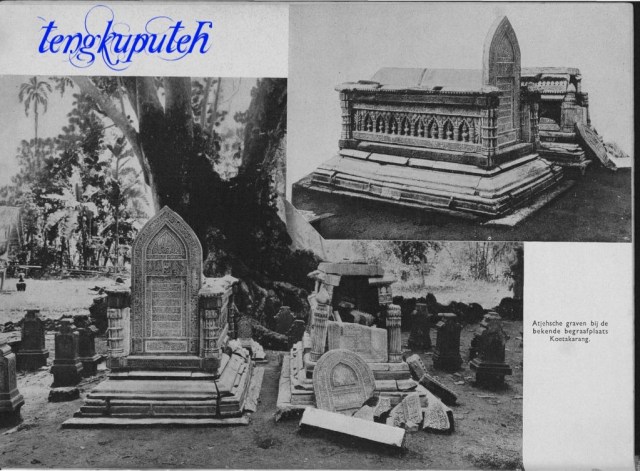
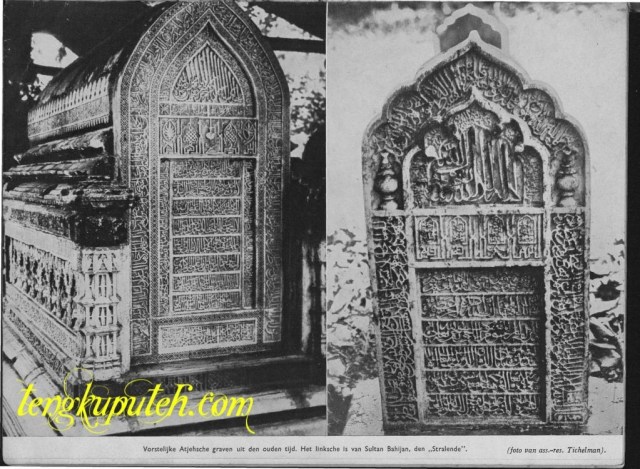
Makam Makam Sultanah Malikah Nahrasyiyah (kiri) dan ayah beliau Zainal Abidin (kanan) kondisi tahun 1937

Dua makam kuno Kerajaan Aceh yang dipotret Belanda sebelum tahun 1937

Tentara Belanda di makam para Sultan Pasai, dengan fotografer C.B. Nieuwenhuis sendiri (dengan kumis, dalam warna abu-abu, duduk di tengah) Foto tahun 1880.

Tim Tengkuputeh dalam hal ini sepakat, sejarah jika tidak diceritakan dengan benar hanya akan menjadi mitos dan legenda semata. Ada banyak cerita sejarah yang hanya menjadi hikayat yang seolah tidak pernah terjadi, mari kita bersama-sama meluruskannya. Buat apa? Sedang kita tidak memperoleh kekayaan atau harta dengan mempelajari sejarah. Menurut tim Tengkuputeh sederhana saja, untuk memperkaya batin dan memperkuat ingatan kita.

Simak kunjungan tim Tengkuputeh ke museum Aceh dalam rangka pameran Batu Nisan Aceh sebagai Warisan Budaya Islam di Asia Tenggara dalam video berikut :

Simak juga reportase lainnya

MENGUNJUNGI RUMAH PAHLAWAN NASIONAL CUT MEUTIA

Artikel lain tentang sejarah Aceh:

  1. PEREMPUAN ACEH FULL POWER 4 AGUSTUS 2008;
  2. MENYUSURI JEJAK DARA PORTUGIS DI ACEH 6 DESEMBER 2008;
  3. TEUKU UMAR PAHLAWAN 11 FEBRUARI 2011;
  4. FILOSOFI GOB 10 OKTOBER 2011;
  5. KEBENARAN YANG SAMAR 28 FEBRUARI 2013;
  6. GAM CANTOI TIADA 30 MARET 2013;
  7. PERANG CUMBOK SEBUAH REVOLUSI SOSIAL DI ACEH (1946-1947) 18 JUNI 2013;
  8. TSUNAMI 26 DESEMBER 2015;
  9. PERADABAN TANPA TULISAN 25 FEBRUARI 2016;
  10. SURAT TENGKU CHIK DI TIRO KEPADA RESIDEN VAN LANGEN AGAR TERCAPAI PERDAMAIAN DALAM PERANG ACEH MAKA BELANDA HARUS MEMELUK AGAMA ISLAM DI TAHUN 1885 4 NOVEMBER 2016;
  11. PARA PENYEBAR KEBOHONGAN 13 NOVEMBER 2016;
  12. MENGUNJUNGI RUMAH PAHLAWAN NASIONAL CUT MEUTIA 17 APRIL 2017;
  13. SAMUDERA PASAI SEBAGAI TITIK TOLAK ISLAM DI ASIA TENGGARA, SEBUAH UPAYA MELAWAN PSEUDO SEJARAH 24 APRIL 2017;
  14. EMAS, KAFIR DAN MAUT 20 APRIL 2017;
  15. MENGENAL LEBIH DEKAT POCUT BAREN 5 MEI 2017;
  16. OPERASI PENYERGAPAN BELANDA TERHADAP CUT MEUTIA 7 MEI 2017;
  17. KESULTANAN ACEH NEGARA BERDAULAT PERTAMA YANG MENGAKUI KEMERDEKAAN REPUBLIK BELANDA DARI KERAJAAN SPANYOL DI TAHUN 1602 18 MEI 2017;
  18. SYARIAT ISLAM SIAPA TAKUT 6 JUNI 2017;
  19. SENJA DI MALAKA 14 JUNI 2017;
  20. KRITIK KEPADA SULTAN ISKANDAR MUDA 4 JULI 2017;
  21. HIKAYAT SUKU MANTE 5 JULI 2017;
  22. TEUKU NYAK MAKAM, PAHLAWAN ACEH TANPA KEPALA 30 JULI 2017;
  23. ASAL MUASAL BUDAYA KOPI DI ACEH 1 AGUSTUS 2017;
  24. MUSIBAH TENGGELAMNYA KMP GURITA 6 AGUSTUS 2017;
  25. PERANG ACEH, KISAH KEGAGALAN SNOUCK HURGRONJE 7 AGUSTUS 2017;
  26. ACEH DI MATA KOLONIALIS 8 AGUSTUS 2017;
  27. MELUKIS SEJARAH 10 AGUSTUS 2017;
  28. NASIHAT-NASIHAT C. SNOUCK HURGRONJE SEMASA KEPEGAWAIANNYA KEPADA PEMERINTAH HINDIA BELANDA 1889-1936 14 AGUSTUS 2017;
  29. ACEH SEPANJANG ABAD 16 AGUSTUS 2017;
  30. PERANG DI JALAN ALLAH 30 AGUSTUS 2017;
  31. ACEH DAERAH MODAL 7 SEPTEMBER 2017;
  32. 59 TAHUN ACEH MERDEKA DI BAWAH PEMERINTAHAN RATU 12 SEPTEMBER 2017;
  33. KERAJAAN ACEH PADA JAMAN SULTAN ISKANDAR MUDA (1609-1636) 13 SEPTEMBER 2017;
  34. PERISTIWA KEMERDEKAAN DI ACEH 14 SEPTEMBER 2017;
  35. PASAI DALAM PERJALANAN SEJARAH 17 SEPTEMBER 2017;
  36. MATA UANG EMAS KERAJAAN-KERAJAAN DI ACEH 19 SEPTEMBER 2017;
  37. ACEH MENDAKWA 21 SEPTEMBER 2017;
  38. MISI MENCARI MAKAM PARA SULTANAH ACEH 6 OKTOBER 2017;
  39. BERZIARAH KE MAKAM SULTANAH MALIKAH NAHRASYIYAH 8 OKTOBER 2017;
  40. EKSPLOITASI SUMBER DAYA ALAM APAKAH BAGUS UNTUK ACEH 15 OKTOBER 2017;
  41. AROMA MEMIKAT DARI DAPUR ACEH 16 OKTOBER 2017;
  42. TARIKH ACEH DAN NUSANTARA 29 OKTOBER 2017;
  43. PEKUBURAN SERDADU BELANDA PEUCUT KHERKHOF DI BANDA ACEH SEBAGAI SAKSI KEDAHSYATAN PERANG ACEH 11 NOVEMBER 2017;
  44. PEMBERONTAKAN KAUM REPUBLIK KASUS DARUL ISLAM ACEH 17 NOVEMBER 2017;
  45. TUANKU HASYIM WALI NANGGROE YANG DILUPAKAN SEJARAH 19 NOVEMBER 2017;
  46. KOPRS MARSOSE SERDADU PRIBUMI PELAYAN RATU BELANDA 8 DESEMBER 2017;
  47. HIKAYAT-HIKAYAT DARI NEGERI ACEH 16 DESEMBER 2017;
  48. LEGENDA GAJAH PUTIH SEBAGAI ASAL NAMA KABUPATEN BENER MERIAH; 12 JANUARI 2018;
  49. SECANGKIR KOPI DARI ACEH; 22 JANUARI 2018;
  50. ACEH PUNGO (ACEH GILA); 8 FEBRUARI 2018;
  51. SIAPAKAH ORANG ACEH SEBENARNYA; 6 APRIL 2018;
  52. ORANG ACEH DALAM SEJARAH SUMATERA; 15 APRIL 2018;
  53. KETIKA IBNU BATTUTA MELAWAT SAMUDERA PASAI; 16 APRIL 2018;
  54. KISAH HIDUP LAKSAMANA MALAHAYATI; 18 APRIL 2018;
  55. PERANAN LEMBAGA TUHA PEUET DALAM MASYARAKAT ACEH PADA MASA LAMPAU; 5 MEI 2018;
  56. MENYINGKAP MAKNA SYAIR KUTINDHIENG SELAKU MANTRA SIHIR ACEH KUNO; 15 MEI 2018;
  57. SEJARAH KERAJAAN LAMURI; 24 JUNI 2018;
  58. KEBIJAKAN POLITIK ISLAM OLEH SNOUCK HURGRONJE SEBAGAI SARAN KEPADA PEMERINTAH HINDIA BELANDA UNTUK MENGHANCURKAN KEKUATAN ISLAM DI INDONESIA; 25 JUNI 2018;
  59. MASA DEPAN POLITIK DUNIA MELAYU; 28 JULI 2018;
Posted in Asal Usil, Cuplikan Sejarah, Reportase | Tagged , , , , , , , , , , , , , , , , , , , , , , , , , , | 112 Comments

AKU MENCINTAIMU DENGAN SEDERHANA

Happy 3rd Anniversary, and still counting

AKU MENCINTAIMU DENGAN SEDERHANA

Aku mencintaimu dengan sederhana, layaknya kasih sayang yang dibawa oleh titik-titik hujan. Yang akan ku bawa kemanapun jua kakiku melangkah. mengingatkan ada hal-hal sederhana yang luar biasa. Indah kehidupan adalah ketika memperjumpakan kita dengan berbagai peristiwa. Lakon itu membuat kita tertawa, bersedih atau berpikir. Hitam dan putih bercampur aduk dalam emosi. Sungguh banyak pengetahuan, sebagai manusia sering kali aku salah melangkah, kecewa dan gagal. Meskipun begitu aku selalu bisa tersenyum mengingat engkau disisiku.

Hari ini, jam ini, detik ini. Tak perlu kau tanyakan lagi, itu semua untukmu adanya. Bahwa aku mengakui, Disaat hujan turun, Aku rindu padamu. Aku mencintaimu bahkan sangat mencintaimu. Cintaku yang sederhana, sangat sederhana dan tanpa kata-kata lagi.

Untuk cintaku yang sederhana, selamat ulang tahun pernikahan ke-3

Posted in Cerita, Kisah-Kisah, Literature, Puisiku | Tagged , , , , , , , , , , , | 5 Comments

THE FALL OF ICARUS, WHEN A MAN TRIES TO REACH THE SUN

We remember the wings of Icarus trying to reach the sun. He will not (will) arrive.

THE FALL OF ICARUS, WHEN A MAN TRIES TO REACH THE SUN

Indonesian Translation

One day, Icarus, who was imprisoned on the island of Crete, wanted to escape by air, flying. His father Daedalus, an inventor, made him wings. The eagle’s feathers were collected and arranged, and finally, a pair of wings became, glued with candles to the child’s body. He flies, but he flies too high, approaching the sun. The wax was melted by the solar heat, and the wings were dated. Icarus fell to earth, into the Aegean. He drowned and died.

Greek mythology does not describe a sad accident or a dramatic event. Quite the opposite, comedy. A normal life does not seem to be shaken by the fate of someone who is being and taken away by death. That what happened was not a tragedy, but something funny, like slipping a banana skin? No sense of the child’s soul, what’s his fault? The question is disturbing. A tragedy that is left passing meaningless.

Is there any defeat? No, hope not.

Perhaps the unfortunate fate of Icarus, the story of a flying and inaccessible young man, is part of everyday life, there are working farmers and vessels on the trade, but there are also people who seek out but the guards. Or perhaps Icarus is an example of the vanity of humanity who is arrogant and forget to be careful. So if he fell and died let it be. Perhaps, life is better served by receiving the enjoyment that exists, such as a pastor who is grateful for a clear season. Or better to live in an honest way, by plowing the earth through the sea. Why not emulate Icarus diligent farmers, herders are patient, and the prosperous merchant on the ship? Why should he violate the established human nature, that he is not a bird?

If it is so easy that we determine the meaning of nature, we will be fooled by formulating “nature” or “essence”, we will never suspect a time when humans will be able to penetrate that formula. Icarus has failed, but if nobody dares to fly, liberate and become “bizarre” the world will remain as medieval. There were no Wright brothers, two Americans who in 1903 with a machine can fly for 10 minutes in a field in North Carolina and thereby pave the way for people to roam the air, like birds, even beyond the birds, until the sky is not scary anymore.

When we fail. Like, when we as students are faced with teachers who are increasingly satisfied with more and more make the students stay class. We are grateful, we are not Icarus. We live, he dies. Life is amazing because we, on a sad day, can actually pick a ripe orange fruit, and taste it, and share it.

Is there any defeat? No, hope not.

We will always get warm and light, we always try to get there. But is it possible to reach that sky, with salvation, blood, prayer, and iron though? Probably not, but life means not because it reaches. Life means by searching.

We remember Icarus’s wings trying to reach the sun. He will not (will) arrive.

Terjemahan Bahasa Indonesia

Posted in Fiction, International, Literature, Opinion, Story | Tagged , , , , , , , , , , , , , , , , , , , , , , , , , , | 7 Comments

THE NOBLE VEIL, ODA NOBUNAGA

ODA NOBUNAGA

THE NOBLE VEIL, ODA NOBUNAGA

Why does he think he needs to hide from everyone who knows and loves him? What was he afraid of? What he protected. Someone who does not trust anyone, Oda Nobunaga. What if a bird does not want to sing? Nobunaga replied, “Kill it!” A story about Oda Nobunaga when Meeting with Saito Dosan at Shotokuji Temple.

XXX

Nobunaga is now nineteen years old. Three years after his death since his father’s death. Public opinion says he is stupid and quickly angry. For three years, this young, careless, empty-headed heir, with no talent or intelligence, was not only able to defend his position but also managed to control the situation all the way through the provinces. How can he do this? Some say it is not Nobunaga’s blessing, but because of the faithful services of his followers – Hirate Nakatsukasa, Hayashi Sado, Aoyama Yosaemon, and Naito Kaysusuke. As long as the servants of the former ruling credentials are alive, things will work out, but if one or two of them die, and the pillars collapse, The destruction of the Oda clan is only a matter of time. Among those who looked forward to it were Saito Dowasfrom Mino and Imagawa Yoshimoto from Suruga. Nobody disagrees with this view. Surrounded by large and powerful provinces, the Oda clan’s territory appears small and poor, for it is necessary for essential strengths for survival. Public opinion is wrong. Nobunaga is considered to be weak-hearted, but if anyone asks for proof, it will be revealed that no one ever determines whether the assumption is right or wrong. Everyone saw Nobunaga leave his castle in the spring and fall, and it all came to the conclusion that he was about to fish or swim. But if you look at it yourself, they will realize that what they see is an all-out military exercise. When he was thirteen, Nobunaga first took part in a battle. At the age of fifteen, he had lost his father. As he grew older, his attitude became more arrogant. At his father’s funeral ceremony, Nobunaga wore an inappropriate dress for such an official occasion. Under the unbelieving sight of the guests, Nobunaga approached the altar, grabbed a handful of incense ash, and threw it into the clay container of his father’s ashes. Then he surprised everyone by returning to the fort. “Very embarrassing. Was he heir to this province? Stupid youth that can not be expected. “Who would have thought he was so sassy?” That’s the view of those who rate Nobunaga based on outward appearances. But those who pondered the situation more deeply shed tears of sadness for the Oda clan. “His younger brother, Kanjuro, is very polite, and behaves respectfully from beginning to end,” one of the mourners said. They regretted that it was not him who was appointed the heir.

XXX

Sometime before his death at the age of forty-six, Nobuhide had arranged Nobunaga’s engagement with Saito Dosan’s daughter from Mino, by Nakatsukasa. It’s been years since Mino and Owari have been hostile to each other, so marriage is political. Such tactics are almost a necessity in a war-torn country. Dosan soon realized the veiled intent behind the plan. Nevertheless, he gave his beloved daughter, Nouhime to the heir of Oda clan leadership, from neighboring provinces to the capital has been known as a moron. Dosan approves of the marriage but secretly intends to seize Owari. Saito Dosan wanted to meet his son-in-law, he proposed holding their first meeting at Shotokuji Shrine in Tonda, the border of the two provinces. The temple is a shrine of the Ikko Buddhist sect and is located somewhat apart from the seven hundred houses in the village. Despite the large entourage, Nobunaga left Nagoya’s fortress crossing the Kiso and Hida rivers, then advanced all the way to Tonda. The dry season is at the door. Wheat in pale yellow fields. The breeze from the Hida river was refreshing. The houses in Tonda look sturdy and have lots of barns. “That’s them. The convoy has arrived. Soon they will pass here. “Two samurais from the Saito clan were placed in the village reporting, the two samurais kneeling in the face of a small hut. The cottage is dark, dirty, and ground floor. “Well, you two hid behind the back bushes.” Many stories about Nobunaga circulated. What was he like? Dosan wonders. What kind of person is he? Before the official meeting, I wanted to see him first. This way of thinking is typical of Dosan, that’s why he’s here, peering out from the cottage by the side of the road. Owari’s troops kept closer. With a stifled breath, Dosan observed the walking style of the soldiers as well as their ranks. The sound of the troop steps followed by the pace of the pace. Dosan can not get his eyes out of sight before him. In the midst of the horsemen is a very gallant horse, with a gleaming muzzle. In a sumptuous saddle decorated with pearls, Nobunaga sits, his hands in purple and white bridles. He was chatting with his followers. “What is this?” These are words that come out of Dosan’s mouth. He looked astonished. Nobunaga’s appearance was unusual. Dosan had been told that the ruler of Owari used to be in strange clothes, but this was more than any story he had ever heard. Nobunaga swayed above the saddle. Her hair was in a condo and tied with a pale green ribbon. He was wearing a bright patterned cotton mantle with only one arm. Both the short sword and the long sword are decorated with seashells and wrapped with holy rice straw. Seven or eight objects hung from his belt: a pouch, a small pumpkin, a medicine box, a fan, a horse carving, and some gems. Under a short cloak made of tiger skin and leopard, he wore a sparkling gold brocade. After Nobunaga had passed, Dosan’s followers had to force themselves not to laugh. Their faces showed how much they struggled to keep from laughing as they watched the ludicrous scene. “It’s finished?” Dosan asked. Then, “is that the end of the procession?” “Yes, that’s it.” “Have you noticed it?” “From afar.” “Hmmm, his appearance did not contradict the rumors circulating. His face is handsome and physical too, but here is something that is lacking. “Dosan said. Smiling smugly, he raised his finger to his head. Immediately, they went out the back door, then down a hidden shortcut to the temple. Just as the front row of Owari’s troops arrived at the front gate of the Shotokoji shrine, Saito Dosan and his followers sneaked through the back gate, acting as if nothing had happened. They changed clothes and headed for the main road. The gate of the temple has been filled with people, because all the Mino people are gathered for an official welcome, the main temple, the big hall, as well as the reception room is left empty.

XXX

Saito Dosan dismissed Nobunaga. “There is no reason for me to go to greet him.” He considers Nobunaga to be merely a son-in-law. There would be no problem if that was the only consideration. But Nobunaga is the ruler of a province, as well as Dosan, and his followers must assume that the meeting will be held between two equals. Even though Dosan is also Nobunaga’s father-in-law, would it not be more appropriate if their first meeting was held as a meeting between two provincial rulers? That is what comes to mind in the mind of Kasuga Tango, one of Dosan’s senior followers, and he asks it carefully. Dosan replied that it was not necessary. “You will join the meeting later. Make sure the seventeen hundred people in the corridor leading here march well. I think they’re ready there. Hide the experienced soldiers, and have them clear their throats as my son-in-law passes by. Prepare army bows and rifles in the yard. And tell him to put on an authoritative look.” There will be no better chance to show off the power of Mino and grab the ruler of Owari and his men, today.

Oda Clan Coat

Nobunaga was climbing the stairs at the main entrance. Around him were more than a hundred of Saito’s followers, ranging from elders to young samurai still on probation. They kneel side by side, bowing to the newly arrived guest. Her hair had been rearranged, instead of a leather tiger shirt and a leopard, she was dressed in a white silk robe emblazoned with gold thread embroidered in her margarine, beneath a purple unlined armor. His short sword was tucked behind his waist, while a long sword he carried in his right hand. His entire appearance resembles the man from the palace.

With no hesitation Nobunaga walked down the corridor, he looked left and right, then said aloud, “I feel awkward when I’m being escorted like this. I prefer to meet my father-in-law alone. ”

Kasuga Tango greeted, while he was busy making small talk, Nobunaga hurried down the corridor, past people marching along the wall. He treated the soldiers as if they were just grass on the side of the road. After arriving at the welcoming room, he asked Tango, “Is this the place?”

“Yes, my lord.” He was still panting because he had to chase after Nobunaga.

Meeting between Saito Dosan and Nobunaga at Shotokuji Temple

Nobunaga nodded, then stepped inside. He calmly sat down and propped his back on a pole on the side of the room. He looked up as if admiring the paintings on the ceiling. In one corner of the room came a rustling sound as a man stood up. Dosan stepped out. He then sat in a higher position than Nobunaga. Nobunaga pretended not to notice, or rather, he pretended to be indifferent as he toyed with his fan. Dosan glances sideways. There is no provision on the ordinance for fathers-in-law to speak with their son-in-law. He held herself silent. Tense atmosphere. Dosan’s eyebrows pierced the needle. Tango who could not resist the tension longer, close himself to Nobunaga and bend over until he reached the tatami. “The master who sits over there is Lord Saito Dosan. Will Lord Nobunaga address him?”

Nobunaga said, “Is that so?” Then pulled his back off the pillar and sat up straight. He bowed once and said, “We are Oda Nobunaga. We are happy to meet you.”Along with the change of attitude and greeting of Nobunaga, Dosan’s attitude was softened. “We’ve been expecting this encounter. We are happy that long-delayed desires can come true.”

“We are happy to have a father-in-law who can be a place to learn. After all, today is a blessed day. We hope at the next meeting I can show the face of a grandchild.”

“With pleasure.” Dosan looked satisfied. He sighed with relief. The father-in-law and son-in-law raised the glass while praising each other. The rigid atmosphere at the beginning of the meeting now turned into a suave.

XXX

“Ah, I remember again!” Nobunaga suddenly said, as if something new had crossed his mind. “My lord Dosan, father-in-law. On the way here, I met a really strange man.”

“Strange how?”

“Hmm, he’s also an old man, and he’s peeking at the convoy from the window of the commoners’ shack. Although this is the first time I met my father-in-law, when I looked at father-in-law, hm .. Father-in-law very similar to that person. Is not this so strange?” Laughing, Nobunaga hid his mouth under a half-open fan.

Dosan paused as if just swallowing a bitter drink. The guards of Dosan are immediately bathed in sweat. After the meal, Nobunaga said, “Ah, I’ve been too much trouble for my father-in-law. I wanted to cross the Hida and reach the place before the night. I excused myself.”

“Are you leaving now?” Dosan stood up. “I am reluctant to see you go, but I can not hold you either.” He himself must return to the fort before dark. The six-meter-long spear forest turned its back on the afternoon sun and headed eastward. Compared to them, Mino’s spear troops looked lethargic and lacking in enthusiasm.

“Ah, I do not want to live any longer. Someday my sons will beg to save lives in front of that moron! But there’s nothing to be done, “Dosan lamented to his followers, rocking in the stretcher.

XXX

The wise man will be drowned in ignorance if he considers his policy high, for the truth is not the wisdom of success but is tested by failures. Pain and soreness, above all that no one can match the value of sacrifice. No knowledge, no experience.

Baca juga Terjemahan Bahasa Indonesia

More stories:

  1. THANK YOU FOR REJECTING ME YESTERDAY; 9 August 2008;
  2. DEVIL FACE OF AN ANGEL; 19 November 2010;
  3. THE COURT OF SATAN; 29 November 2010;
  4. HOW TO TURN LEAD INTO GOLD; 3 April 2017;
  5. DIFFERENT NARCISSUS; 7 April 2017;
  6. YUKIMURA SANADA, THE LAST GENERAL; 10 April 2017;
  7. THE LAST WITCH; 10 April 2017;
  8. ALI AND MALENA, A LOVE STORY; 11 April 2017;
  9. TOKUGAWA IEYASU, THE ASURA; 19 April 2017;
  10. BHISHMA’S DEATH; 21 April 2017;
  11. BEHIND THE SCENES MACHIAVELLI WROTE THE PRINCE; 23 April 2017;
  12. SPEECH OF THE BIRDS; 25 April 2017;
  13. LETTER TO LISA; 9 June 2017;
  14. GATE WITHOUT GATE, THE MILITARY STRATEGY OF IEYASU TOKUGAWA; 10 JUNE 2017;
  15. DUSK IN MALACCA; 4 July 2017;
Posted in Fiction, History, International, Literature, Story | Tagged , , , , , , , , , , , , , , , , , , , , , , , | 17 Comments