MENGAPA KITA MERASA SENASIB DENGAN PALESTINA

Palestina adalah kesedihan. Sepatah dua patah cerita tentang orang-orang yang kehilangan kemerdekaan, tanah yang dirampas dan orang-orang teraniaya.

MENGAPA KITA MERASA SENASIB DENGAN PALESTINA

Di depan gedung parlemen Israel (Knesset) masih berdiri tulisan yang menjadi landasan politik Israel, bahwa “Luas wilayah Israel adalah dari sungai Eufrat (Irak) sampai ke sungai Nil (Mesir).” Selagi itu masih dijadikan dasar Negara Israel tampaknya kemungkinan damai di Timur Tengah sangat kecil. Israel sendiri sebagai sebuah Negara yang disokong oleh Amerika Serikat merupakan kekuatan besar yang memiliki segalanya, militer tangguh, keuangan persejataan yang kuat, menguasai media serta industri yang maju.

Maka, Palestina adalah kesedihan. Sepatah dua patah cerita tentang orang-orang yang kehilangan kemerdekaan, tanah yang dirampas dan orang-orang teraniaya. Gema Palestina ini sedemikian sering terlupakan. Ketika tindakan kekerasan pihak keamanan Israel yang menyebabkan 3 orang Jemaah tewas dan lebih dari 100 luka-luka di kompleks Masjid Al-Aqsa, sebuah aksi kekerasan dan pelanggaran hak azazi manusia, seperti pembunuhan terhadap orang yang berupaya menjalankan haknya melakukan ibadah di Masjid Al-Aqsa. Dunia terasa sembilu. “Lihatlah!” Israel seakan menegaskan bahwa, “Orang Palestina boleh memiliki pemerintahan sendiri, tapi itu hanya diatas kertas!”

Sejarah adalah sebuah pola dengan beberapa pengulangan.

Pada 11 Juli 1948, tentara Israel, dengan dibantu batalion yang dipimpin Moshe Dayan lengkap dengan sebuah kendaraan berlapis baja yang dipasangi meriam menyerbu al-Ludd, disertai para pemuda yang telah dilatih perang dari Ben Shemen. Kota itu dicoba dipertahankan para milisi Arab. Tapi dalam 47 menit, belasan orang Arab tewas, termasuk perempuan, orang tua, dan anak-anak. Di pihak Israel, sembilan orang mati.

Malam itu juga posisi-posisi kunci di pusat kota direbut. Penduduk Palestina, dalam jumlah ribuan, dipaksa masuk ke masjid utama. Ketika beberapa orang Arab mencoba melawan dengan menembaki tentara Israel dari dekat sebuah masjid kecil, balasan datang tak tanggung-tanggung.

Granat dilontarkan ke rumah-rumah. Masjid kecil itu ditembak dengan peluru antitank. “Dalam 30 menit, dua ratus lima puluh orang Palestina tewas,” tulis Ari Shavit dalam bukunya My Promised Land: The Triumph and Tragedy of Israel. “Zionisme telah melakukan pembantaian di al-Ludd.”

Dan itu bukan akhir cerita. Setelah kota diduduki, Yitzhak Rabin, perwira operasi, meneruskan keputusan Ben-Gurion dalam sebuah instruksi tertulis: “Penduduk al-Ludd harus diusir secepatnya, tanpa memandang umur.”

Menjelang malam, sekitar 35 ribu orang Arab Palestina berduyun-duyun meninggalkan kota kelahiran merekadalam barisan yang amat panjang menuju timur. Tak pernah bisa kembali.

Ari Shavit menuliskan adegan itu dengan nada sedih. Ia tahu kekejaman telah terjadi terhadap orang Palestina yang tak berdosa dan tak berdaya ituorang-orang usiran abad ke-20, seperti bangsa Yahudi, orang-orang usiran abad ke-6 sebelum Masehi. Tapi ia tak mengutuk. Wartawan harian Haaretz itu tak sanggup mengutuk para pemimpin Israel yang memerintahkan kesewenang-wenangan di al-Ludd. “Tanpa mereka,” tulisnya, “aku tak akan pernah dilahirkan. Mereka melakukan kerja yang keji itu yang memungkinkan bangsaku, rakyatku, anak-anakku, dan diriku hidup.”

Shavit lahir di Rehovot, 20 kilometer dari Tel Aviv, sembilan tahun setelah Negara Israel berdiri. Ada yang jujur dalam pernyataannya: ia mengaku tak berdaya di tengah pilihan-pilihan moral yang sulit.

Israel memiliki segalanya untuk memenangkan perang melawan Palestina. Pesawat-pesawat tempur mereka mengaum di angkasa, sedang orang Palestina punya apa? Mungkin mereka hanya bisa mengatakan kami punya tubuh yang bisa meledak. Bayangkan tubuh yang bisa meledak. Palestina bukan hanya “tanah tumpah darah” dalam arti harfiah, tapi juga orang-orang yang selamanya dijerumuskan dalam rasa sakit dan terus menerus dipenggal.

Kondisi di Palestina, masyarakat disana beribadah dengan dikawal Tentara Israel. Foto Reuters / Ammar Awad

Kita tidak tahu sampai kapan bisa Palestina hidup dalam kezaliman Israel, tapi kita semua tahu bahwa Palestina akan selalu hidup sebagai sebuah hasrat. Hari-hari disana penuh ketegangan, antara marah dan cita-cita, kemungkinan hidup atau mati, ketergusuran sekaligus kepahlawanan, nostalgia serta sulitnya harapan.

Palestina mungkin saat ini adalah satu-satunya yang harus kita suarakan, sebab Palestina bukan hanya sebuah wilayah, tapi sebuah perjuangan akan kemerdekaan. Sebagaimana yang dituliskan dalam pembukaan Undang-Undang Dasar 1945. “Bahwa kemerdekaan itu adalah hak segala bangsa.”

Rasanya agak sulit dibayangkan, Israel sebagai sebuah Negara yang menaungi bangsa Yahudi yang membawa trauma sejarah pemusnahan sebagian besar kaum Yahudi oleh Nazi, kini justru melakukan kekejaman selayaknya mereka dulu diperlakukan. Israel adalah Israel, karena merasa pernah menjadi korban holocaust justru menjadikan mereka merasa berhak menjadi pelaku holocaust selanjutnya, yang lebih kejam dari Hitler. Sebuah lingkaran kebencian yang tak akan pernah berujung.

Israel, merasa terkepung sejak lahir, menyerang dan menduduki wilayah orang sejak pertama berdiri. Israel bukan hanya sebuah negeri, Israel adalah sebuah pasukan tempur. Dia siaga terus menerus dan umumnya tak pernah kalah.

Sejarah memang tak pernah menjanjikan penutup yang bahagia bagi semua orang, juga (mungkin) tak ada  “happy ending” yang jadi akhir selama-lamanya. Tapi sejarah juga terdiri atas tindakan yang tak henti-hentinya membangkang, menuntut, dengan kata lain dari kesewenang-wenangan, tak boleh terjadi lagi. Maka dalam segala keterbatasan kita, marilah kita berdoa untuk mereka di Palestina. Karena Palestina adalah kita.

Mengapa kita adalah Palestina? Palestina bukanlah hanya sebuah wilayah, bukanlah sekumpulan orang-orang dari etnis tertentu. Palestina adalah kesedihan, menghadapi kekuatan yang bertaut dengan pengetahuan dan teknologi, menghadapi senjata-senjata yang canggih, kekuatan uang yang begitu perkasa serta menaklukkan. Mengapa kita merasa senasib dengan Palestina? Karena kita tahu rasanya bersedih, karena hati kita merasa senasib dengan Palestina. Pernah merasakan bagaimana diringkus, diringkas dan dibungkam didunia.

XXX

Beberapa pemikiran:

  1. Melanjutkan Perjuangan; 4 Agustus 2008
  2. Lughat; 28 November 2008;
  3. Udik Invation; 15 Desember 2008;
  4. Membangun Tradisi Baru; 18 Desember 2008;
  5. Tragedi Andalusia Mungkinkah Berulang; 30 Desember 2008;
  6. Jangan Melupakan Sejarah; 26 Juli 2009;
  7. Menegakkan Keadilan; 3 November 2009;
  8. Menelusuri Sejarah Perang Salib; 30 April 2010;
  9. Makna Puisi Yang Hilang; 5 Januari 2011
  10. Penaklukkan Kebudayaan; 30 Desember 2012;
  11. Membakar Buku Membunuh Inteletual; 6 Juni 2016;
  12. Tragedi Barbastro; 3 April 2017;
  13. Pengulangan Sejarah; 23 Mei 2017;
  14. Bom Bunuh Diri Untuk Kemenangan Siapa; 25 Mei 2017;
  15. Memutus Lingkaran Kebencian; 8 Juli 2017;
Posted in Cerita, Cuplikan Sejarah, Data dan Fakta, Kisah-Kisah, Kolom, Mari Berpikir, Opini, Pengembangan diri | Tagged , , , , , , , , , , , , , , , , , , , , , , , , , , , , | 16 Comments

OH MAN, I COMPLETELY DON’T KNOW YOU

Oh man, I completely don’t know you.

OH MAN, I COMPLETELY DON’T KNOW YOU

Actually, he was nothing more than a rotten man with a grandiose dream. Someone with pride and self-centeredness, thinking that the world is created for him alone. He is nothing more than a slacker and defeated in the battle of life. Disturbed by his dreams, his own aspirations and plans and then fall and create the world that he can only understand. It is very difficult to live with him. He always knows when is the right time for him to make me cry and laugh cruelly.

But his words are very sweet. Though insulting and not always adoring. It was so easy he made me forget that not a minute ago he made me cry. His smile was innocent. And the most remarkable poem he created has a strong and deep-rooted feeling to the earth. Somehow a man full of contradictions, individualistic and cold can make the word as his slave.

Really I can never understand why I was caught by him. One word of it can stir up my feelings, it’s been hundreds of years I know the rancid bastard. He who has taught me how to hate, burning on him. “That is a woman if her wishes are not met it will be threatening or crying.” It is the words of a man who believes that women are weak creatures. He will never know a woman’s revenge will move the whole world with him, shrink a man then destroy him without mercy.

Right now my hatred is burning. Why? Ask a weak man with a steel grip that stole my youth. My lips smile at him but really want to trample on the bastard’s head. It was enough of him humiliation to have no love for him now. From a girl who once fell in love, the most burning love of all loves ever, the most deserving love of all love. Love that once reached the soul and body. And now there’s nothing left. Human feelings are incomprehensible.

Oh man, I completely don’t know you.

Translate From: AKU TAK MENGERTI KAMU

Posted in International, Literature, Poetry, Story | Tagged , , , , , , , , , , , , , | 12 Comments

MEMBELI KEBIJAKSANAAN

Beberapa orang hanya bisa melihat tanpa bisa mengerti, mendengar tanpa bisa memahami, menghakimi tanpa bisa mengetahui

MEMBELI KEBIJAKSANAAN

Indonesia sedang menikmati media sosial booming, percakapan yang paling panas justru terjadi disana. Masyarakat kini cenderung merujuk media sosial untuk mengetahui isu terkini dan perkembangan sebuah peristiwa. Kecenderungan ini otomatis mengubah cara kerja banyak profesi, termasuk wartawan dan aparat pemerintah.

Perkembangan teknologi internet telah mengantarkan media sosial sebagai media penting untuk sumber berita, setiap orang mampu memberikan perspektif dan bercerita tentang opininya terhadap suatu kejadian. Ditambah konten melalui media sosial adalah jangkauan berita menjadi semakin luas.

Sayangnya, hasrat membaca besar-besaran tersebut hanya terbatas pada membaca judul saja tanpa keinginan untuk menganalisis lebih mendalam. Cukup sering kita melihat sebuah konten dibesar-besarkan tanpa terlalu menilik kualitas editorial dari tulisan tersebut.

Beberapa orang hanya bisa melihat tanpa bisa mengerti, mendengar tanpa bisa memahami, menghakimi tanpa bisa mengetahui

Tentu itu adalah sinyalemen yang menyedihkan, ketika dunia maya saat itu memberikan cukup banyak peluang menangguk keuntungan melalui iklan, Google Adsence misalnya. Berbagai bualan dibesarkan, siasat retorika dilakukan untuk membuat orang penasaran. Sedikit menyesatkan tak apa, asal tujuan tercapai. Kita bersedih ketika berita bohong dan fitnah diviralkan.

Kita hidup pada sebuah zaman ketika benci bisa jadi diiklankan. Teriakan muak, geram, dan tak sabar dengan teriakan yang cukup keras maka akan menarik perhatian orang ramai, bahkan mendapat dukungan. Sebaliknya, di dunia yang kian mencemaskan ini. Dunia dan manusia gampang salah dan marah. Himbauan kebaikan kerap kali dipandang dengan curiga, ada maksud dibelakangnya. Pandangan seperti ini juga tidak lahir secara instan, ada kejadian dibelakangnya. (Mungkin) fenomena ini lahir dari banyak kecenderungan orang-orang munafik yang memamerkan kesalehan guna menutupi kesalahan.

Padahal kita, manusia sebagaimana dikatakan oleh Allah S.W.T adalah “Khalifah”-Nya di muka bumi. Makhluk yang ditugaskan untuk memimpin, minimal dirinya sendiri namun apakah kita selaku manusia mampu melaksanakan tugas yang berat itu dengan bijaksana? Kebijaksanaan tidak serta merta diwariskan oleh seorang ayah kepada seorang anak, kebijaksanaan juga tak selalu melekat pada tingginya tingkat pendidikan.

Manusia diberikan akal oleh tuhan untuk mempelajari apapun dari siapapun, untuk mengambil kebaikan bahkan dari tahi sekalipun, dengan diolah menjadi pupuk. Di samping itu dalam setiap meja kopi, dalam setiap majelis, manusia harus berpikir dan menganalisa tiap-tiap berita atau pun kejadian. Mengambil kesimpulan berdasarkan manfaat dan mudharat.

Logika adalah alat terbaik untuk mengambil keputusan, namun kita juga dibekali nurani sebagai alat guna mendapatkan kebijaksanaan. Nurani melahirkan kebaikan, dan kebaikan yang tulus itu tak akan pernah seperti api membakar kayu, ia tak akan pernah habis.

Apa guna kepandaian kalau tidak memperbesar kepribadian manusia sehingga makin sanggup memahami orang lain – Emha Ainun Najib

Sayangnya kebijaksanaan itu tidak semata-mata lahir karena tingkat pendidikan, keuangan yang berlebih, atau bahkan kesengsaraan yang mendalam sekalipun. Ia sering lahir dari sebuah hati dan fikir yang peka dan peduli. Ia bisa muncul pada siapa saja, tak mesti disinggasana raja atau gubuk derita. Sebagaimana Nabi Musa belajar dari Nabi Khaidir tentang kebijaksanaan.

Kita dapat berusaha membeli kebijaksanaan, dengan mengatasi keterbatasan diri justru ketika merasa, disaat-saat apapun juga, bahwa diluar Tuhan di dunia ini, ada yang lebih perkasa dari kita dan tak malu untuk belajar dari mereka. Selebihnya, saya dan kamu adalah manusia. Kita hanyalah makhluk-Nya yang senantiasa bisa saja lalai, oleh lupa dan tidur.

Opini :

  1. Para Penyebar Kebohongan; 13 November 2016;
  2. Riwayat Sarung; 9 Januari 2017;
  3. Tragedi Barbastro; 3 April 2017;
  4. Menentang Tradisi Memang Tradisi; 5 April 2017;
  5. Kopi Dalam Lintasan Sejarah Dunia; 1 Mei 2017;
  6. Gula Dan Sejarah Penindasan; 4 Mei 2017;
  7. Mencari Jurus Penangkal Fitnah Sebuah Jurnal Ilmiah; 11 Mei 2017;
  8. Memahami Makna Penista; 11 Mei 2017;
  9. Pengulangan Sejarah; 23 Mei 2017;
  10. Bom Bunuh Diri Untuk Kemenangan Siapa; 25 Mei 2017;
  11. Kesadaran Literasi; 8 Juni 2017;
  12. Syariat Islam Siapa Takut; 9 Juni 2017;
  13. Idul Fitri Dan Hukum Tekanan Pascal; 25 Juni 2017;
  14. Hikayat Suku Mante; 5 Juli 2017;
  15. Memutus Lingkaran Kebencian; 8 Juli 2017;
Posted in Cerita, Kisah-Kisah, Kolom, Mari Berpikir, Opini, Pengembangan diri | Tagged , , , , , , , , , , , , , , , , , , , , , | 2 Comments

SADNESS

In the shadow of the gray sky that every day afflicted, with the sun gloomy. I miss the blue sky. In the memories of the blue sky, heavy rain, morning dew, waving palms, and waves pounding.

SADNESS

Maybe this is just a utopia of heaven, and that life should always be filled with love. The chant sounded so pure, like schoolchildren marching in front of the gate, shouting happily expressing the deepest heartfelt, the innocent expression of the children that really thrilled the heart.

But, that’s not entirely true.

And (sometimes) we must surrender accept (some) bad luck as destiny. And (maybe) there is no interpretation of the word that will speak properly, when the tongue seems to refuse to say when there is much to say.

And (apparently) the suffering of the soul does not accumulate as we age. There is a faded pride, a thinned spirit, like a river that is so swift and terrible in the upstream, then absorbed and lost in the downstream.

(Surely) every human has several hidden stories, that in fact, life is able to make up for other impurities. Bitter but ironic, surrender also keeps the passion. He who is lonely, isolated among passersby, prepare different maps, other times, though not always supported. There is a longing, which is expected to present virtue.

(Maybe) the riveting is not always fascinating.

When stunned to feel feelings, feelings that have long never come back. Emptiness and loss invite mystery. In the vast perfect whiteness, make contemplation, what is life (like) in that vacuous ocean, relative.

Indeed, every remaining step is history. Behind the silence there is a poem, in motion there is dhikr. As dhikr-dhikr begins slowly, eyes slowly closed, then his tongue tired of his sleeping spirit stops.

However, all humans must (have) had a problem.

And (maybe) only in misery and know misery. The greatness of the soul is not a pride. And (always) a morning after rain will be very refreshing. Hope for the belief of striving to be faithful to the dream, this is a madness that makes humans understand the value of humanity.

Bait Al Hikmah, Ashura Day, 10 Muharram 1435 H (coinciding December 13, 2013)

Translate From: NISBI

Posted in Fiction, International, Literature, Opinion, Poetry, Story | Tagged , , , , , , , , , | 11 Comments

A LETTER TO A STORY IN THE PAST

No love Anymore

A LETTER TO A STORY IN THE PAST


All hope

It turns out today to be a barrier

After fighting for so long

It turns out that logic is a winner


Forgive me

What you call reluctant to sacrifice

On the old pride

In the dreams ago


When the sense of controlling the soul

I had no intention of obeying him

Although half of the breath is restrained

I was still stubborn


This is my weakness

Which you call an ivory tower

Even if ever want to say

Want to succumb to an ego


When I write this letter

With determination, I decided

I can not and I really can not

Destroy all ideas


For you

Let it disappear now

Then with the wind

Untouched away


The gates of the fort have I locked

The border bridge is now enforced

And the lamps will be turned off

As a piece of long forgotten story


Lhokseumawe, June 15, 2008. The cornered canteen University of Malikussaleh.

Translate From: SURAT KEPADA SEPOTONG MASA LALU

Similiar posts:

  1. YOUNG AND PURE; 20 December 2011;
  2. ROTTEN; 21 February 2012;
  3. POETRY OF THEBES; 13 March 2012;
  4. CURSE OF HATRED; 25 November 2012;
  5. ODE OF A HERMIT; 17 January 2013;
  6. JUST FOR YOU; 14 December 2013;
  7. COSMOLOGY UNIVERSE; 2 April 2014;
  8. FATE; 15 April 2014;
  9. RUN; 17 October 2015;
  10. A MAN OF FUTURE; 6 January 2017;
  11. HOW TO TURN LEAD INTO GOLD; 3 April 2017;
  12. PLEASE, DO NOT LET ME LOVE HER; 2 May 2017;
  13. LETTER TO LISA; 9 June 2017;
  14. REQUIEM OF UNFINISHED STRUGGLE; 12 July 2017;
  15. HEAVEN; 16 July 2017;
Posted in International, Literature, Poetry, Story | Tagged , , , , , , , , , , , , | 7 Comments

THE RIVER MAN

Every hero needs irony. Each time a character is performed so mightily, it is important to distance themselves. Distance to think again, with a bit of a joke. Distance for more wisdom. Irony opens the door to that wisdom. Irony

THE RIVER MAN

Humans are destined for life, including exams to meet with themselves in the past. Reminding, that life, as a call, is actually a sad, sad call. In that sorrow, we should be on duty.

One hot day in the dense forest, four of the five Pandavas died one by one. Hours earlier, Yudhishthira, the eldest, asked his brothers to go to find water. He was thirsty, so was everyone else. One by one had departed, but no one returned.

Anxiously, Yudhishthira went to the edge of the clear river. He saw the bodies of his two siblings a thousand, Bhima and Arjuna lying. Lifeless. Then he found the bodies of his two other brothers, Sahadeva and Nakula, Son of Pandhu from Madri‘s mother. Yudhishthira was shocked. The four siblings died without a battle.

In the midst of such a dark and gloomy thought, Yudhishthira heard an unseen weight of its source. “Listen, Yudhishthira”, the voice said. “These four Kshatriya, your four younger brothers, one by one die for violating my words. They were told not to drink the water of the lake. But they, with full confidence, even arrogant against the restrictions.”

Who is speaking? Yaksha the intangible? Ghost water-dwellers who know him? Yudhistira fell silent, he listened to the next words. Not the dharma of a Kshatriya to hear, they act and decide based on what they learn, he understands his brothers against the Yaksha.

But then in the shadow of Yudhishthira, beneath his calm tide, he trembled. He saw that afternoon was like a nightmare. Suddenly a journey, a process, from the day that the five of them entered the forest because of the waste, cut off. Only nine days to 13 years of exile will end. The Indraprastha Kingdom throne will be returned to the Pandavas. But now what happened? Only he, Yudhishthira, lives.

“Just tell me, I am the soul of this river water. I know your four brothers are thirsty, I know you are thirsty, but you should not do what they do.”

In misery and difficulty, the wisdom of the heart is not pride. At that time Yudhishthira realized, in this world beyond the god, there are beings that are much stronger than him. And when it feels superior to others, that’s where defeat begins. “Allow me to drink”, Yudhishthira begged, asking for something that might not be given, without knowing what to do if not allowed.

“I will let you drink. But you have to answer some questions before they can drink this water.” Humility is not always better than pride, but when it is humble, the opposition almost always makes a requirement. (Maybe) that’s because most people are reluctant to be humble.

At that time he could choose. He lets himself die like the other four Pandavas, or he is willing to question the occult voice. But he does not know what happens if the answer is wrong. Will he die too? Or will he be allowed to live but still can not drink the water of the lake? In the Mahabharata narrated, Yudhishthira decided to be willing to answer the questions that will confront him. With that, it is actually like jumping into the dark ravine in front.

In the masterpiece as it is told, some questions are advanced. Yudhishthira responded with resignation. Until the most recent, the most decisive.

Said the unseen voice, “One of your brothers will soon be revived. Who do you want, Yudhishthira?”

Yudhishthira fell silent. He closed his eyes, and difficult choices collided in the dark. Finally, he said softly, “Nakula.”

“Nakula?” The voice was astonished. “Not Bhima, your real brother you care about, his strength is equivalent to dozens of elephants? Not Arjuna, the great archer?”

“No,” Yudhishthira replied, his words increasingly solid. “For who protects people is not a weapon, not a force. The main protector is dharma. Nakula I choose because I, the survivor and alive, is the son of Kunti. It is fitting that Madri’s son should also be living like me. That’s fair.”

The word “fair” is like shaking all over the water. Hearing that, the unseen voice seemed to be silent, and soon Shiva appeared in front of Yudhishthira. The god of death lovingly embraced him. Kahyangan was fascinated by the words of Pandu’s eldest son who had just been phrased. Grace was revealed. The four brothers, not only Nakula revived.

Yudhishthira, 13 years ago he was a failed gambler. But in life, when is gambling over? Earlier when he decided to answer the occult voice, he felt himself like a dice thrown and could not determine how he would fall. Each throw is the recognition that life is an accidental accident. Unclear direction. Absurd.

Also on the banks of the river. Yudhishthira does not really know which face of the dice will appear and what caused it. I picked Nakula, but I do not know what will happen next with the rest of my life in this forest. I do not know and I am afraid, but there is something that instantly strengthens itself, the feeling of choosing the just.

Perhaps that is why 13 years ago, he accepted the challenge of the Kauravas to play dice, with a confusing patience attitude. He wants to face a tough and cheating gambler, Shakuni. He was defeated, humiliated, expelled and exiled for 13 years.

He does not count with the calculation of possibilities. There is no strategy to get a dice look that fits with the guess. He just stared at the dark ceiling, feeling that every pitch was never the same, even though many times. Each falling dice is an inconceivable coincidence. Probability theory unduly simplify.

Yudhishthira is brave, but it is not that there is no problem here. His willingness to deprive himself as a subject, and surrender to fate, was unable to make him touch the world outside himself. So his behavior became part of the abominations, he made his property, his kingdom, his brothers, even himself, and finally his wife, so the bets. All fall into the hands of the opponent.

At that time he appeared with a solid askesis. Able to accept the absurdity of life while eliminating itself as a subject that controls things. But in that patience, he was not moved by others, not called to think of others. He chose silence.

Finally, 13 years later he changed. From the scene on the edge of the lake was visible, that day Yudhishthira is no longer a flabby dice in front of Shakuni. Fate and future can not be mastered, but he was not passive. He is not a pile of robots. He chooses with heart, Nakula. He sacrificed his love for Bima and his hope for Arjuna.

That is, it is present in a strong subjectivity. At that time dharma was not the actualization of the “me who is firm”, but loyalty to the word “just”, something that made himself firm in that decisive moment, something that made sense of life infinite. Something magical in the event, he felt hope, love, and willingness, though in anxiety and incompleteness.

Since then, in the Mahabharata. Yudhishthira is an odd knight. He is different, ascends the throne and considers himself a sinner, so many humans are killed so that the Indraprastha Kingdom returns to the Pandhu family. For him, the behavior of the Kshatriya, the warriors, resembles the dog’s fighting over food scraps. He knew the position of power and dharma would always be contradictory. And he must choose, every option will open the following options, and he will not run from that choice, again.

Thus he did not completely obey the rules of the scriptures about a man, varna, and Intermediaries. But as taught by the unseen voice on the banks of the river, one does not become wise just by studying the scriptures alone. He must live and make choices.

Sometimes in life, we make mistakes, we are only able to make sure that we will not repeat them again, without knowing how the results are.

Translate from: LELAKI SUNGAI

Posted in Fiction, History, International, Literature, Story | Tagged , , , , , , , , , , , , , , , | 12 Comments

SALAM KEPADA MALAHAYATI

Yang tercinta, Malahayati. Wahai angin, kutitipkan salam untuknya, kuharap disana ia baik-baik saja.

SALAM KEPADA MALAHAYATI

Setiap memandang lautan, betapa mempesona gelombang air itu. Kualihkan pandangan ke langit, aku melihat laju burung layang-layang terbang seperti memburu masa datang. Dan mataku semakin mengabur, Selat Malaka menyayup diujung mata. Hatiku kembali ke masa lampau. Bahwa pernah disuatu masa, hiruk pikuk di Kuala Aceh. Armada Cakradonya sedang berkemas mengangkat jangkar, melaju membelah Selat Malaka.

Akhirnya aku paham perasaan lelaki itu, meski ia telah berkalang tanah. Akan rindu yang menggebu sekaligus harap cemas. Betapa ia gundah gulana menanti kabar, kepulangan sang kekasih. Sang Laksamana yang seperti singa, namanya harum ke seluruh dunia. Kepergiannya dilepas oleh lambaian tangan. Membanggakan seluruh negeri serta menggetarkan bangsa Paringgi, tertulis penuh puja dan puji.

Tapi ada sebuah hati tak terlalu peduli, ia terluka seperti aku sendiri mempunyainya. Disana ia yang masih terlibat air mata dan darah. Ia dan aku sama, merindukan sang kekasih nan jauh di Selat Malaka. Yang tercinta, Malahayati. Wahai angin, kutitipkan salam untuknya, kuharap disana ia baik-baik saja.

Bait al-Hikmah 23 Syawwal 1438 H (Bertepatan Senin, 17 Juli 2017)

Posted in Cerita, Cuplikan Sejarah, Kisah-Kisah, Kolom, Puisiku | Tagged , , , , , , , , , , , , , , , , , , , , , , , , , , , | 2 Comments

HEAVEN

Where vision fails, the earth can give news

HEAVEN

Actually I, like my ancestors.

Just like everyone too.

Want heaven, which is narrated by huge gardens.

Passed by dairy rivers, filled with angels.


But my inner voice screamed.

Insulting and ranting, can you?

I am a bad devil, self-conscious, thirsty for worldly desires.

Enjoyed every snooty drenched in the blue port.


Actually, I am not, as it sounds.

Just like everyone too.

Having a lust, but I can not hold it.

The plunge in unlimited temptations.


Nothing more than this cramped crotch.

Ever firmly reject it, insulting his admirers.

Today, however, feels angry, anxious and scared.

Shyly missed it, heaven.


Bait Al Hikmah, 8 Sha’ban 1434 H (simultaneously 17 June 2013)


So it is not good to contemplate too past mistakes. If we can not forgive each other what each of us has done, there will be no peace between us.

Translate From: SURGA

Posted in Fiction, Literature, Poetry, Story | Tagged , , , , , , , , | 7 Comments

HISTORICAL REPETITION

Once a Persian Kisra commands a collection of historians to write down the history of mankind from the earliest known history to that day.

HISTORICAL REPETITION

Once a Persian Kisra commands a collection of historians to write down the history of mankind from the earliest known history to that day. Year after year, historians complete their writing. The number of writings carried by 10 donkeys. So the Kisra commanded the historians to recapitulate the text.

Year after year passed again, and once again the historians completed their writing, this time shorter, 100 bundles. But with the consideration that Kisra had aged so incapable of reading the entire writing, he instructed the experts to summarize the writing to be shorter.

So once again, the historians summed up the text. Year after year goes by, the historians have not finished the writing. Until finally Kisra was about to die, so he summoned one of the leaders of the historians to tell the history of mankind in a concise form before his death.

After thinking, the chief of these scholars summarizes to Kisra that the history of mankind, in general, is the same; Born, Tired and then Died. After hearing the words of the historian then Kisra breathed his last breath.

Human life may be written in a different way but the cycle is always the same, so the conclusions are taken by the historians of ancient Persia. But are the conclusions taken by them true? Sometimes we feel had learned from the experiences of people in the past, learn from the mistakes made by people in the past but we subconsciously repeat the behavior of the people before us.

The most basic mistake of human attitude. Feeling perfect, so no longer want to learn and accept criticism for the development of knowledge and soul to be stagnant. His form can change a man in a matter of time, Sukarno who in his youth straight struggle for Indonesian independence and must be willing to become a political prisoner of the Colonial government. When Sukarno became president precisely “imprisoned” his comrades own arms.

The relationship between Sutan Syahrir and President Soekarno deteriorated until finally the PSI was dissolved in 1960. In 1962 to 1965, Syahrir was arrested and imprisoned without trial until suffering a stroke. And Finally, Syahrir died in Switzerland on 9 April 1966.

Germany as a country totally destroyed which devastated all its systems after World War II the country was able to rise up, rearrange and rebuild the potential and progress of the country. At the end of World War II Germany was divided into two, West Germany and East Germany. In 1990 Germany reunited and formally formed the Federal Republic of Germany, the German state that we now know.

South Korea is now known as the Asian Tiger, with its well-established economy and respected corporate company in the world. Whereas in the past, Ginseng State is really a poor country.
Time magazine stated in 1960 that South Korea was poorer than Iraq, Liberia, and Zimbabwe. They just finished the war with their neighbor – North Korea – and have no natural resources.

Humans basically often do wrong, but the best people are those who want to learn from mistakes to be better, the various calamities that hit this nation is a test to become a better nation. The Japanese would not advance if they were not “atomic bombed” by allies, Germany became Europe’s strongest industrial nation after being torn apart by two world wars.

South Korea became the power of Asian Economy after the Korean War left trauma. And many other examples. Various calamities are also a sign, something is wrong our self. And maybe we should change it immediately. The choice is, learn from history or repeat history.

TRANSLATE FROM: PENGULANGAN SEJARAH

XXX

More article in English

  1. DEVIL FACE OF AN ANGEL; 19 November 2010;
  2. SPEECH OF THE BIRDS; 25 April 2017;
  3. AGAINST TRADITION IS ACTUALLY VERY OLD TRADITION; 8 May 2017;
  4. THE FALL OF ICARUS, WHEN A MAN TRIES TO REACH THE SUN; 14 May 2017
  5. HISTORY OF COFFEE; 18 May 2017;
  6. HISTORY OF SARONG; 20 May 2017;
  7. WHAT IS THE PURPOSE OF THE SUICIDE BOMBING; 25 May 2017;
  8. RAMADAN AND RELATIVITY; 26 May 2017;
  9. CONQUEST OF CULTURE; 15 June 2017;
  10. MANTE THE LOST PYGMY TRIBE; 13 July 2017;
  11. CIRCLE OF HATRED; 14 July 2017;
  12. WHY PALESTINE IS OUR SADNESS; 24 July 2017;
  13. THE ORIGIN OF THE COFFEE CULTURE IN ACEH; 19 August 2017;
  14. DISEASE TO DEATH; 26 August 2017;
  15. TAX AND CIVILIZATION; 9 September 2017;
Posted in History, International, Opinion, Story | Tagged , , , , , , , , , , , , , , , , , | 8 Comments

CIRCLE OF HATRED

A circle of hatred is a fire that burns itself and others

CIRCLE OF HATRED

Those who are fearful when pressed turn out (often) to be very fierce when in power, people who are severely tortured by a situation are often more oppressive rulers harder than their predecessors. If one to get a job to bribe 100 million, then when the grasp of power will ask for a bribe of 200 million and continue. Continue to grow into a snowball from time to time, will never be finished, and eventually become a circle of Hatred.

Apparently, humans have a tendency to mimic what he hates, sometimes the imitating nature of it instead makes it “eviler” and “more vicious”. Every oppression as colonization is bad. Only a dirty person who thinks colonialism has a good and bad side. The idea that colonialism has a good side was once planted in Indonesia through the Netherlands, their coming is to bring civilization to the people of the archipelago is false!

History of Hatred

History is a wonderful science, every incident in the past will not be exactly the same today, but it has a pattern, and if we think and study it can be learning.

The siege of Barbastro

When the power of Islam in Cordova fell into the hands of Fernando de Castilla (1236), Portugal by Alfonso II (1249), and the last region of the Iberian Peninsula in Granada fell into the hands of King Ferdinand (Aragon) and Isabella (Castille) in 1492. Immediately vengeance was made, and forced repression of Christianity was done on the Muslims of Andalusia. Whereas when ruling the Islamic rulers, the Umayyad dynasty and its successors never resorted to the coercion of religion to the conquered peoples of the country. We know that for 800 years of Andalusia (Covering Spain, Portugal, and Southern France) is the center of Islamic civilization, in that span of Moorish-Islamic and Spanish-Christian masters have intermarried. Why? Probably because they feel there is no justice in colonization.

In 1492 Ferdinand and Isabella issued the Alhambra Decree ordering all Jews to leave Spain. Muslims in Spain also received similar orders. Many of them moved to Christianity rather than leave Spain, and they are called conversos. These conversos are suspected of not converting honestly and sincerely.

Muslims in Spain, Mudéjars, or who have moved to Catholicism, called Moriscos, have escaped persecution by the Spanish Inquisition. According to the Treaty of Granada (1491), Muslims are promised freedom of religion, but this agreement does not last long. In 1502, Muslims were given an ultimatum to convert to Christianity or leave Spain. The majority of them convert, but only outside, because they still dress and speak as before, worship according to Islam in secret, and use Aljamiado’s writing. This caused Cardinal Cisneros to impose tougher and more coercive rules, leading to an insurrection. The rebellion was successfully extinguished (1502), and the Spanish used this rebellion as an excuse to cancel the Granada Treaty. In 1508, Islamic dress was forbidden. In 1526 and 1527, even harsher regulations were issued. In 1567, the newly issued King Felipe II banned the use of Islamic names, Islamic dress, and Arabic prohibitions. Even the Muslims were told their children would later be handed over to be educated by Christian priests. All 300,000 moriscos were eventually driven from Spain in 1609-1614, by King Felipe III.

Expulsion of Muslim Valencia (1609 AD)

Expulsion of Muslim Catalonia (1613 AD)

Expulsion of Muslim Murcia (1614 AD)

The route of death and blood is opened with the motto “Gold”, “gospel”, and “glory”. The discovery of the sea lane made the Western powers brilliantly “jumped” over Turkey as a major Islamic force that became the latch to the east, the sea becoming a highway and barrier-free (meaningless). The result? Destruction of a nation by another nation, all of that is triggered by hatred.

The hatred spread to Europe

Spain also controlled the Netherlands. The continuous oppression by the Spaniards of the Dutch resulted in the Eighty Years’ War or the Dutch Rebellion (1566-1648), which was a Dutch Seventeen Province rebellion against the king of Spain. Initially, Spain succeeded in suppressing this rebellion, but in 1572 the rebels succeeded in seizing Brielle, and the rebels eventually won and gained independence through the Peace of Munster (1648).

After Dutch independence, they followed in the footsteps of their colonizer, Spain. They built an overseas colonial empire. This was supported by Dutch skills in the field of shipping and trade, but the Dutch studied the weakness of Spain in the inability of capital utilization, so the Dutch established colonies with an indirect capitalist model whose management was handed over to colonial companies, one of which the VOC conquered most of the kingdom in Southeast Asia (Indonesia today).

Colonialism is a crime accompanied by oppression. Who wants to argue?

Although one race and one religion, Belgium and the Netherlands had once separated in 1830. Belgium liberated itself. Why? Because Belgium feels colonized. Though the Dutch never forced the Belgians to grow cloves or nutmeg-like the Maluku people and there was no arson and mass murder like the Dutch in Aceh and Gayo.

Mutilation of Congolese people by Leopold II of Belgium.

Belgium itself turned out to be more cruel invaders than the Netherlands. King Leopold II of Belgium (1835-1909) held from 17 December 1865 to 1909. When Belgium invaded the Congo, Leopold II conjured a previously peaceful country into a country that became a 100 percent slave. Under his banner, Leopold II forced the Congolese people to scavenge their own resources and fill Leopold II’s treasure pockets. Initially with the ivory collection, and after rubber prices rose in the 1890s, he forced the indigenous people to collect rubber latex. Leopold II was so cruel to the Congo people, through the hands of his soldiers, he slaughtered and mutilated those who would not work. At least 10 million Congolese were killed during the Belgian colonization, surpassing the deaths of 6 million Jews by Hitler who shook the world. Funnily enough, Leopold II does not seem to want to be responsible for it after it is known to slaughter 10 million people. He gave his power to parliament, making him abdicate. But Leopold II can still enjoy his life with all his possessions, above the suffering of others.

Colonization in Indonesia
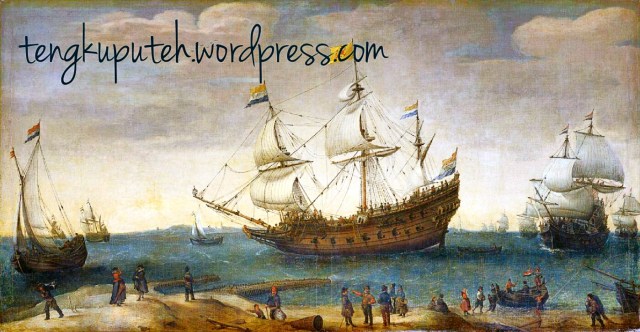
VOC ships, the pirates white, proclaimed the civilizing mission to the nations in the archipelago. Though clearly, the purpose behind their came to the archipelago is there to “colonize” the natives.
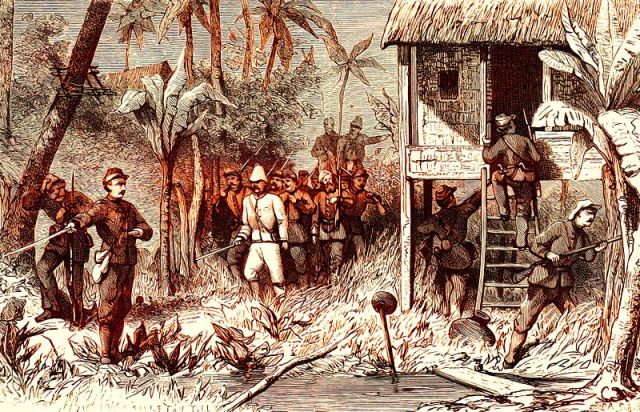
Military Forces Operation at Mukim XX (Aceh War 1873-1904) One of the longest and longest resistant resistance to Dutch colonization in Indonesia

Evolution of the Dutch East Indies

In Indonesia itself after the VOC went bankrupt and dissolved on December 31, 1799, the Dutch government took over its colonies in the Dutch East Indies, At the beginning of the 19th century only the island of Java as a whole belonged to the Netherlands, then in subsequent years all other regions in the archipelago Indonesia) were either conquered or “classified”. This control of the colony became the largest contributor to the global influence of Dutch forces, especially in the trading of spices and other plantation commodities. At its peak in 1942, the Dutch East Indies covers all areas of Indonesia today.

The situation changed when Japan came, Japanese soldiers came pretending to be “old brothers” for the Indonesians defeated the Dutch colonizers. In March 1942, the Dutch government officially declared defeat to the Japanese army and signed the Kalijati agreement. If at the beginning of his arrival, Japan promised to free Indonesia from Dutch colonialism soon

If at the beginning of his arrival, Japan promised to free Indonesia from Dutch colonialism soon afterward Japan immediately showed its original character, wanted to colonize Indonesia, but the period of Japanese occupation in Indonesia was not long. Japan surrendered to the allies after Hiroshima and Nagasaki were bombed by the United States atomic bomb.

When on August 17, 1945, Indonesia declared independence proclaimed in Jakarta. The Dutch opposed and fought the freedom fighters. Only on 27 December 1949, Indonesian sovereignty was recognized. West Papua was still occupied by the Dutch until 1961. Apparently, the independence of Indonesia also mimicked the Dutch colonialist bad attitude toward corruption and Japan with a bureaucratic attitude that is rigid and tends militaristic. Though these two things have been removed by both Indonesian colonizers.

Indonesia’s occupation of Timor-Leste

In 1975, Portuguese Timor was abandoned by Portugal during the Carnation Revolution. So soon Portuguese Timor was invaded by Indonesia, assisted by Australia, Britain, and America For fear of becoming a communist state.

Indonesia’s infrastructure in East Timor

But the UN does not approve of Indonesia’s actions. On 30 August 1999, in an UN-sponsored referendum, the majority of the people of East Timor voted for independence from Indonesia. Immediately after the referendum, anti-independence militias were organized by the military and initiated a scorched earth campaign. According to Wikipedia, the militia killed 1400 East Timorese and forcibly pushed 300,000 people to flee to West Timor (Territory of the Republic of Indonesia). On September 20, 1999, the International Air Force for East Timor (INTERFET) was sent to East Timor to end the violence. This mass extermination resulted in Indonesia not having a cultural heritage there, something that was not done by the previous two colonists of Indonesia, the Netherlands, and Japan. Even when East Timor was recognized as a State and officially independent from Indonesia on 20 May 2002 when it became a member of the United Nations, they decided to use the Portuguese name “Timor-Leste” as its official name.

The fate of East Timor after independence was no better than when it was still Indonesia’s 27th province, the economy was classified with lower downward income by the World Bank, ranked 158th in the HD list. 20 percent of the population is unemployed, 52.9 percent live on less than US 1.25 per day. Although independence still depends on the supply of goods from Indonesia ranging from staple food to fuel oil, politically very dependent on the former colonizers of Portugal, and does not have its own currency so it adopts the US Dollar currency. And whether the ugliness of what Timor Leste imitated from Indonesia so that their lives become more severe than when joined the Republic of Indonesia.

How is our fate?

It’s really our fate all this time due to continuous hatred, chronic and become a residue in the blood. The more bureaucrats are stealing from this country, the crueler the seniors are to the juniors. Individuals are becoming more violent and violent. Should we let this?

End this vicious cycle!

Somehow the world works like this? We can not imagine why this is all moving towards the more violent. When the Romans had not embraced Christianity there was the term “Homo Homini Lupus” meaning “A man is a wolf to another man” What would happen if religion did not come down to earth, of course, human beings become more violent.

Actually putting an end to this hate loop is very easy, if we have the right example. When the Prophet Muhammad S.A.W conquered the city of Mecca, the people of Makkah who had once openly hostile to him, and had conspired to kill him, had tortured his companions and had fought him in Badr, in Uhud, and so asked about their fate.

He said, “Now you can go home, you all I release.” With the words of the Messenger of Allah a whole nation of Quraysh, and all the people of Mecca are freed and forgiven of all the sins and mistakes they have committed over the years to Prophet Muhammad SAW and self Muslims. Muhammad, the Messenger of God has won and resigned but his victory and power are not used to revenge and avenge, but used to flow love and to forgive.

“There has certainly been for you in the Messenger of Allah an excellent pattern for anyone whose hope is in Allah and the Last Day and [who] remembers Allah often.” (QS Al-Ahzab: 21)

This world, time, like a stream of water, is sometimes deflected by a piece of rubble, by a gentle breeze.

When we humans are able to get out of a nightmare, find peace with the same past and be able to forgive all the suffering that happened in the past then finished the chain of hatred. Maybe the world does not necessarily change, maybe we will lose. But is life just a mere thing in the world?

“By the time. Indeed, mankind is in a loss. Except for those who have believed and done righteous deeds and advised each other to truth and advised each other to patience.” (QS Surat Al-Asher 1-3)

When the man says in kindness and patience, he gives meanings such as turning words into poetry, from which his life becomes a bright light that emits light into Rahmat Ulli Alamin (Grace to the universe). Can it? May Allah bless us all. Amen Ya Allah Ya Rabbal Alamin.

TRANSLATE FROM: LINGKARAN KEBENCIAN

Similar articles:

  1. YUKIMURA SANADA, THE LAST GENERAL; 10 April 2017;
  2. CIVILIZATION WITHOUT WRITING; 13 April 2017;
  3. TOKUGAWA IEYASU, THE ASURA; 19 April 2017;
  4. BEHIND THE SCENES MACHIAVELLI WROTE THE PRINCE; 23 April 2017;
  5. ACEH THE FIRST SOVEREIGN COUNTRY TO RECOGNIZING THE INDEPENDENCE OF THE NETHERLANDS; 27 April 2017;
  6. THE NOBLE VEIL, ODA NOBUNAGA; 13 May 2017;
  7. HISTORY OF COFFEE; 18 May 2017;
  8. HISTORY OF SARONG; 20 May 2017;
  9. DUTCH RAID OPERATION AGAINST CUT MEUTIA (1910); 20 May 2017;
  10. HISTORY OF SUGAR; 5 June 2017;
  11. SAMUDERA PASAI AS THE FIRST ISLAMIC KINGDOM IN SOUTHEAST ASIA; 6 June 2017;
  12. GATE WITHOUT GATE, THE MILITARY STRATEGY OF IEYASU TOKUGAWA; 10 JUNE 2017;
  13. CONQUEST OF CULTURE; 15 June 2017;
  14. GOLD, INFIDELS, AND DEATH; 10 July 2017;
  15. MANTE THE LOST PYGMY TRIBE; 13 July 2017;
Posted in History, International, Opinion, Reportase, Story | Tagged , , , , , , , , , , , , , , , , , , , , , , , , , , , | 8 Comments